
Lieferung heute & morgen

Qualitätsgarantie

Willkommens-Angebote freischalten: KOSTENLOSE Lieferung | Bis zu 80 % RABATT | Kostenlose 30-Tage-JoyPlus-Testphase
App herunterladen
As your Joybuy Product Recommendation Officer, my role is to provide you with clear and objective product information. This article is for anyone seeking a functional and aesthetic solution for their windows without damaging the frames with drill holes. This is especially relevant in rental properties, where structural alterations are often prohibited.
A no-drill pleated blind offers a flexible and straightforward way to manage privacy, sun protection, and room temperature. Below, you'll find a guide to the most important selection criteria, along with a curated selection of models that meet various needs.
To find the right model for your needs, you should consider three key aspects: the mounting method, the functional properties of the fabric, and the correct measurements.
The most common method for a no-drill pleated blind is the clamp-fit system. This involves attaching adjustable clamp brackets directly onto the window sash. This method is stable, can be removed without leaving any residue, and is suitable for most uPVC windows that open. An alternative is to use adhesive strips or plates, which are applied directly to the window pane or frame. Both options allow for installation without tools or damage, making them an ideal solution for no-drill window privacy.
Depending on the room and your specific requirements, the fabric's properties play a crucial role.
Before ordering, precisely measure the width and height of the window pane. To minimise light leakage from the sides, many manufacturers recommend adding a few centimetres to the width for optimal coverage. Pay close attention to the manufacturer's measuring instructions. While standard sizes cover many common windows, a custom-made pleated blind can be a worthwhile option for non-standard formats.
Here are three models that stand out for their specific features and mounting methods.
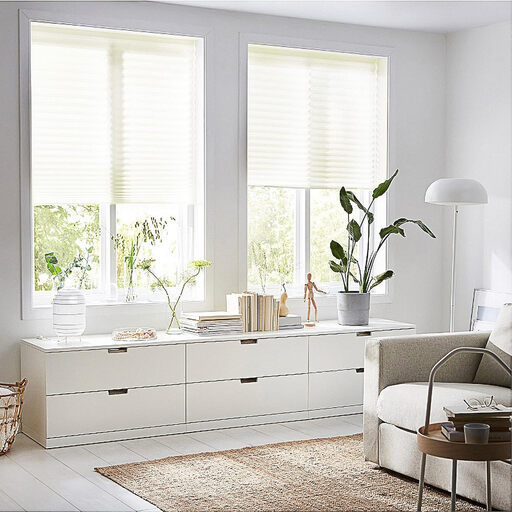
Why it stands out: This model is a straightforward and stylish solution for living spaces that require basic privacy and pleasant light filtering.
Pros:
Who is it for? For users looking for an affordable and functional solution for living rooms, offices, or kitchens, where the focus is on privacy and gentle daylight control.
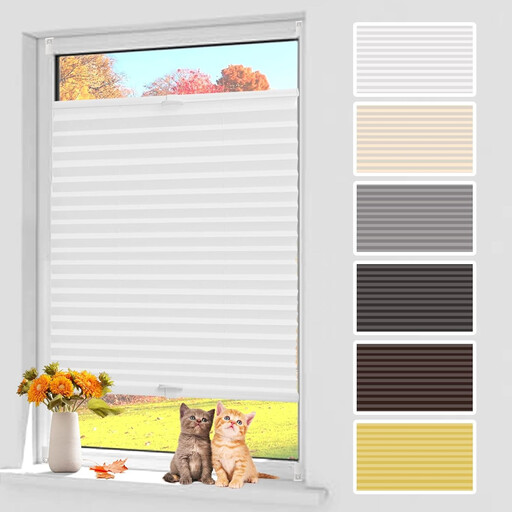
Why it stands out: This pleated blind provides an effective blackout function, making it especially suitable for rooms where darkness is desired.
Pros:
Who is it for? Ideal for bedrooms, children's rooms, or home cinemas where maximum light reduction is needed for restful sleep or an uninterrupted viewing experience.
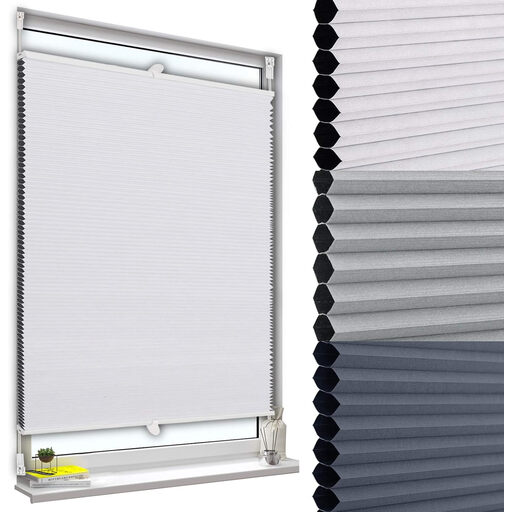
Why it stands out: The honeycomb blind from WOLTU combines a blackout effect with thermal and sound-dampening properties, making it a multifunctional solution.
Pros:
Who is it for? For users who not only value blackout functionality but also want to improve their home's energy efficiency and reduce outside noise. Especially suitable for bedrooms on busy streets or for windows with intense sun exposure.
Didn't find the right model for your window, or are you looking for other types of window coverings? In our Window Coverings category, you'll find a wider selection of solutions for your window design.
A clamp-fit pleated blind is secured with adjustable clamp brackets at the top and bottom of the window sash. These brackets are simply placed over the frame and tightened, clamping them securely in place. For adhesive versions, special adhesive strips ensure a firm hold on the window pane or frame. Both methods are designed to be removed without leaving any residue.
A standard pleated blind, also known as a no-drill pleated shade, consists of a single, pleated piece of fabric. A honeycomb blind, on the other hand, is made of two layers of fabric that form honeycomb-shaped air pockets. This structure provides additional insulation against heat, cold, and sound.
Most clamp-fit systems are designed for standard uPVC windows that can be opened and have a frame thickness within a specific range (e.g., 10–23 mm). They are generally not suitable for fixed glazing, skylights, or wooden windows with non-standard profiles. Therefore, always check the product description and the manufacturer's compatibility information.