
Lieferung heute & morgen

Qualitätsgarantie

Willkommens-Angebote freischalten: KOSTENLOSE Lieferung | Bis zu 80 % RABATT | Kostenlose 30-Tage-JoyPlus-Testphase
App herunterladen
No-drill pleated blinds can provide privacy and light control without leaving wall plugs, screws or drill holes in your window frame. This makes them particularly practical for rented homes. However, unclear sizing, unsuitable fixings and exaggerated claims often lead to poor buying decisions.
By Joybuy Product Recommendation Officer
The terms blackout pleated blind, “blackout” and “light-blocking” aren’t always used consistently by retailers. The fabric and any gaps at the sides are what matter. A pleated blind may be described as providing privacy or blocking out light, while light still enters around the edges.
If you’re looking for a pleated blind for a bedroom, check:
A no-drill pleated blind is usually fitted to the window sash using clamp brackets. This option is best suited to rectangular windows with a compatible frame thickness. Adhesive brackets, on the other hand, need a clean, smooth, grease-free surface. Their grip may be affected by rough, uneven or heavily textured surfaces.
Before buying, check the window frame thickness, any seals, handles and protruding parts. For balcony or room doors, also make sure the blind won’t catch on handles or walls when you open and close the door.
A listing such as 60 x 100 cm pleated blind normally refers to the width and height of the product, not necessarily the exact dimensions of the glass. A made-to-measure pleated blind is custom-made; for standard products, you’ll need to choose from the available sizes.
Some of the products mentioned here are available in fixed sizes. For example, the 90 x 200 cm model may suit larger windows or doors, provided the frame and fixing are suitable. Always measure according to the instructions in the relevant listing.
For many no-drill models, a product width of around 4 cm more than the width of the window pane is recommended as a guide. This varies by product, so don’t assume it applies to every pleated blind.
A few practical measuring steps:
A privacy pleated blind protects against direct views in, but depending on the fabric, it may still let daylight through. A pleated blind with sun protection reduces glare and light intensity; this doesn’t automatically mean it offers a specific level of UV or heat reduction.
For different rooms:
Pleated blind clamp brackets attach to the window sash and can usually be removed without leaving marks if the frame thickness is suitable. Adhesive brackets are suited to smooth surfaces, but should be fitted according to the manufacturer’s instructions.
Check:
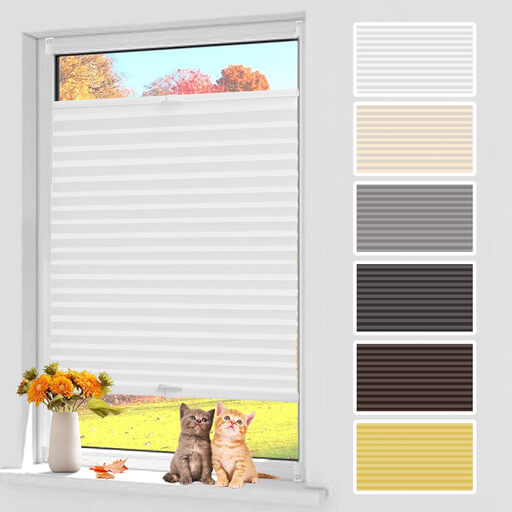
Why this product suits this buyer: The fixed 60 x 100 cm size and white polyester fabric make it a good fit for smaller standard windows when you want a simple, tool-free installation.
The product details specify a no-drill clamp fitting, tool-free installation, and light and privacy protection. Check that the frame width is suitable before buying.
60 x 100 cm, white polyester, and installation without drilling or screws.

Why this product suits this buyer: The double-layer honeycomb structure, metal frame and clamp brackets for frame thicknesses of 10–23 mm will appeal if you prefer clear construction details.
The stated frame thickness makes it easy to check whether the blind is suitable. This model is designed for indoor use and isn’t suitable for roof windows.
100% polyester, metal frame, top and bottom handles, and no-drill clamp fitting.

Why this product suits this buyer: The 90 x 200 cm size is worth considering for larger windows and doors, provided the frame dimensions and adhesive or clamp brackets are suitable.
The product description advises measuring the glass width and adding around 4 cm, and says the blind is suitable for windows and doors.
Large size, adjustable positioning and no-drill installation for indoor spaces.
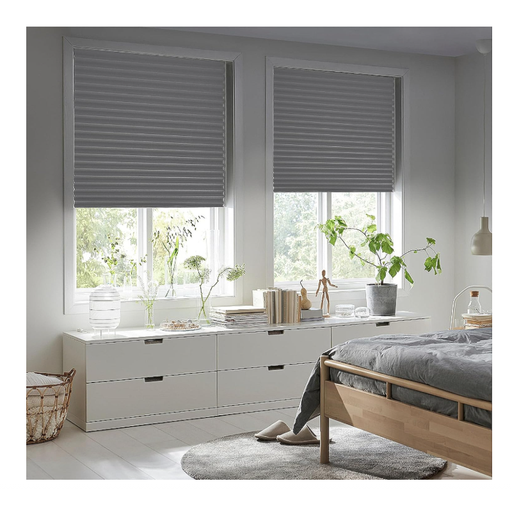
Why this product suits this buyer: The light grey, light-filtering fabric suits rooms where you want privacy and less glare while still letting daylight in.
The description identifies the fabric as light-filtering, rather than fully blackout. This helps set realistic expectations about how much light it blocks.
90 x 120 cm, light grey polyester, no-drill clamp system and height-adjustable operation.
Before fitting, clean the frame with a suitable residue-free product and let it dry. Attach the clamp or adhesive brackets according to the instructions. Then check that the blind is straight and moves without needing excessive force.
For many polyester fabrics, a soft, dry or slightly damp cloth is all you need. Harsh cleaning products, scouring pads and prolonged exposure to high levels of moisture can damage the fabric and brackets. Keep cords and operating components out of children’s reach. Check the fixings regularly, especially on balcony or room doors that are opened and closed frequently.
We’ve put together a complete, regularly updated list of products that meet these strict selection criteria and fully comply with the safety regulations in force in the EU.
How long it lasts depends on the frame thickness, type of fixing, fabric weight and how often it’s used. Clamp brackets should fit securely to a suitable window sash. Adhesive brackets need a clean, smooth surface. If you open and close the window frequently, check the fixings are stable on a regular basis.
This type of fitting is often suitable for a rented home, as it doesn’t leave drill holes in the wall or window frame. Whether the fixing can be removed without leaving marks depends on the bracket and the surface. For adhesive fittings, follow the manufacturer’s instructions for removal.
The blind itself normally doesn’t need electricity. Ongoing costs are therefore mainly limited to the initial purchase, replacing brackets if necessary and care. Motorised versions may involve additional costs for electricity, batteries or controls; the models described here are operated manually.