
Lieferung heute & morgen

Qualitätsgarantie

Willkommens-Angebote freischalten: KOSTENLOSE Lieferung | Bis zu 80 % RABATT | Kostenlose 30-Tage-JoyPlus-Testphase
App herunterladen
A no-drill clamp-fit pleated blind can be a practical alternative to permanently screwed-in roller blinds in rented homes, offices and living spaces. Depending on the model, it can be fitted using clamp brackets, adhesive brackets or suction cups. This helps keep walls and window frames largely undamaged.
Even so, unclear sizing information and exaggerated product claims often lead to the wrong purchase. These three problems are particularly common:
For many clamp-fit pleated blinds, it’s recommended that you measure the width of the glass and add around 4 cm. For example, if the glass is 86 cm wide, a 90 cm-wide blind may be a good fit. The required height is often based on the full height of the window, including the sash or frame, as stated in the product details.
However, measuring recommendations aren’t the same for every system. Some models suggest adding 2 to 4 cm. So check the details for the specific product before you buy. A made-to-measure pleated blind is a good option if standard sizes don’t cover enough of the glass.
The same applies to a 90x120 cm pleated blind: the dimensions usually refer to width × height. Check the order before placing your order, as some product pages may use inconsistent wording.
A light-filtering pleated blind diffuses daylight and can reduce visibility from outside. It isn’t automatically a blackout blind. If you’re choosing one for a bedroom or a room that gets direct sunlight, check the specific product description:
For sun protection at the window, the colour, fabric density, side of the building the window faces and the gap between the fabric and the glass all matter. Lighter fabrics often have a more subtle effect in a room, while darker shades can change the light more noticeably. Claims about room temperature or UV reduction should only be made on the basis of specific manufacturer information.
A no-drill pleated blind is usually attached to the window sash. Clamp brackets are suitable for windows where there’s enough clearance around the frame and seal. Adhesive brackets need a clean, dry and smooth surface. Before fitting, remove any dust and grease from the frame.
The polyester fabric used in the models mentioned is moisture-resistant, but not waterproof. A pleated blind may be suitable for a bathroom if it isn’t exposed to splashing water on a regular basis. These designs aren’t intended for showers or surfaces that are constantly damp. Several models are explicitly unsuitable for sloping roof windows.
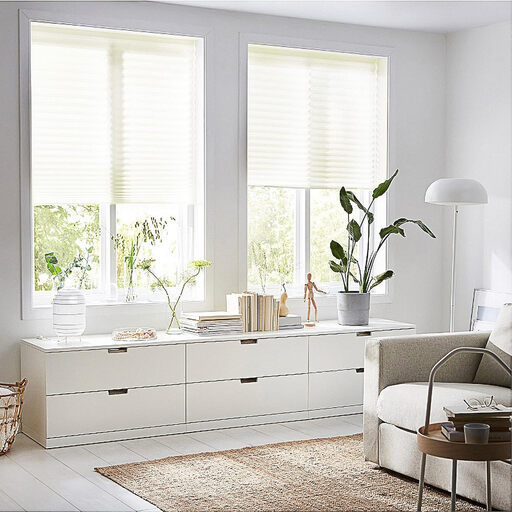
Why it suits this profile: This size is suitable for narrower standard windows. The beige polyester fabric can be fitted without drilling using the clamp-fit system, and moved up or down to adjust privacy and sun protection.
The product details recommend measuring the glass width and adding 4 cm, and note that the blind isn’t suitable for sloping roof windows.
60 × 120 cm, adjustable position, moisture-resistant fabric and no-drill fitting.
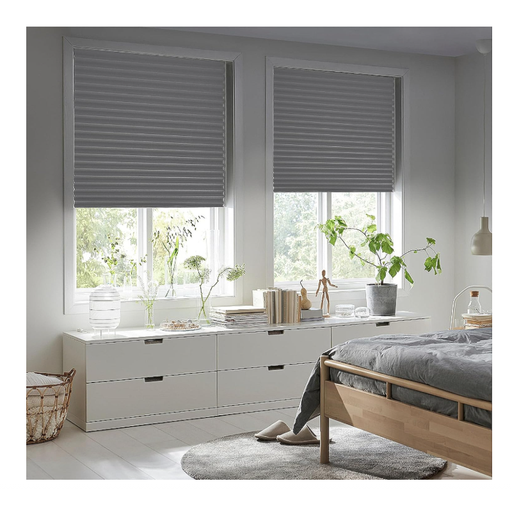
Why it suits this profile: The 90 cm width may suit a larger window, provided it matches the measured glass width. The light grey, light-filtering fabric lets you adjust the light and privacy levels.
The product page lists four adhesive brackets, recommends cleaning with a soft cloth and specifies that the frame must be clean and dry.
90 × 120 cm, clamp-fit installation, height-adjustable and designed for indoor windows and doors.
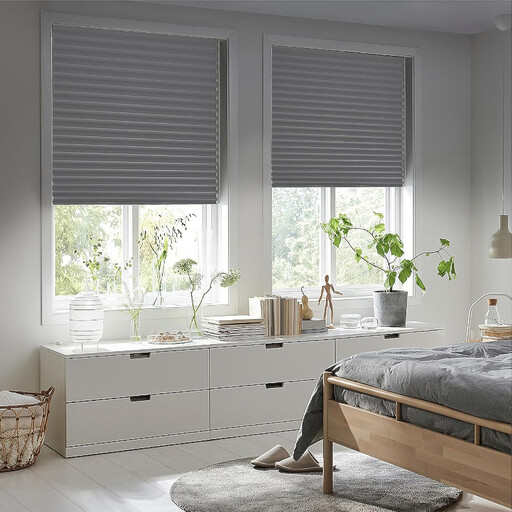
Why it suits this profile: At 200 cm high, it’s worth considering for tall windows, balcony doors or patio doors. The light grey fabric filters light and can be repositioned as the light changes.
The description specifically recommends cleaning with a damp cloth and stresses the need for secure fitting.
75 × 200 cm, light-filtering polyester fabric, clamp-fit or adhesive mounting, and suitable for windows or doors.
In homes with children, fit cords and controls out of their reach. Replace any damaged or loose adhesive brackets to help prevent the blind from falling.
We’ve put together a complete, regularly updated list of products that meet these strict selection criteria and fully comply with the safety regulations in force in the EU.
How long it lasts depends on the fitting method, surface, weight and how it’s used. Clamp brackets are held mechanically to the window sash. Adhesive brackets need a smooth, dry and grease-free surface. Check the fixings regularly, particularly if you open the window or door frequently.
For the Dream-seeker models mentioned, it’s often recommended that the blind is around 4 cm wider than the glass. The specific recommendation may vary, so measure the glass and compare the result with the relevant product description.
A clamp-fit pleated blind can be a good choice for temporary fitting, as it doesn’t require holes in the wall or window frame. However, adhesive fittings may leave residue or affect delicate surfaces. Check that the surface is suitable and keep the fitting instructions.