
Lieferung heute & morgen

Qualitätsgarantie

Willkommens-Angebote freischalten: KOSTENLOSE Lieferung | Bis zu 80 % RABATT | Kostenlose 30-Tage-JoyPlus-Testphase
App herunterladen
As a renter or homeowner, you may face the challenge of installing effective sun and privacy protection without damaging window frames or walls. Drill holes are often undesirable or even prohibited by a lease agreement. Fortunately, a variety of solutions offer simple, damage-free installation.
This guide is here to help. We'll introduce different types of drill-free window treatments, explain how they work, and provide practical tips to help you make an informed decision for your living spaces.
Before you decide on a product, a few considerations are helpful. The choice of the right model depends on your window type, your light control needs, and the desired features.
The most common method for a no-drill pleated blind is the clamp-fit system. This involves clamping adjustable brackets directly onto the window sash. This method is suitable for most uPVC windows that can be opened.
The function of your new window treatment is largely determined by the material.
A perfect fit is crucial for both function and appearance. Precisely measure the width and height of the window pane (from glass bead to glass bead). When ordering, note the manufacturer's specifications: often, the fabric width is a few centimetres narrower than the specified total width to leave space for the mechanism. Ensure that the window handle remains freely operable after installation.
Here is a selection of products that meet different requirements for installation, function, and design.
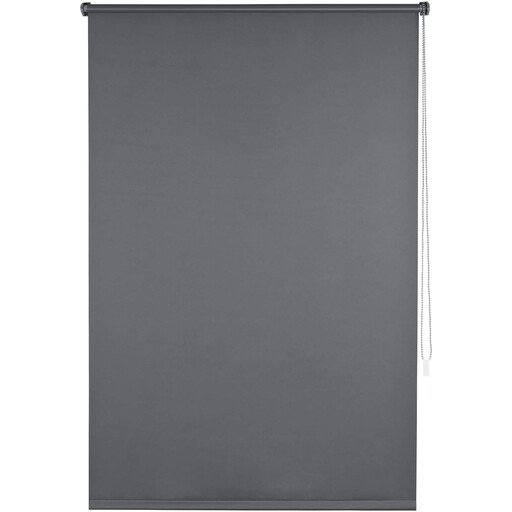
Why it stands out: This roller blind combines a full blackout function with a sophisticated aesthetic. The back is coated with an aluminium layer that blocks light and provides thermal insulation. A special feature is the colour-coordinated design—the fabric, back coating, and mounting accessories all come in a uniform anthracite tone.
Advantages:
Who is it for? This no-drill roller blind is a great choice for bedrooms, children's rooms, or home cinemas where maximum room darkening is desired. It is also suitable for energy-conscious users who want to benefit from the additional thermal insulation.
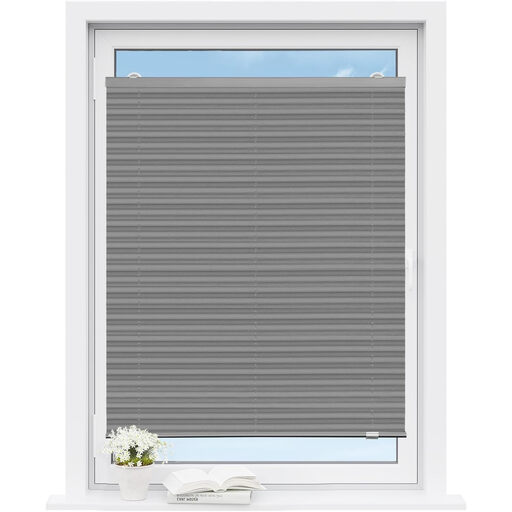
Why it stands out: The innovative suction cup mounting makes this pleated blind extremely versatile. It can be attached to any smooth glass surface without clamping or gluing. This is particularly practical for fixed windows, balcony doors, or even sloped skylights.
Vorteile:
Who is it for? Ideal for renters or users looking for an extremely flexible and residue-free solution. It's an excellent option for non-opening windows, conservatories, or rooms where privacy is desired without completely darkening the space.

Why it stands out: This model is a honeycomb blind, whose double fabric panels form air chambers. This honeycomb structure provides improved heat and sound insulation compared to a standard pleated blind. It is operated smoothly via handles on the top and bottom rails, allowing for precise positioning.
Advantages:
Who is it for? This pleated blind for windows is the right choice for users who value energy efficiency, blackout capabilities, and sound insulation. It is perfectly suited for bedrooms, living rooms, or offices where both the room climate and lighting conditions need to be optimised.
The products featured already cover many use cases. However, if you are looking for other designs, colours, or specific sizes, there is a wide range of other solutions available.
Discover more products in our Glass Decoration category and find the perfect protection for your windows.
A standard pleated blind consists of a single, zigzag-pleated panel of fabric. A honeycomb blind, on the other hand, consists of two fabric panels connected in a way that forms a honeycomb structure in cross-section. These air pockets within the honeycombs provide significantly better heat and sound insulation.
A clamp-fit system uses adjustable clamp brackets that are placed over the top and bottom edges of the window sash and tightened. The tension cords of the pleated blind are then hooked into these brackets. No drilling, screwing, or gluing is required, and the brackets can be removed at any time without a trace.
Clamp-fit mounting is primarily designed for modern uPVC windows. Caution is advised with wooden or aluminium windows. Check the shape of the window sash and the maximum clamping depth specified by the manufacturer. The standard clamp brackets may not fit on very wide or profiled wooden frames. In such cases, a pleated blind with suction cup or adhesive mounting might be a more suitable alternative.