
Lieferung heute & morgen

Qualitätsgarantie

Willkommens-Angebote freischalten: KOSTENLOSE Lieferung | Bis zu 80 % RABATT | Kostenlose 30-Tage-JoyPlus-Testphase
App herunterladen
As a renter or homeowner, you know the challenge: you need effective sun and privacy protection, but you either don't want to or aren't allowed to drill holes into your window frames. A no-drill pleated blind seems like the ideal solution. The market offers a wealth of options, from clip-on pleated blinds to dual roller blinds, but not all of them live up to their promises.
This guide will help you navigate the common pitfalls and make an informed decision. We'll show you what really matters when choosing, so you can find a durable and functional solution for your windows.
Many products advertise easy installation and high functionality. In practice, however, three major flaws often lead to disappointment and unnecessary expenses.
To avoid a costly mistake, you should check three core aspects. These determine the fit, functionality, and longevity of your new privacy screen.
Drill-free mounting is primarily achieved through two systems. The choice depends on your window type and your preferences.
The function of your blind is determined by the fabric. Clarify your needs beforehand:
Modern pleated and roller blinds offer various control concepts. Cordless systems, operated via a handle on the bottom rail, are considered particularly safe as they pose no strangulation risk for children or pets. Models with a side chain are also common and allow for convenient operation, especially on tall windows.
We have matched products from our range to different user profiles to make your choice easier.
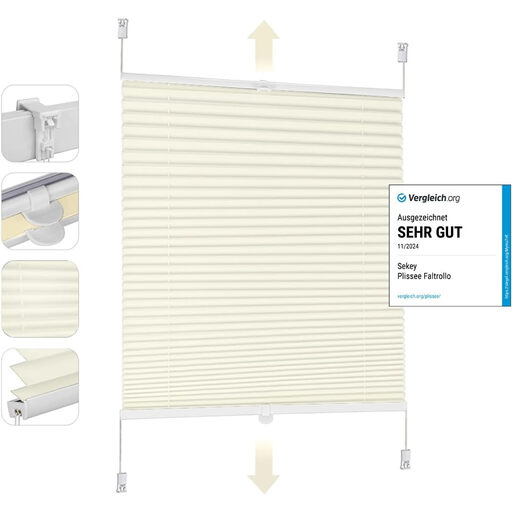
Why This Fits Their Persona: A straightforward and affordable solution for standard windows in rental apartments. Ideal for living spaces where basic privacy and sun protection are needed without breaking the bank.
The product relies on a proven clip-on system with clear instructions. It avoids the pitfall of an overly complicated installation and focuses on the core function: simple privacy.
Simple, tool-free installation. The opaque fabric provides privacy while still letting daylight through.
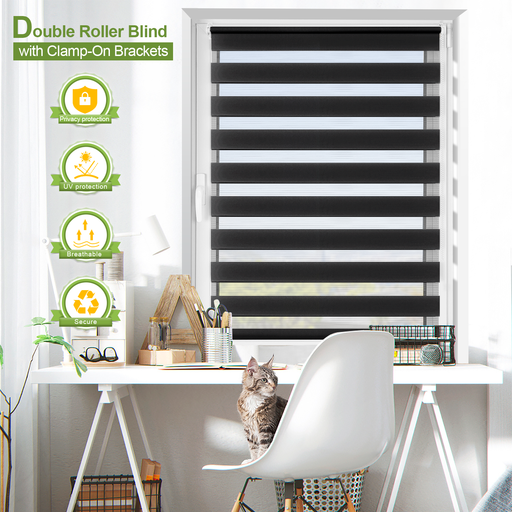
Why This Fits Their Persona: For those who want more than just simple privacy. The dual roller blind allows for flexible light control and adds a stylish accent to the room with its modern zebra-stripe look.
Its function is clearly defined: it's all about variable light regulation. Unlike products with misleading fabric descriptions, this one offers real, visible added value through its design.
Seamless regulation of light and privacy with alternating woven fabric panels. Installation via clip-on brackets without drilling.

Why This Fits Their Persona: Perfect for bedrooms or other rooms where complete darkness and a stable room temperature are desired. The combination of blackout and thermal insulation offers maximum comfort.
This blind sidesteps the misleading fabric trap with a verifiable feature: the silver thermal coating on the back ensures effective blackout and insulation.
Provides 100% blackout according to the manufacturer. The thermal coating helps regulate room temperature. Cordless design for enhanced safety.
We've compiled a complete, up-to-date list of products that fully meet these strict selection criteria and safety standards.
1. How do I correctly measure my window for a clip-on pleated blind? Measure the glass width (the width of the window pane) and add about 2 cm on each side to ensure good coverage. The order width should therefore be about 4 cm wider than the glass pane, but not extend past the window handle. For the height, measure the height of the entire window sash. Always follow the manufacturer's specific measurement instructions.
2. Are clip-on or adhesive pleated blinds really durable? When installed correctly and with the right frame thickness, high-quality clip-on systems are very stable and long-lasting. They are designed for daily use. With adhesive systems, durability heavily depends on the quality of the adhesive and a clean, grease-free mounting surface. For a long-term, robust solution, a clip-on system is generally the more reliable choice.
3. What is the difference between a pleated blind and a dual roller blind? A pleated blind (also called a folding blind) consists of a single, pleated fabric that folds up like an accordion. It offers a very flat and space-saving look. A dual roller blind consists of two parallel fabric panels with alternating transparent and opaque stripes. By shifting the panels, you can seamlessly adjust the light from almost transparent to fully opaque, offering more flexibility in light control.