
Lieferung heute & morgen

Qualitätsgarantie

Willkommens-Angebote freischalten: KOSTENLOSE Lieferung | Bis zu 80 % RABATT | Kostenlose 30-Tage-JoyPlus-Testphase
App herunterladen
A no-drill pleated blind is ideal for rented homes, rooms that are rearranged frequently and windows where you want to avoid permanent drill holes. Installation may seem straightforward at first, but incorrect measurements, unsuitable window frames or unclear information about light transmission can often lead to the wrong purchase.
For many clamp-fit products, the stated width is the overall measurement, including the brackets. According to product details, the actual fabric may be around 4 to 5 cm narrower. So if you measure only the glass, you may end up with less coverage at the sides than expected.
As a practical guide, for many models:
Always follow the specific measuring instructions for the product you choose.
A light-filtering pleated blind softens daylight and reduces visibility from outside, while still letting some light into the room. A blackout pleated blind or an opaque pleated roller blind is a better choice for bedrooms if you want as little light as possible to pass through the fabric. However, some light may still come in at the sides of blinds fitted inside the frame.
For a privacy pleated blind in a bathroom, kitchen or ground-floor room, a soft, diffused light effect is often enough. For a desk where you use a screen, a sun-shading pleated blind can help reduce glare without making the room completely dark.
A pleated blind with clamp brackets needs a suitable window frame. Several WOLTU models specify a frame thickness of 13 to 23 mm. Other systems are designed for around 10 to 23 mm or 16 to 22 mm. Wooden windows, roof windows, sloping windows and certain fixed-glazed or sliding units may not be suitable.
Before buying, check the following:
In homes with children, keep operating chains and cords out of their reach. Secure installation also helps prevent the blind from slipping or falling.
A traditional pleated blind can usually be fitted directly to the window sash and has a relatively compact, folded appearance. A no-drill day and night blind, also known as a clamp-fit double roller blind, has alternating sheer and opaque fabric strips. Use the chain to change how the strips align and adjust the amount of light in stages.
A no-drill Venetian blind often lets you adjust the angle of the slats. For doors and larger glazed areas, also consider how the blind operates, how sturdy it is and how much space it takes up. When choosing a pleated blind for windows and doors, make sure the width allows the handle to move freely.
The products listed are mostly made from polyester. You can clean the material with a soft cloth or a soft brush. Moisture-resistant does not mean waterproof, so a model designed for humid rooms should not be exposed to direct water over a long period.
Opaque or blackout fabrics are a natural choice for bedrooms. A semi-transparent model may be more comfortable in living rooms and home offices if you want to keep the daylight. A colour such as beige pleated blind 75 x 200 cm works well in many neutral interiors, but the size, fitting method and desired light effect are still the most important considerations.
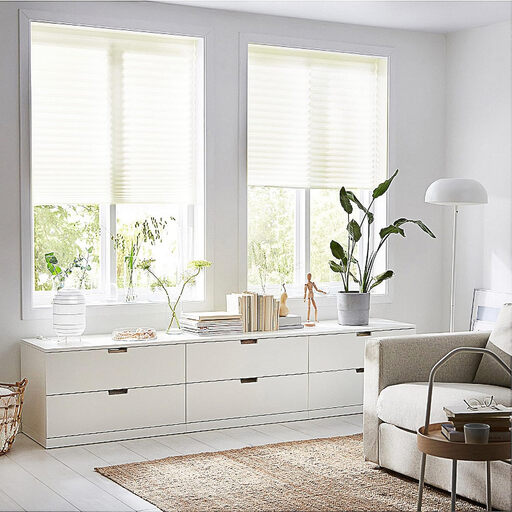
Why it suits this type of buyer: This model combines a popular window width with clamp-fit or adhesive installation, with no drilling required. You can adjust its position using the handle and cord.
The product details recommend allowing around 4 cm extra compared with the glass width. They also note that the fabric is moisture-resistant but not waterproof.
75 x 200 cm, beige, polyester fabric, adjustable positioning and installation without drill holes.

Why it suits this type of buyer: The honeycomb structure, two operating handles and clamp-fit system for frames measuring 10 to 23 mm offer several clearly specified features.
The product description distinguishes between opaque fabric and whether the blind is suitable for your window. Roof windows are specifically excluded.
Opaque polyester fabric, adjustable clamp brackets, top and bottom handles, and cleaning with a damp cloth.

Why it suits this type of buyer: This model is designed for rooms where you need opaque fabric and operation without a freely hanging pull cord.
The product details state the suitable frame thickness range of 16 to 22 mm and exclude roof windows. This makes it easier to check whether installation is suitable before you buy.
80 x 150 cm, clamp or screw fitting, operated using the bottom rail, and polyester fabric with a coated backing according to the product details.
We’ve put together a complete, regularly updated list of products that meet these strict selection criteria and fully comply with the safety regulations in force in the EU.
Depending on the design, the pleated blind is attached to the window frame with clamp brackets or fitted using adhesive brackets. The frame must be clean and dry, and suitable for the system you’re using. Check that all the brackets are secure before using the blind.
Its lifespan depends on the materials, how often it’s operated, exposure to sunlight, cleaning and how securely it’s fitted. Avoid using excessive force, and check the brackets regularly to make sure they haven’t come loose. There’s no reliable general estimate of lifespan that applies to every product.
There are no usual running costs, as pleated blinds and roller blinds are operated by hand. You may only need to pay for replacement brackets or a new blind later on if the fabric, chain or adhesive fittings become damaged.