
Lieferung heute & morgen

Qualitätsgarantie

Willkommens-Angebote freischalten: KOSTENLOSE Lieferung | Bis zu 80 % RABATT | Kostenlose 30-Tage-JoyPlus-Testphase
App herunterladen
A no-drill pleated blind is a practical choice for rental apartments, offices and rooms that change frequently: In many cases, the window frame remains undamaged, while installation can be carried out using clamp brackets, adhesive mounts or suction cups. However, not every model is suitable for every window. Incorrect measurements, unsuitable surfaces or an underestimated blackout level often result in unnecessary returns and an unstable fit.
For many products, the stated measurement refers to the overall width of the pleated blind, including the brackets. The actual fabric may therefore be narrower. For example, the WOLTU Blackout Roller Blind specifies that the fabric width is approximately 4 cm less than the overall width.
Therefore, measure:
As a practical guideline, several models recommend a pleated blind width approximately 3 to 4 cm wider than the glass width. The precise specifications of the individual product remain decisive.
A light-filtering pleated blind filters daylight and reduces visibility from outside, while still keeping the room bright. A privacy pleated blind restricts views from outside but may continue to allow diffuse light through. A blackout pleated blind, on the other hand, is suitable for bedrooms, children’s rooms or spaces with computer workstations where as little outside light as possible is desired.
The terminology is not always consistent. Look for specific descriptions such as “Blackout”, “light-filtering”, “semi-opaque” or details about the fabric coating. Complete darkness should only be expected where it is explicitly stated as a product feature. Side gaps around the window cannot always be avoided, depending on the installation method and window design.
A pleated blind with clamp brackets is usually attached to the movable window sash. The frame must therefore be sufficiently accessible. Frame thickness requirements vary by model. For example, the WOLTU Day-and-Night Roller Blind is specified for window frames measuring 13 to 23 mm, while the WOLTU Blackout Roller Blind is designed for frames measuring 16 to 22 mm.
Adhesive mounts require a smooth, clean and dry surface. Rough, dusty, damp or uneven frames can impair adhesion. Suction cups are primarily suitable for smooth surfaces such as glass or tiles, but not for textured walls. Before purchasing, check whether a clip-fit, adhesive or suction-cup installation is compatible with your window.
Also make sure that the window sash can still be tilted or opened fully. Stable mounting is particularly important for balcony doors and frequently used windows.
Polyester is widely used in the pleated blinds and roller blinds mentioned here. Moisture-resistant fabrics are practical in kitchens and bathrooms, although “moisture-resistant” does not mean waterproof. In wet rooms, the fabric should not remain in constant contact with water.
The choice by room could look like this:
Colours such as white pleated blind, beige pleated blind or grey pleated blind influence the overall feel of a room. Light-coloured fabrics generally make interiors appear more open, while darker versions can subjectively reduce the intensity of light. The actual lighting effect also depends on the fabric construction, coating and side gaps.
Models with handle rails can be moved from the top or bottom. This allows the fabric to be positioned precisely over the upper or lower section of the window. Chain or cord controls offer a different operating experience, but should be secured out of children’s reach.
Window coverings are subject to safety requirements designed to prevent strangulation hazards. Check the installation instructions, any chain tensioners and the manufacturer’s safety information. Small brackets and fittings should be kept out of children’s hands during installation.
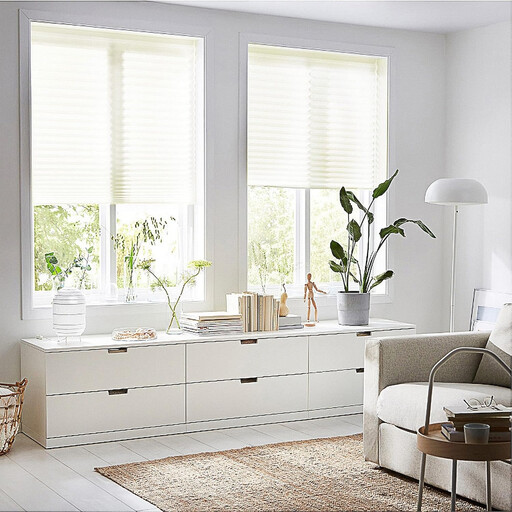
Why it’s a good fit: The compact size is suitable for smaller windows in living rooms, bedrooms or home offices. Clamp brackets and adhesive mounting enable installation without drilling.
The dimensions and suitability for windows and doors are clearly stated. Before ordering, however, the glass width should still be checked against the recommended allowance.
Beige polyester fabric, 75 × 100 cm, clamp and adhesive mounts, adjustable from top to bottom.

Why it’s a good fit: For bedrooms, offices or rooms with strong incoming light, the stated blackout design is a compelling choice.
The description specifies the required frame thickness of 16 to 22 mm as well as the narrower fabric width. This makes it easier to verify installation requirements in advance.
Cordless operation via handle, polyester fabric with silver-coloured backing, clamp or drill installation, 80 × 150 cm.
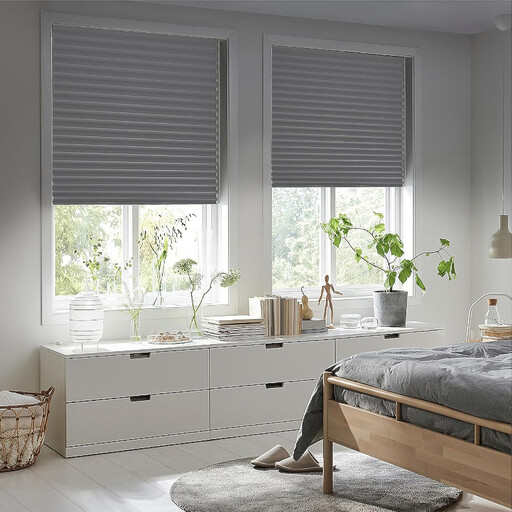
Why it’s a good fit: The greater width covers wider windows. The light grey, semi-opaque fabric is intended for living rooms, kitchens and offices.
The light-filtering design is not presented as a complete blackout solution. A blackout model is more suitable for a dark bedroom.
100 × 130 cm, polyester fabric, installation with clamp or adhesive mounts, described as suitable for windows and doors.
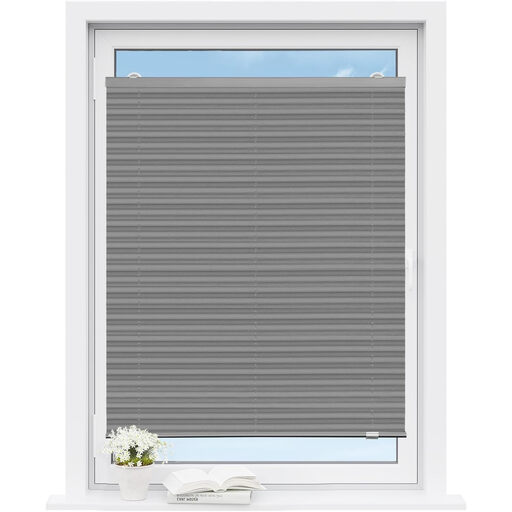
Why it’s a good fit: For smooth glass surfaces, balcony doors or temporary installation, suction cups provide an alternative mounting solution.
The product details limit use to smooth surfaces such as glass or tiles. This installation method is not intended for textured surfaces.
Grey polyester fabric, suction-cup installation, 50 × 130 cm, with an adjustable width of 50 to 90 cm according to the product description.
The complete category features a current selection of products for no-drill installation. Compare dimensions, fabric properties and mounting methods before purchasing.
Clean the installation area with a suitable residue-free cleaning product and allow it to dry completely. With adhesive mounts, the surface must be free from both dust and moisture. Clamp brackets should sit evenly without obstructing seals or the window handle.
For the fabrics mentioned here, a soft, dry cloth or a slightly damp cloth is usually sufficient for cleaning. Harsh cleaners, abrasive products and vigorous rubbing can damage polyester fabric, coatings or edges. Before adjusting the blind for the first time, check that all brackets are securely attached.
Durability depends on frame thickness, installation quality, frequency of use and product weight. A properly fitted clamp bracket is suitable for windows that are opened and closed regularly, but should still be checked occasionally. With adhesive and suction-cup installation, temperature, humidity and surface condition can affect adhesion.
Measure the visible glass width and compare it with the product specifications. An allowance of approximately 3 to 4 cm is often recommended. Also check the frame height, window handle and permitted frame thickness. For a made-to-measure pleated blind, follow the specifications provided by the respective supplier.
Yes, provided that the width, height and mounting system are compatible with the balcony door. For doors that are opened frequently, sturdy clamp brackets and an easy-to-operate handle rail are advisable. For particularly wide or heavy door blinds, check the suitability of the specific model before purchasing.