
Lieferung heute & morgen

Qualitätsgarantie

Willkommens-Angebote freischalten: KOSTENLOSE Lieferung | Bis zu 80 % RABATT | Kostenlose 30-Tage-JoyPlus-Testphase
App herunterladen
A no-drill pleated blind is a practical choice for rented flats, owner-occupied flats and houses when you want to add privacy and sun protection to windows or doors quickly. Clamp brackets or adhesive strips mean you can avoid drilling holes in the frame. However, not every style will suit every window. Common reasons for choosing the wrong blind include inaccurate measurements, misjudging how much light the fabric lets through or choosing a fitting method that is unsuitable for the surface.
Pleated blind measurements are usually given as width × height. The key question, though, is whether the width refers to the glass, the window sash or the entire frame. For several styles, it’s recommended that you choose a blind around 2 to 4 cm wider than the visible glass. The height should match the height of the entire window sash.
Before buying, measure:
A 75x100 cm pleated blind, 100x120 cm pleated blind or 100x130 cm pleated blind may fit differently depending on the frame design. Always compare the measurements given for each product option with your own measurements.
A light-filtering pleated blind softens daylight and can reduce glare and overlooking. It won’t automatically make a room dark, though. If you’re choosing a blind for a bedroom, children’s room or home office, check the fabric description carefully:
Always check marketing terms against the specific product details. A pleated blind described as “Blackout” won’t necessarily block out light completely at the sides.
A pleated blind with clamp brackets is usually fitted to the window sash. This is handy for rented homes, but the window rebate needs to be deep enough. For some styles, for example, the suitable depth is between 10 and 23 mm. If the frame is too narrow, too wide or heavily profiled, the blind may not be held securely.
Adhesive fitting, on the other hand, requires a clean, dry and preferably smooth surface. Dust, moisture, textured finishes or greasy residue can weaken the adhesive. Clean the frame and let it dry completely before fitting the blind. If you often leave your windows on the tilt setting, take extra care when securing the brackets and check them regularly.
Many no-drill clamp systems are suitable for rectangular tilt-and-turn windows. For doors, also check that the blind won’t catch on the handle, wall or door frame when you open the door. A pleated blind for doors should be tall enough and securely fitted, as it will be moved more often.
Several of the styles listed here are specifically not suitable for roof windows. Wooden windows, sliding windows and very uneven frames may also need a different type of fitting.
The styles listed are mostly made from polyester fabric. This can generally be cleaned with a soft, slightly damp cloth, but it isn’t automatically waterproof. If you’re choosing a blind for a bathroom or kitchen, check the product description for information about moisture resistance.
Harsh cleaning products, scouring pads and pulling too hard can damage the fabric, pleats or brackets. Children should not play with operating cords or moving parts. Read the manufacturer’s safety instructions before use.
Neutral colours are relatively easy to coordinate with your existing furniture:
The overall effect depends on the fabric’s texture, the room’s lighting and the wall colour. If you have several windows, it’s a good idea to choose a matching colour and style for all of them.
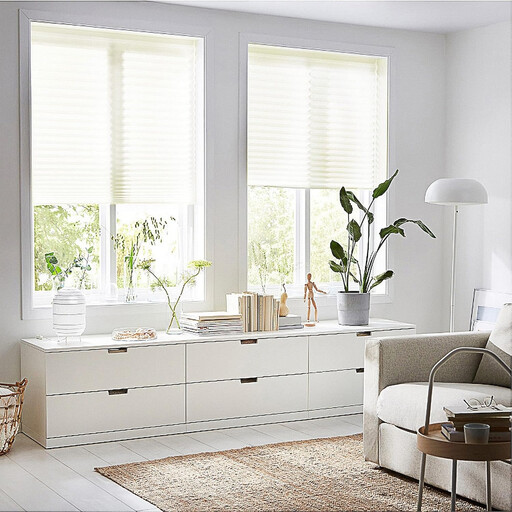
Why it suits this type of buyer: Its compact size is suitable for smaller interior windows and doors. The clamp brackets and adhesive fitting let you install it without drilling.
The size and fitting method are clearly stated. The fabric is described as opaque, but check that it offers the level of room darkening you want before buying.
75 × 100 cm, beige polyester fabric, with clamp and adhesive fitting options for interior windows and doors.
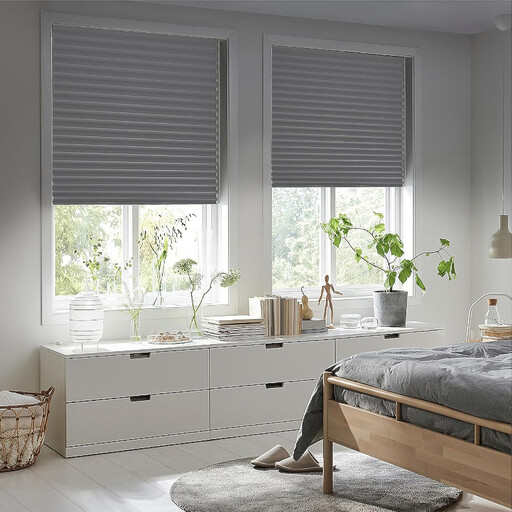
Why it suits this type of buyer: Its larger size suits wider windows or doors. The light grey, semi-sheer fabric lets diffused light into the room.
The product details specify the size, material and light-filtering properties. This makes it easier to check whether the level of privacy and brightness will meet your expectations before buying.
100 × 130 cm, light grey polyester fabric, adjustable positioning and no-drill fitting.
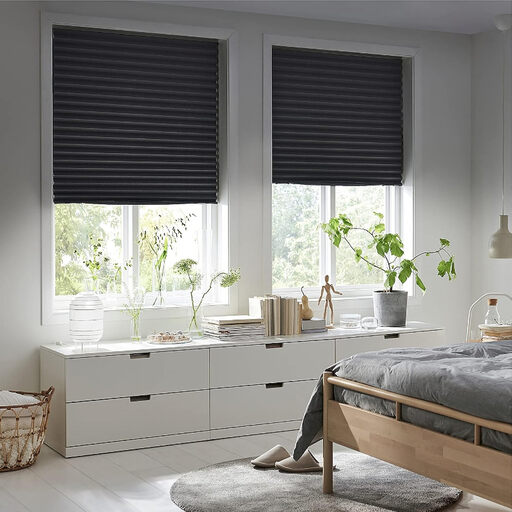
Why it suits this type of buyer: The anthracite finish is a good choice for studies, living rooms or doors where you want a stronger contrast.
The clamp fitting avoids drilling holes. Before buying, though, check your frame measurements, the level of moisture it will be exposed to and whether your window is a roof window, as these are not suitable.
100 × 120 cm, anthracite polyester fabric, adjustable operation, plus privacy and sun protection.
We’ve put together a complete, regularly updated list of products that meet these strict selection criteria and fully comply with the safety regulations in force in the EU.
With a Klemmfix pleated blind, clamp brackets are attached to the top and bottom of the window frame. Some styles may also come with adhesive strips. The frame must be clean and dry, and the brackets must be the right size for it. Before hanging the blind fully, check that you can still open and tilt the window all the way.
Its lifespan depends on the fabric quality, how often it’s used, exposure to sunlight and how securely the brackets are fitted. Moving the blind gently and regularly can help it last longer. Check adhesive brackets from time to time to make sure they’re still secure. If the blind is coming away from the frame or the cords are damaged, don’t use it again until the fitting has been replaced.
A no-drill clamp roller blind or pleated blind may suit a balcony or internal door, provided the measurements, door frame and clearance are right. Make sure there’s enough space around the door handle and that the blind won’t hit the wall or furniture when the door opens. A secure fitting is especially important for doors that get a lot of use.