Joybuy Insights

No-Drill Pleated Blinds Buyer's Guide and Common Mistakes

The search for the right sun or privacy protection for rental apartments or newly designed rooms often ends with a central challenge: How do you install roller blinds or pleated shades without damaging the window frame with drill holes? A no-drill pleated blind seems like the ideal solution. However, the market is flooded with products of widely varying quality. Many buyers only realise after installation that the clamp brackets are wobbly, the fabric doesn't truly provide a blackout effect, or the dimensions don't fit despite careful measuring.

This guide will show you what to look for to avoid common purchasing pitfalls. We focus on the crucial technical features and help you make an informed decision that perfectly matches your requirements.

The Typical Pitfalls of Buying: What's Often Overlooked

Before we turn to the solutions, it's important to know the most common problems that lead to frustration and unnecessary expenses:

  1. Unstable Mounting Systems: Cheap clamp brackets made of brittle plastic or with insufficient tension give way after a short time. The blind hangs crookedly or, in the worst-case scenario, falls down, especially with frequent use or on windows that are often tilted.
  2. Misleading Fabric Descriptions: A blind advertised as "blackout" often still lets a significant amount of light through and is hardly suitable for a bedroom. The differences between translucent, dim-out, and blackout are substantial but are often communicated unclearly in marketing.
  3. Errors from Inaccurate Measurements: Many measuring instructions are imprecise. If you order based on the glass width alone, light will seep in at the sides. If you order too wide, the blind will interfere with the window handle. This is one of the main reasons for returns.

Crucial Factors Before You Buy: Mounting System, Fabric, and Correct Measurements

To avoid these problems, you should carefully examine three core parameters. These determine the functionality, durability, and fit of your new privacy screen.

The Mounting System: Clip-Fix, Adhesive, or Suction Cup?

Drill-free installation relies mainly on three techniques. The choice depends on your window type and your usage habits.

  • Clip-Fix System (Clamp Brackets): This is the most common method for a no-drill roller blind. Adjustable brackets are clamped directly onto the window sash. It is crucial to measure the frame thickness (rebate depth) of your window. Most systems are designed for uPVC windows with a thickness of 15 to 23 mm. On high-quality clip-fix window blind models, the brackets are made of robust metal or reinforced plastic and provide a secure hold.
  • Adhesive Mounting: With this method, brackets are attached to the window frame using special adhesive strips. This method is suitable for windows that cannot be opened or when clamp brackets are not desired for aesthetic reasons. The quality of the adhesive is paramount here. The surface must be absolutely clean and free of grease before application.
  • Suction Cup System: This flexible option is less common and is often used for special applications such as balcony doors, smooth tiles, or even skylights (with limitations). The holding power depends heavily on the smoothness and cleanliness of the surface.

Fabrics and Their Function: From Privacy to Complete Blackout

The fabric's designation reveals its primary function. Pay close attention to these distinctions:

  • Translucent / Sheer: Provides a light privacy screen for windows but allows plenty of daylight into the room. Ideal for living rooms or kitchens where brightness is desired.
  • Dim-Out / Room-Darkening: Significantly reduces light ingress and protects against prying eyes. However, the room does not become completely dark. A good choice for home offices or living areas.
  • Blackout: A blackout roller blind blocks almost 100% of the light. This is achieved through a special coating on the back of the fabric (often silver or white). This option is essential for bedrooms and children's rooms.
  • Specialty Fabrics: A thermal roller blind has a reflective coating that repels heat in the summer and insulates against cold in the winter, which can contribute to energy efficiency. A honeycomb blind goes a step further: its honeycomb-shaped air pockets offer excellent thermal and acoustic insulation. A no-drill double roller blind (also called a zebra blind) combines transparent and opaque stripes to regulate light ingress seamlessly.

Measuring Correctly: The Foundation for a Perfect Fit

To avoid a bad purchase, follow this simple guide:

  1. Measure the Width: Measure the width of the glass pane (from one seal to the other).
  2. Add Overlap: Add approx. 2 cm to this measurement on each side to minimise light leakage from the sides. The order width would therefore be: Glass Width + 4 cm.
  3. Check for Obstructions: Ensure that the total width determined this way does not interfere with the window handle or other protruding parts. The fabric width is typically about 4 cm narrower than the specified total width of the blind (including the bracket).
  4. Measure the Height: Measure the height of the entire window sash. Choose the next largest standard size.

Recommended Options Across Categories

Here are some recommendations tailored to specific needs and living situations that purposefully avoid the pitfalls mentioned.
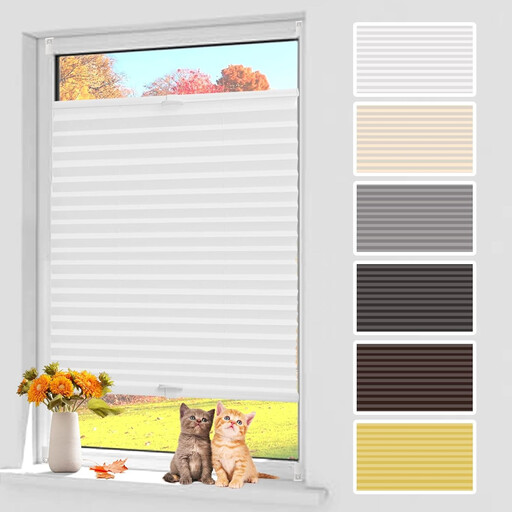
MATCH FOR: Budget-Conscious Renters
Dream-seeker Pleated Blind 80x120cm White - No-Drill Clamp/Stick Mount, Blackout 1 Piece

Dream-seeker Pleated Blind 80x120cm White - No-Drill Clamp/Stick Mount

Why This Fits Their Persona: Ideal for renters looking for a straightforward and cost-effective solution for standard windows. The no-drill installation protects the window frame, and the light-filtering property provides sufficient privacy for living spaces without completely darkening the room.

How It Avoids the Trap

The product offers a dual mounting system (clamp or adhesive), providing flexibility for different window types and bypassing the problem of unstable fixings when applied correctly. It is clearly declared as light-filtering, not blackout.

Key Advantage & Pros

Very simple and fast tool-free installation. The pleated blind can be infinitely adjusted in height and offers a clean, modern appearance.
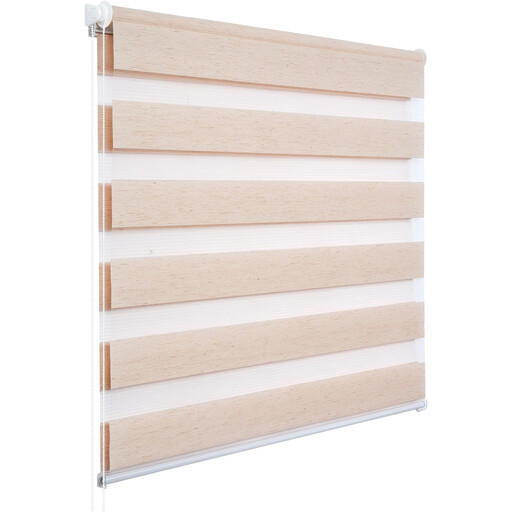
MATCH FOR: Design and Comfort Enthusiasts
WOLTU Double Roller Blind Clip Fix without Drilling Wood Look Natural

WOLTU Clip-Fix Double Roller Blind, Wood Look

Why This Fits Their Persona: For users who value aesthetics and flexible light control. The double roller blind design allows for a seamless transition from sheer to opaque, and the wood-look finish lends a warm, high-quality feel to the room.

How It Avoids the Trap

This model avoids the trap of unclear fabric descriptions by focusing on its core function—variable light control. The chain pull mechanism is designed for durability, preventing the jamming common in cheaper models.

Key Advantage & Pros

Infinitely adjustable light and privacy levels thanks to two parallel fabric panels. The chain pull can be flexibly mounted on the left or right side.

MATCH FOR: Maximum Functionality
WOLTU Honeycomb Pleated Blind without Drilling Blackout Thermal

WOLTU No-Drill Blackout Thermal Honeycomb Blind

Why This Fits Their Persona: Perfect for bedrooms, children's rooms, or rooms with intense sun exposure. This honeycomb blind not only provides effective blackout but also offers thermal insulation and a sound-dampening effect for maximum living comfort.

How It Avoids the Trap

It solves the problem of misleading "blackout" claims. The honeycomb structure with an internal coating ensures a verifiable light blockade and offers real added value through heat and sound insulation.

Key Advantage & Pros

Combines three functions in one product: blackout, thermal insulation (can reduce energy costs), and sound dampening. Operation via top and bottom handles allows for flexible positioning.

Looking for more options?

We've compiled a complete, up-to-date list of products that fully meet these strict selection criteria and German safety regulations.

Frequently Asked Questions (FAQ)

How reliable are clamp brackets on a no-drill pleated blind?

When installed correctly on a suitable window frame (usually uPVC, with the right thickness), high-quality clamp brackets are very reliable for daily use. Ensure the brackets are firmly seated and do not wobble. Most systems are designed for frequent tilting and opening of windows.

What is the difference between a blackout blind and a dim-out blind?

This distinction is crucial. A dim-out blind significantly reduces light ingress but allows a certain degree of brightness through, similar to a cloudy day. A blackout blind is equipped with a light-impermeable layer and blocks almost all incoming light, resulting in near-complete darkness in the room.

Can I also attach a clip-fix blind to a wooden window?

Caution is advised here. Clip-fix systems are primarily designed for modern uPVC windows. On painted or varnished wooden windows, the clamps can leave pressure marks or damage the surface. Some manufacturers explicitly advise against use on wooden windows. Always check the product description or consider alternative no-drill methods like adhesive brackets, but test them on an inconspicuous area first.


Try These Selected Options