
Lieferung heute & morgen

Qualitätsgarantie

Willkommens-Angebote freischalten: KOSTENLOSE Lieferung | Bis zu 80 % RABATT | Kostenlose 30-Tage-JoyPlus-Testphase
App herunterladen
A no-drill roller blind is a practical solution for renters and homeowners seeking a fast, damage-free option for privacy and sun protection. Installation is straightforward, involving clamping or adhering the blind directly to the window frame. However, the market is saturated with products of widely varying quality. Before making a decision, it's crucial to understand the common pitfalls that can lead to a poor purchase.
This guide will show you what to look for to find a durable and functional solution. We'll focus on three critical points that are often overlooked:
To avoid these problems, you should focus on three core technical aspects. These determine the functionality and longevity of your new roller blind.
The attachment method is the central feature of a no-drill roller blind. The most common systems are clamp and adhesive brackets.
The function of your roller blind is determined by its fabric. There are four main levels:
In addition to the classic roller blind, there are specialized variants that offer different functional advantages.
Based on these criteria, we have identified several products that represent a suitable solution for specific user profiles.

Why This Fits Their Persona: Ideal for rental apartments where structural changes are not permitted. The combination of clamp and adhesive mounting offers flexibility for various window types and ensures residue-free removal.
The dual mounting system (clamping and adhesive) provides a stable alternative if the clamp brackets don't fit the window frame perfectly, thus minimizing the risk of damage.
Offers a blackout function and simple, tool-free installation. The pleated design allows for flexible positioning for targeted privacy.
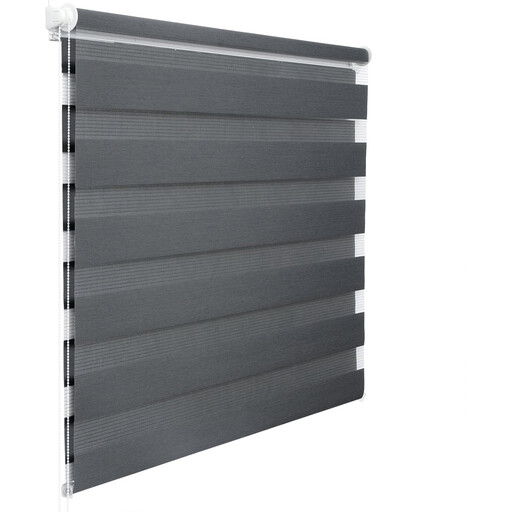
Why This Fits Their Persona: Perfect for living rooms or offices where lighting conditions vary throughout the day. The dual roller (Zebra) principle allows for precise control of light incidence without having to fully raise or lower the blind.
The product description explicitly states that the fabric width is approx. 4-5 cm narrower than the total width. This helps the user order the correct size and avoid light gaps.
Infinitely variable light control through alternating transparent and opaque fabric panels. The chain hoist can be flexibly mounted on the left or right.

Why This Fits Their Persona: Designed for bedrooms or children's rooms where maximum darkness is crucial for restful sleep. The additional thermal function helps regulate room temperature.
This blind bypasses the "room-darkening" fallacy with a silver-coated backing that, according to the manufacturer, provides 100% blackout. The OEKO-TEX certificate also indicates a tested material standard.
Effective blackout and thermal insulation. The cordless design increases safety in households with children and pets.
We've compiled a complete, up-to-date list of products that fully meet these strict selection criteria and safety regulations.
Correct measurements are crucial to avoid light gaps. Follow these steps:
With correct installation and the choice of a product with high-quality clamp brackets, the window seal should not be damaged. The brackets are designed to fit onto the frame without excessively compressing the seal. Be sure to tighten the brackets only as much as necessary and not to exceed the maximum frame thickness specified by the manufacturer.
A dual roller blind (or no-drill blind in a broader sense) consists of two fabric panels that can be moved against each other to control the light incidence. A no-drill pleated blind consists of a single, folded fabric panel. The main advantage of a pleated blind is often its flexibility, as it can frequently be opened from both the top down and the bottom up, allowing for very targeted placement of the privacy screen.