
Lieferung heute & morgen

Qualitätsgarantie

Willkommens-Angebote freischalten: KOSTENLOSE Lieferung | Bis zu 80 % RABATT | Kostenlose 30-Tage-JoyPlus-Testphase
App herunterladen
A no-drill roller blind can quickly add privacy and shade to rented homes, children’s bedrooms, bedrooms, offices and balcony doors. However, inaccurate measurements, unsuitable clamp brackets or exaggerated claims can often lead to the wrong purchase. It’s not just the design that matters: you need to consider the window frame, fitting method, fabric properties and how you want to control the light.
For many products, the stated width includes the entire assembly, including the brackets. This means the usable fabric area may be narrower. According to the product details, the fabric on the WOLTU Blackout Roller Blind is around 4 cm narrower than its overall width. If you want to cover as much of the window as possible, measure the glass and the space next to the window handle carefully.
A clip-on roller blind attaches to the top of the window frame. The frame thickness must be compatible with the brackets supplied with the model. Depending on the product, the suitable thickness may be 1–10 mm, 10–23 mm, 13–23 mm or 16–22 mm. Clip-on brackets are often unsuitable for wooden windows, roof windows and certain sliding windows. Check these details carefully before buying.
A blackout roller blind without drilling with a coated backing can significantly reduce the amount of light coming in. By contrast, a transparent or semi-transparent pleated blind filters the light while keeping the room bright. A day and night double roller blind combines adjustable transparent and opaque stripes, but it won’t necessarily provide complete blackout.
Clamp brackets are practical for rented homes because you don’t need to drill holes in the wall or window. However, you’ll need a suitable frame and enough clearance for the window handle. Suction cups are another option for smooth glass surfaces, such as for temporary use or vehicle windows. They may not stay firmly in place on dusty, wet or textured surfaces.
Before fitting, you should:
Don’t just take a rough measurement of the width and height with a tape measure. You’ll need to check:
If you’re choosing a blind for a window or door, check that it’s long enough for a balcony or patio door. For large areas, several narrower blinds may be more practical than one wide model.
A sun-shading roller blind with semi-transparent fabric is a good choice for living spaces where you want to keep the daylight. A privacy roller blind limits the view into your home without completely darkening the room. For bedrooms or media rooms, consider opaque fabrics.
Honeycomb pleated blinds have a folded, multi-layer structure. According to the product details, the fabrics on the WOLTU models mentioned here are made from 100% polyester. They’re designed for frames that are 10–23 mm thick and are adjusted using top and bottom handles. Any claims about reducing heat or noise should be understood as product features, not guaranteed savings or complete sound insulation.
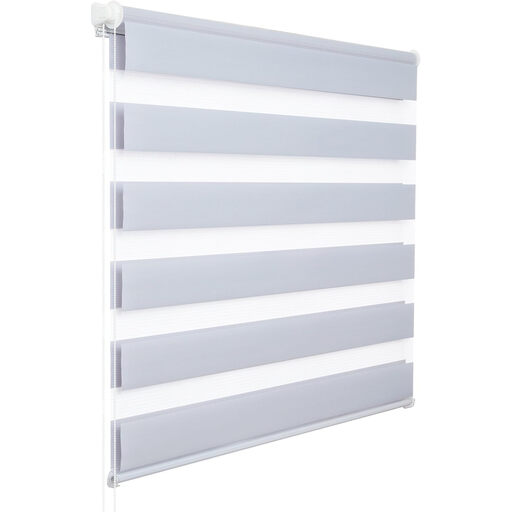
Why this product suits this profile: The combination of clip-on fitting and alternating fabric stripes lets you adjust light and privacy in living rooms or bedrooms.
The compatible frame thickness of 1–10 mm is clearly stated. This makes it easy to check before buying whether the clamp brackets will fit your window.
100% polyester fabric, left- or right-hand chain fitting, and stepless adjustment between light-filtering and opaque sections.

Why this product suits this profile: This model is designed for rooms where you want to reduce brightness, improve privacy and enjoy straightforward fitting.
According to the description, the stated product width includes the brackets. The compatible frame thickness of 16–22 mm is also specified.
According to the product details, 200 g/m² polyester with OEKO-TEX certification, a silver-coated backing and cord-free operation.

Why this product suits this profile: This honeycomb pleated blind is suitable for bedrooms, living rooms and studies when you want the flexibility to adjust it from both the top and bottom.
The compatible frame thickness of 10–23 mm is clearly specified. This lets you check compatibility before placing your order.
Double-layer polyester fabric, top and bottom handles, and clip-on fitting with no drilling.
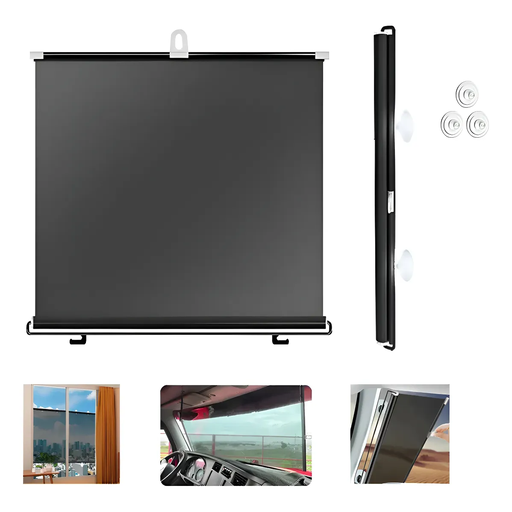
Why this product suits this profile: This extendable sunshade is designed for smooth vehicle windows and temporary fitting using suction cups or hooks.
Measure the actual window before buying. Suitability depends on more than just the vehicle model.
Automatic retraction, UV-resistant PVC according to the product details, and fitting that doesn’t permanently alter the vehicle.
We’ve put together a complete, regularly updated list of products that meet these strict selection criteria and fully comply with the safety regulations in force in the EU.
Dust your no-drill roller blind carefully on a regular basis, or clean it with a slightly damp cloth. Abrasive cleaners can damage coatings and polyester fabrics. If you have a chain-operated model, keep the operating chain out of children’s reach. Even with a cord-free no-drill window blind, keep small fitting parts out of reach during installation.
A thermal roller blind or honeycomb pleated blind can affect light and heat exposure. However, how much the room temperature actually changes also depends on the window area, glazing, orientation, ventilation and distance from the window. You can’t assume a specific level of energy saving.
How long it lasts depends on the fitting method, materials, operation and window frame. Choose clamp brackets that suit the frame thickness and check regularly that they’re secure. Suction cups need a clean, smooth and dry surface.
First measure the glass and frame width, as well as the height you want to cover. Then check whether the overall width, including the brackets, will interfere with the window handle or tilt function. If the fabric is narrower than the overall width, allow for the difference when measuring.
No. A manually operated roller blind doesn’t need electricity. It can reduce direct sunlight or change the level of privacy. Any effect on room temperature depends on the fabric, window, sunlight and fitting.