
Lieferung heute & morgen

Qualitätsgarantie

Willkommens-Angebote freischalten: KOSTENLOSE Lieferung | Bis zu 80 % RABATT | Kostenlose 30-Tage-JoyPlus-Testphase
App herunterladen
A no-drill roller blind is a practical solution for many homes, especially for renters. The ability to install privacy and sun protection without damaging walls or window frames is a crucial advantage. However, the market is saturated with products of widely varying quality and functionality. Misleading product descriptions or incompatible mounting systems often lead to disappointment and wasted money.
This guide will help you identify the most common pitfalls and make an informed decision. We focus on the objective criteria that truly matter.
The 3 Most Common Mistakes When Buying Drill-Free Blinds:
To avoid a purchasing mistake, you should evaluate three core aspects before making a decision. These determine the functionality, fit, and longevity of your new blind.
The most common method is the clamp-fit blind. Here, brackets are clamped directly onto the window sash. The crucial factor is the maximum window frame thickness the clamp bracket is designed for. Precisely measure the thickness of your window sash (excluding the rubber seal). Common systems are designed for frame thicknesses from 10 mm to 23 mm. Carefully check the product specifications to ensure the brackets fit your window. An alternative is mounting with adhesive strips, which requires a very clean, smooth surface and can leave residue upon removal.
A blind's function is largely determined by its material. There are four main levels:
A flexible alternative is the no-drill dual roller blind (also known as a zebra blind). It consists of two parallel fabric layers with alternating transparent and opaque stripes. By shifting the layers, you can seamlessly adjust the light level. A no-drill pleated blind also offers high flexibility with its folded structure and the ability to be adjusted from both the top and bottom.
The right size is crucial for both function and aesthetics. Follow this rule:
Instead of making blanket recommendations, we are presenting products tailored to specific user profiles.
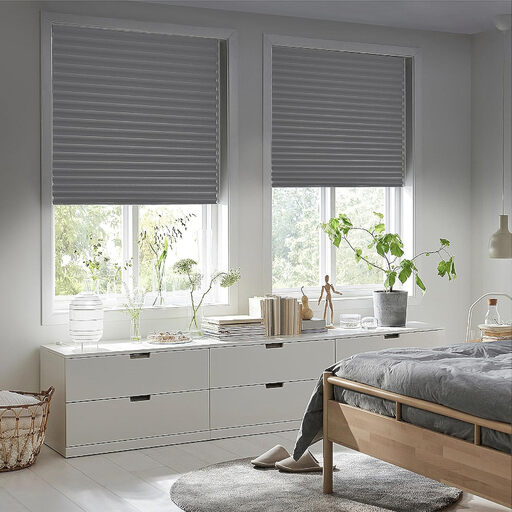
Why it's a good fit: Ideal for renters seeking a straightforward, flexible, and residue-free solution for standard windows. The pleated blind can be adjusted from both the top and bottom, offering variable privacy for everyday life in a rental.
The product offers both clamp and adhesive mounts and provides clear sizing instructions (glass width + 4 cm), which minimises the risk of a purchasing error.
The ability to position it seamlessly from the top and bottom offers more flexibility than a conventional roller blind. The material is described as moisture-resistant, which simplifies cleaning.
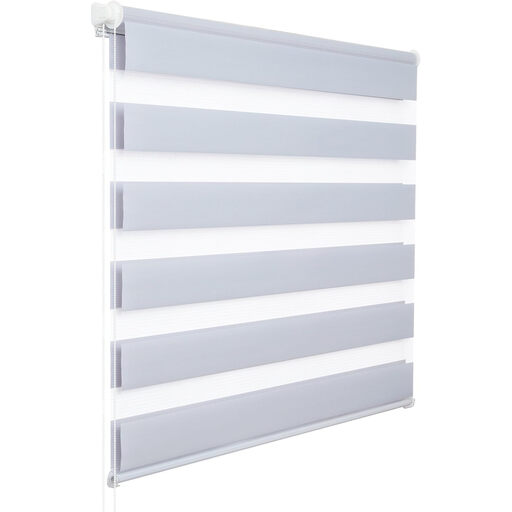
Why it's a good fit: For users who value aesthetics and flexible light control. The dual roller blind allows for a seamless transition from transparent to opaque and fits into living rooms, home offices, or kitchens with its modern design.
The product clearly defines its function (alternating between light-filtering and opaque), preventing false expectations of a complete blackout. The clamp-fit mount is designed for a specific frame thickness (1-10 mm).
The alternating panels of 100% polyester fabric allow for precise control over privacy and light. The chain mechanism can be installed on either the left or right side.
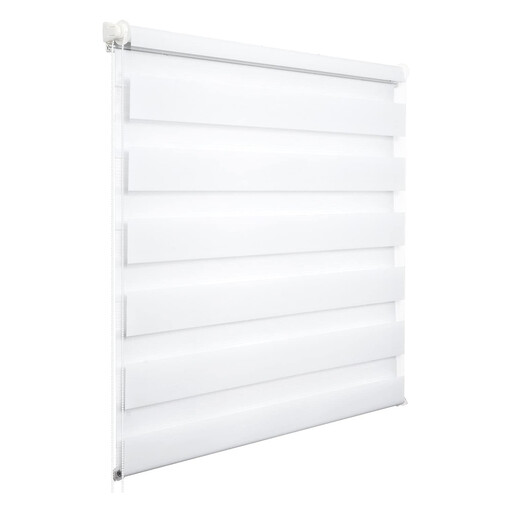
Why it's a good fit: For individuals needing a high degree of room darkening in a bedroom or nursery. Although it's a dual roller blind, it can significantly reduce incoming light by overlapping the opaque stripes, creating a tranquil atmosphere.
The product description mentions a seamless adjustment "from light-filtering to opaque," which sets realistic expectations. The clamp brackets are specified for a common frame thickness of 13-23 mm.
According to the manufacturer, the 100% polyester material is processed with hot-cut technology to prevent fraying. It is suitable for humid environments and is easy to maintain.
We have compiled a comprehensive, up-to-date list of products that meet strict selection criteria and quality standards.
Yes, with correct installation and a compatible window frame thickness, clamp-fit systems provide a reliable hold. The brackets are clamped onto the window sash and secured by the blind's tension. It is crucial that the frame thickness specified in the product description matches your window and that the installation instructions are followed precisely.
First, measure the width of the glass pane itself. Add your desired overlap to this measurement on both sides (typically 2 cm per side) to prevent light gaps. This result is your order width. Ensure that the blind will not obstruct the window handle. For the height, measure the entire height of the window sash. Choose a blind with a length that is at least equal to this measurement.
A blind labelled as "blackout" significantly reduces light ingress but rarely achieves 100% darkness like an external shutter. Narrow light gaps will inevitably appear at the sides of the blind. However, for most use cases, such as sleeping at night, the level of darkness is perfectly adequate. For a more complete blackout, models with side guide rails can be an option, but these often require a more complex installation.