
Lieferung heute & morgen

Qualitätsgarantie

Willkommens-Angebote freischalten: KOSTENLOSE Lieferung | Bis zu 80 % RABATT | Kostenlose 30-Tage-JoyPlus-Testphase
App herunterladen
As a Joybuy Product Recommendation Officer, my role is to provide you with clear, objective information. If you're looking for a hassle-free solution for privacy and sun protection without damaging window frames or walls, a no-drill roller blind is a practical choice. This installation method offers a flexible, damage-free alternative, especially in rented flats where structural changes are often prohibited.
This article serves as a guide to help you understand the different types and features, enabling you to make an informed decision. We will introduce a selection of models and provide useful tips for your purchase.
Choosing the right model depends on your individual needs for light control, privacy, and functionality. Here are three key points to consider.
A blind's functionality is largely determined by its fabric. Two common variants are the dual roller blind and the blackout roller blind.
The most common method for a clip-on roller blind is the clamp-fit system. This involves simply hanging adjustable clamp brackets over the window sash. Precise measurement is crucial to ensure the blind fits perfectly.
Most modern no-drill window blinds are made of 100% polyester. This material is low-maintenance, retains its shape, and is durable. A dry cloth or a soft brush is usually sufficient for cleaning. Operation is typically via a chain drive (side-pull blind), which can be mounted on the left or right as needed, allowing for flexible handling.
Based on functionality and use cases, we have compiled a selection of different models that can be installed without drilling.
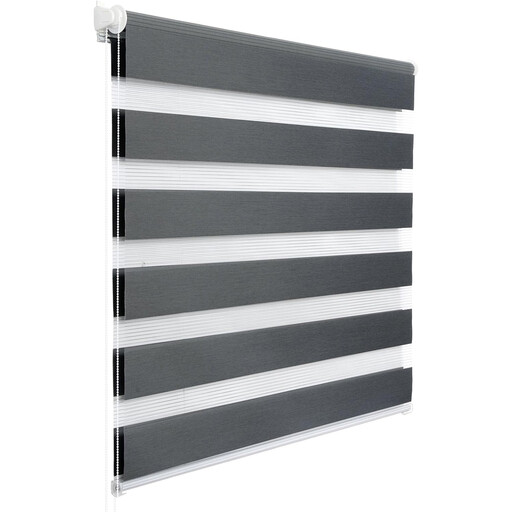
Why it stands out: This Zebra blind offers exceptionally flexible light control thanks to its alternately woven fabric panels. It combines the function of a privacy screen with the ability to make the room bright or dim, depending on the sun's position and your needs.
Advantages:
Who it's for: Individuals looking for a flexible and modern privacy and sun protection solution in living rooms, offices, or kitchens that can adapt to varying light conditions.
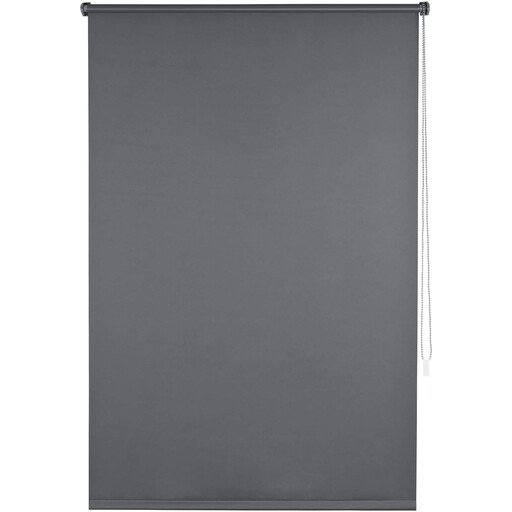
Why it stands out: This blackout blind features a special aluminium coating on the back, which, according to the manufacturer, blocks nearly 100% of light. The coating also provides thermal insulation.
Advantages:
Who it's for: Users who need maximum blackout for bedrooms, children's rooms, or home cinemas and also want to benefit from the energy-saving properties of a thermal blind.
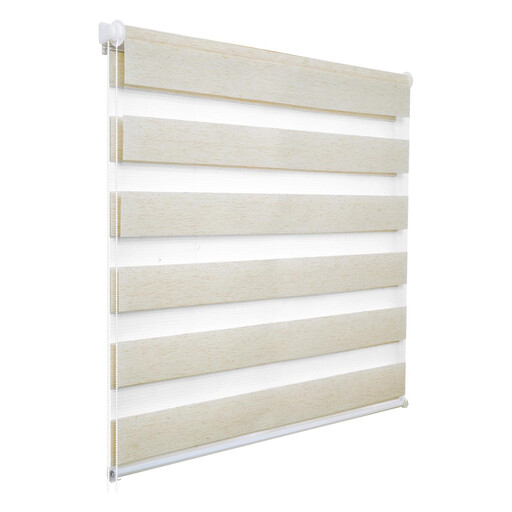
Why it stands out: This model combines the modern functionality of a dual roller blind with a warm wood-effect finish. It offers an attractive alternative to solid-colour designs and blends harmoniously into living concepts with natural elements.
Advantages:
Who it's for: Users who appreciate the practical benefits of a dual roller blind but prefer a look that exudes warmth and naturalness, integrating well into classic or nature-inspired interior styles.
Couldn't find the right model for your window, or do you need a different size? You can find an expanded product selection in our van side window blinds category.
A clamp-fit roller blind is a no-drill window blind that is attached directly to the window sash using adjustable clamp brackets. The brackets are simply clipped onto the top edge of the window frame and tightened. This method is particularly suitable for renters as it leaves no permanent damage, such as drill holes, and the blind can be easily removed when moving.
First, measure the width of the window pane. To prevent light from seeping in at the sides, the fabric should overlap the pane by about 4 cm (2 cm per side). The order width of the blind is the sum of the fabric width and the width of the side bracket mechanism (usually an additional 3-4 cm). Make sure the total width of the blind does not interfere with the window handle. Also, measure the thickness of the window sash to ensure the clamp brackets will fit (typically 1.3-2 cm).
Yes, many blackout blinds, referred to as thermal blinds, have a special coating on the back (often silver-coloured). This reflective layer can reduce solar radiation and thus heat build-up in the summer. In the winter, it acts as an additional insulating layer against the cold window pane and can help reduce heat loss.