
Lieferung heute & morgen

Qualitätsgarantie

Willkommens-Angebote freischalten: KOSTENLOSE Lieferung | Bis zu 80 % RABATT | Kostenlose 30-Tage-JoyPlus-Testphase
App herunterladen
As a renter or homeowner, you often face the challenge of installing effective sun and privacy protection without damaging window frames or walls. Drill holes are frequently forbidden in rental properties, and even in your own home, you may want to avoid permanent alterations. A no-drill roller blind offers a practical and straightforward solution.
This article serves as a guide. It introduces various drill-free systems and presents a selection of products to help you decide on the perfect privacy and sun protection for your windows or balcony door.
Before you make a decision, there are several technical aspects to consider. The right choice depends on your window type, the desired level of darkness, and specific room requirements.
The most common systems for no-drill installation are clamp and suction cup mounts.
The functionality of a roller blind is largely determined by the material used.
Precise measurement is crucial for a perfect fit and an attractive look. Measure the width of the glass pane and add about 2 cm on each side to minimise light gaps on the sides. The order width of the blind usually refers to the total width including the brackets; the fabric itself is usually about 4 cm narrower. For sun protection for a balcony door, measure the height of the entire window sash to ensure complete coverage.
Here is a compilation of different models that stand out for their specific features and mounting types.
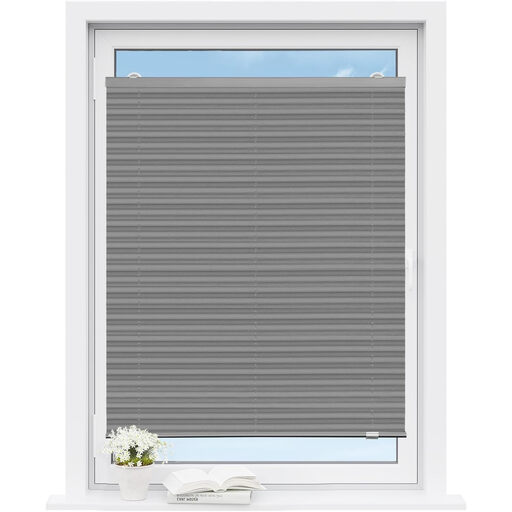
Why it stands out: The suction cup mounting makes this pleated blind exceptionally versatile. It can be attached directly to the glass of standard windows, skylights, or balcony doors without touching the window frame.
Advantages:
Who is it for? For users seeking a solution for fixed-pane windows, sloped roofs, or conservatories where clamp mounting is not an option. Also practical for temporary installations.
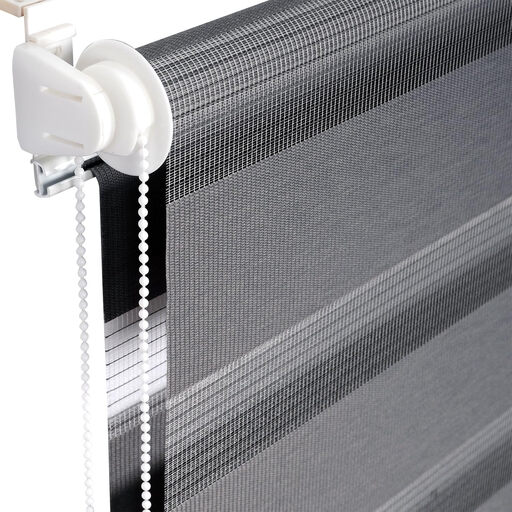
Why it stands out: This double roller blind combines easy clip-on installation with the functionality of a zebra blind. The alternately woven fabric panels allow for precise control over light and privacy.
Advantages:
Who is it for? Ideal for living and work spaces where the light incidence needs to be flexibly adjusted throughout the day without having to fully open or close the blind.
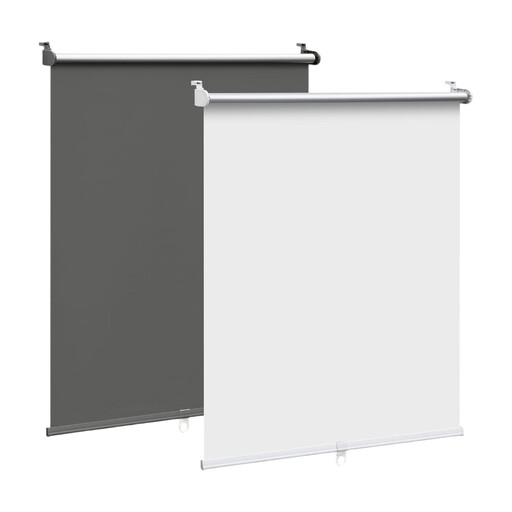
Why it stands out: This blackout roller blind provides complete darkness and a thermal insulation function thanks to its silver coating. The cordless design enhances safety, especially in households with children.
Advantages:
Who is it for? An excellent choice for bedrooms, children's rooms, or other spaces where complete darkness and a stable room temperature are desired.
Haven't found the right solution for your privacy screen for your window without drilling yet? There is a wide variety of other models and designs that meet different requirements. From special widths to other fabrics and colours—the selection is vast.
? Explore more curtains and blinds in our category overview
The stability of a drill-free roller blind depends heavily on the mounting system and correct installation. Clip-on blinds provide a very secure hold on a compatible frame thickness, as they firmly grip the window sash. With suction cup systems, a clean, smooth, and grease-free glass surface is crucial for lasting adhesion. When installed properly, both systems are reliable for daily use.
Most clip-on systems are designed for modern uPVC windows with a standard frame depth. On wooden windows or very old window models, the shape of the frame or the material surface can compromise the clamping effect. Some manufacturers, like WOLTU, explicitly state in their product descriptions that their clip-on brackets are not suitable for wooden windows. It is advisable to check the manufacturer's specifications carefully.
The main difference lies in the construction and folding of the fabric. A roller blind consists of a smooth panel of fabric that is rolled up and down on a tube. A pleated blind, on the other hand, consists of a pre-folded (pleated) fabric that is compressed and expanded like an accordion. Pleated blinds are often more flexible in their positioning and can be opened from top to bottom as well as from bottom to top, allowing for highly variable light and privacy control.