
Lieferung heute & morgen

Qualitätsgarantie

Willkommens-Angebote freischalten: KOSTENLOSE Lieferung | Bis zu 80 % RABATT | Kostenlose 30-Tage-JoyPlus-Testphase
App herunterladen
As a Joybuy Product Recommendation Officer, I see countless people searching for a practical solution for privacy and sun protection, especially for rental apartments. A no-drill roller blind is often the first choice. However, the market is flooded with products of widely varying quality. Misleading claims and inadequate product information can quickly lead to a purchase you'll regret.
This guide will help you navigate the common pitfalls and make an informed decision. We'll focus on the objective criteria that truly matter.
Before you spend any money, you should be aware of the three most common issues with low-quality products, which often only become apparent after installation.
To avoid a bad purchase, you should focus on three core technical features. These determine the fit, function, and durability of your new privacy screen.
The most common method is the clamp-fit roller blind. Here, brackets are clamped directly onto the window sash. The crucial factor is the permissible frame thickness (also known as rebate depth). Measure the thickness of your window sash (excluding the seal) and compare it with the manufacturer's specifications (e.g., "suitable for frames from 13–23 mm"). An incorrect fit will result in an unstable installation. An alternative, especially for non-opening windows, is adhesive mounting. For this, an absolutely clean and grease-free frame surface is essential for a permanent hold.
The choice of fabric determines the primary benefit. Here are the most common types:
A common mistake happens during measuring. Pay close attention to the distinction between fabric width and order width (total width).
Pro Tip: Measure the width of the glass pane. Add about 2 cm on each side to minimise light gaps. The resulting total width should correspond to your order width. Make sure the blind does not interfere with the window handle.
Based on the criteria above, we have identified some products that are well-suited for different user profiles.

Why This Fits Their Persona: Ideal for renters seeking a straightforward, functional, and residue-free removable solution. This clamp-fit pleated blind provides solid blackout functionality for bedrooms or home offices without requiring a large budget. Installation is tool-free and quick.
The product offers two clearly defined mounting options—clamp and adhesive brackets—thus avoiding the problem of unstable universal mounts. Its function is declared as 'Blackout,' which sets a clear expectation.
Very simple, tool-free installation. Provides effective blackout for standard needs in living rooms and bedrooms.
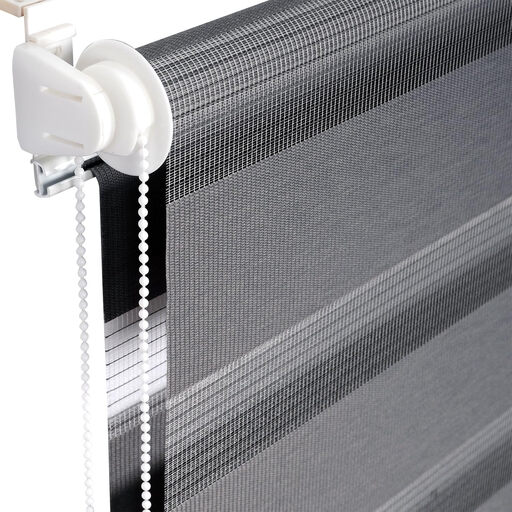
Why This Fits Their Persona: For users who value aesthetics and flexible light control. This dual roller blind allows for precise control over brightness and privacy with its two fabric layers, adding a modern design accent to the room.
According to the manufacturer, the fabric is 100% polyester with hot-cut edges, which counteracts the typical fraying. The chain pull mechanism offers more reliable and precise operation than simple spring mechanisms.
Seamless light regulation via alternating transparent and opaque stripes. The chain pull can be flexibly mounted on the left or right side.
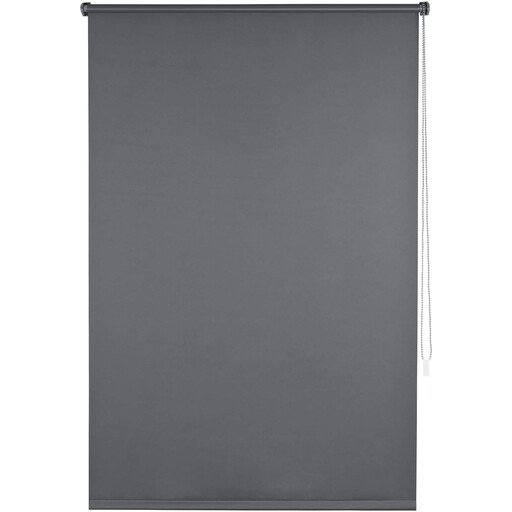
Why This Fits Their Persona: Perfect for shift workers, families with young children, or home cinema owners who need maximum light blockage. This thermal blind is specifically designed for high blackout performance and additional thermal insulation.
This product directly addresses the 'false blackout' pitfall: according to the manufacturer, a 'Light-Stop aluminum coating' ensures a blockage of nearly 100% of light. This is an objective, verifiable feature.
Offers very high blackout performance. The thermal coating can help regulate room temperature and potentially reduce energy costs.
We have compiled a complete, up-to-date list of products that fully meet these strict selection criteria and quality standards.
Durability depends on the quality of the clamp brackets and correct installation. High-quality brackets made of sturdy plastic or metal, mounted on a compatible window frame (correct thickness), can last reliably for several years. It is advisable to check the tension of the brackets periodically and tighten them if necessary.
Many manufacturers advise against using clamp brackets on wooden windows. The clamps are designed for the specific profiles of modern uPVC or aluminium windows and could damage the paint or surface of a wooden frame. For wooden windows, adhesive solutions or, if permitted, traditional screw mounting are often better suited. Always check the manufacturer's specific recommendations.
Most fabrics can be gently dusted with a soft brush or a vacuum cleaner on its lowest setting with a brush attachment. For light stains, a slightly damp cloth is often sufficient. Avoid aggressive cleaning agents or completely soaking the fabric, as this could damage the material, the coating, or the pleats (in the case of a pleated blind).