Joybuy Insights

No-Drill Roller Blinds: How to Avoid 3 Common Buying Mistakes

As a Joybuy Product Recommendation Officer, I see countless options for privacy and sun protection every day. The no-drill roller blind is an especially popular solution for renters and anyone seeking practicality. However, the market is flooded with products of widely varying quality. Misleading claims often lead to frustration and wasted money.

This buyer's guide will walk you through the three most common pitfalls when buying a clamp-on roller blind and explain which technical features to look for to find a durable, functional solution for your windows.

The Hidden Flaws: 3 Traps to Be Aware Of

Many roller blinds look great at first glance, only to reveal their weaknesses after just a few weeks. Watch out for these three typical problems to avoid a bad purchase.

  1. Unstable Clamp Brackets: The most common annoyance is cheap plastic brackets. They often don't fit the specified window frame thickness, lose their tension after a short time, or simply break. The result: the blind hangs crooked, slips, or falls off every time you tilt the window.
  2. Inferior Fabrics: A roller blind is meant to protect from sun and prying eyes. However, many budget-friendly fabrics fade quickly under UV exposure, start to fray at the edges, or fail to provide the promised level of blackout. A so-called no-drill blackout blind that only provides shade completely misses the point.
  3. Misleading Width Specifications: A classic mistake happens during measurement. Manufacturers sometimes list the total width of the blind, including the mounting hardware, not the fabric width itself. If you buy such a blind, you'll end up with unsightly light gaps on the sides of the window pane, significantly compromising both privacy and sun protection.

What Really Matters: The Decisive Buying Criteria

To avoid these issues, you should check three core parameters before buying. These define the quality and fit of your new roller blind.

1. Mounting System: Clamp-Fit, Adhesive, or Suction Cup?

The mounting method is the heart of any no-drill roller blind. The most common type is the clamp-fit roller blind.

  • Clamp Brackets (Clamp-On Blinds): These fittings are clamped directly onto the window sash. The crucial detail here is the adjustable clamping range, which must match the thickness of your window sash (usually between 10 and 25 mm). High-quality systems use sturdy, adjustable brackets that guarantee a secure fit without damaging the frame. They are suitable for most uPVC windows that open, but not for wooden windows or fixed-glazed elements.
  • Adhesive Mounting: An alternative that also requires no drilling. With this method, brackets are attached to the window frame using special adhesive strips. A clean, grease-free surface is essential for an optimal hold.
  • Suction Cups: This option is less common and primarily intended for smooth glass surfaces, such as on skylights or a fixed roller blind for a balcony door. The holding power can vary depending on the surface and temperature.

2. Fabric Type and Light Control: From Privacy to Blackout

The fabric determines how much light enters the room and how much privacy you have.

  • Transparent/Light-Filtering: Offers a basic privacy screen for your window while letting in plenty of daylight. Ideal for living areas where brightness is desired.
  • Opaque: Completely shields from curious onlookers but still allows diffuse light to pass through. A great choice for bathrooms or offices.
  • Blackout: These fabrics often have a special coating on the back (e.g., silver or matching the fabric colour) that blocks almost all light. Essential for bedrooms and children's rooms.
  • No-Drill Double Roller Blind (Zebra Blind): This clever design combines alternating transparent and opaque fabric panels. By shifting the two layers, you can seamlessly adjust the light level—from nearly transparent to completely opaque.

3. The Right Measurements: Fabric Width Over Total Width

Measure precisely to avoid light gaps. The rule of thumb is:

  • Width: Measure the width of the glass pane and add about 2 cm to each side. The order width should therefore be approximately 4 cm wider than the glass pane. Make sure the fabric can pass by the window handle. Always check the product description to see if the specified width is the fabric width or the total width.
  • Height: Measure the height of the entire window sash. Choose the next largest standard height.

Recommended Products for Every Need

Based on the quality criteria mentioned, we have identified several products that offer a suitable solution for specific user profiles.
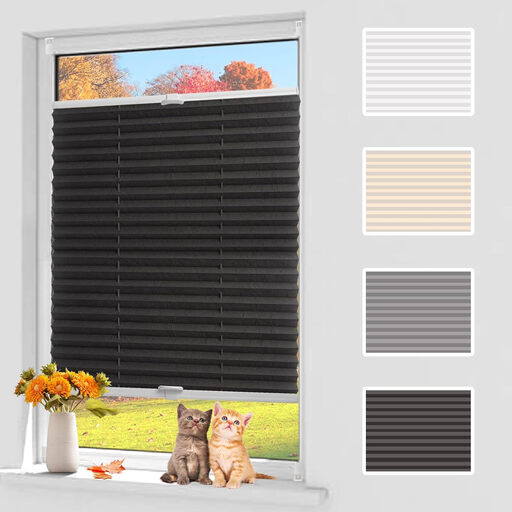
MATCH FOR: Budget-Conscious Renters
Dream-seeker Pleated Blind 70x140cm Anthracite - No-Drill Clamp/Stick Mount, Blackout 1 Piece

Dream-seeker Pleated Blind 70x140cm Anthracite - No-Drill Clamp/Stick Mount

Why This Fits Their Persona: Ideal for students or a first apartment. This clamp-fit pleated blind offers a straightforward and affordable solution for standard windows. It combines privacy with easy handling without breaking the bank.

How It Avoids the Trap

The product comes with a clamp-fit system designed for common window frame thicknesses, thus avoiding the trap of unstable brackets.

Key Advantage & Pros

Freely adjustable from both the top and bottom for flexible light control. Moisture-resistant fabric, also suitable for kitchens or bathrooms.
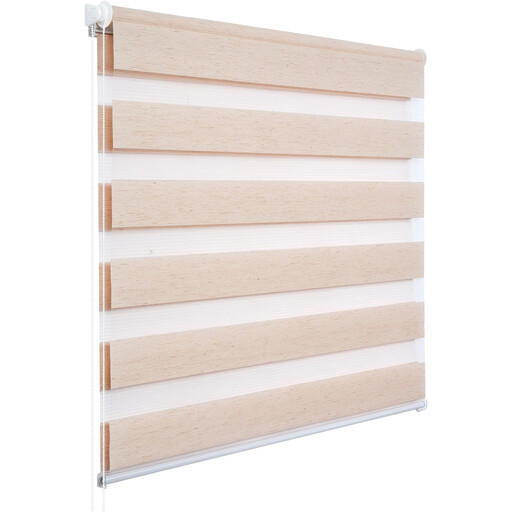
MATCH FOR: Design-Conscious Users
WOLTU Double Roller Blind Clip Fix without Drilling Wood Look Natural

WOLTU Double Roller Blind Clip Fix without Drilling Wood Look Natural

Why This Fits Their Persona: For anyone who wants to combine functionality with warm aesthetics. This wood-look Zebra blind blends harmoniously into modern and classic interior styles while offering flexible light control.

How It Avoids the Trap

The fabric is high-quality, and the wood look is a design feature that goes beyond pure function, avoiding the trap of functional but low-quality materials.

Key Advantage & Pros

Seamlessly adjust light and privacy with two parallel fabric panels. The chain pull can be flexibly mounted on the left or right side.
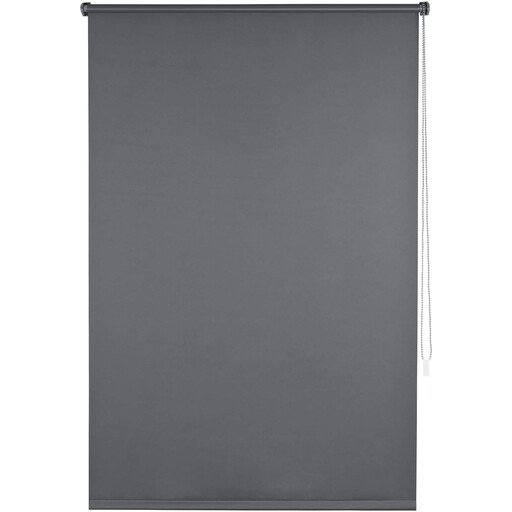
MATCH FOR: Those Seeking Total Darkness
EUGAD Blackout Roller Blind without Drilling Thermal Blind

EUGAD Blackout Roller Blind without Drilling Thermal Blind

Why This Fits Their Persona: For people who need maximum darkness in a bedroom or nursery. This blind is specifically designed for blackout purposes and offers an additional benefit with its thermal coating.

How It Avoids the Trap

It bypasses the "fake" blackout blind trap with a special aluminium coating on the back that, according to the manufacturer, blocks nearly 100% of light.

Key Advantage & Pros

The thermal coating reflects sun rays in the summer and helps retain heat in the winter. The fabric width is clearly defined (approx. 4 cm narrower than the order width), which prevents measurement errors.

Looking for more options?

We have compiled a complete, up-to-date list of products that fully meet these strict selection criteria and all relevant safety regulations.

Frequently Asked Questions (FAQ)

How long does a clamp-fit roller blind last?

The lifespan of a clamp-fit roller blind depends heavily on the material quality and frequency of use. A model with sturdy metal or high-quality plastic brackets and a UV-resistant fabric can last for several years with normal use. Cheaper models with basic plastic parts may lose their tension after just one season.

Can I install a no-drill roller blind on a balcony door?

Yes, many clamp-fit systems are also suitable for balcony doors, as long as they are standard tilt-and-turn doors. It's important to measure the entire height of the door sash and select a blind of the appropriate length. For fixed-glazed side panels of a balcony door, models with suction cup or adhesive mounting can be an alternative.

What is the difference between a double roller blind and a Zebra blind?

There is no functional difference. The terms double roller blind and Zebra blind are used interchangeably to describe the same product type: a blind made of two parallel fabric panels with alternating transparent and opaque stripes. This design allows for flexible control of light.