
Lieferung heute & morgen

Qualitätsgarantie

Willkommens-Angebote freischalten: KOSTENLOSE Lieferung | Bis zu 80 % RABATT | Kostenlose 30-Tage-JoyPlus-Testphase
App herunterladen
A no-drill roller blind promises a quick and easy solution for privacy and sun protection—ideal for rental properties or for anyone who wants to keep their window frames intact. While installation using a clamp or adhesive system is convenient, the market is flooded with products of widely varying quality. Before you make a decision, it's crucial to understand the typical flaws that often lead to disappointment and unnecessary expense.
This guide reveals the three most common pitfalls to avoid when buying and explains which technical features you need to look for to find a durable and functional solution for your windows.
The marketing promises often sound identical, but the differences are in the details. These three problems are particularly common:
To avoid these pitfalls, you should check three core parameters before adding a product to your cart.
A reliable system is both adaptable and robust. Look for adjustable clamp brackets that can be fitted to different window sash thicknesses. Most quality products are designed for a window sash thickness of 10 to 23 mm. Models with a metal core inside the bracket offer significantly greater durability and stability compared to all-plastic versions.
This is the most important step for achieving functional coverage. To determine the correct order width, follow these steps:
Formula: Order Width = Glass Pane Width + 4 cm
This overlap ensures the roller blind is opaque and minimises light leakage from the sides, which is especially critical for a blackout blind. Check that the resulting total width does not interfere with the window handle.
Different fabrics and coatings are necessary depending on your needs:
Here are some product recommendations tailored to specific use cases and the quality criteria mentioned above.
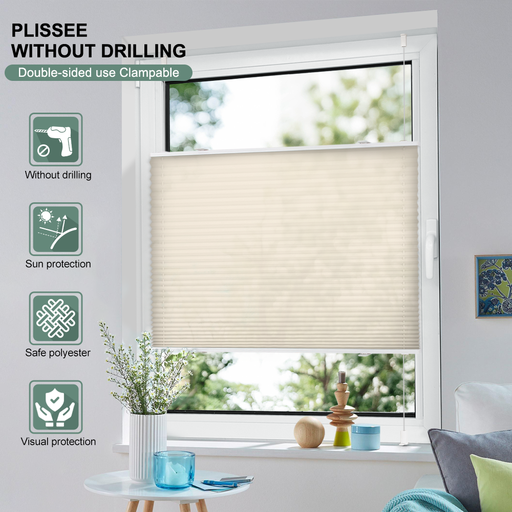
Why it's a great fit: Perfect for rental properties where a simple, damage-free installation is essential. The pleated design offers flexible privacy and can be positioned anywhere on the window without completely blocking out the light. It's a versatile alternative to classic clamp-on Venetian blinds.
The included clamp brackets are designed for common window sash thicknesses and provide a secure hold, avoiding the material fatigue common in low-cost products.
Infinitely adjustable from both the top and bottom for maximum flexibility in light control; tool-free assembly in just a few minutes.
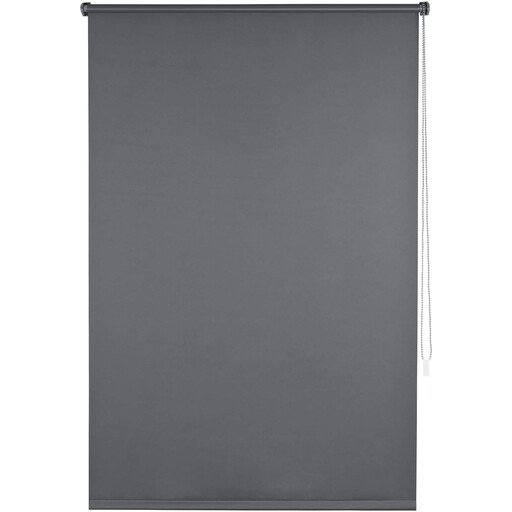
Why it's a great fit: Perfect for users who value energy efficiency in addition to blackout functionality. The special coating helps regulate room temperature and can contribute to lower heating and cooling costs.
This thermal blind features an explicit aluminium coating on the back that reflects sunlight—unlike basic, dark-coloured fabrics with no real thermal function.
Effective blackout and thermal insulation thanks to the aluminium coating; robust construction and colour-matched accessories for a cohesive look.
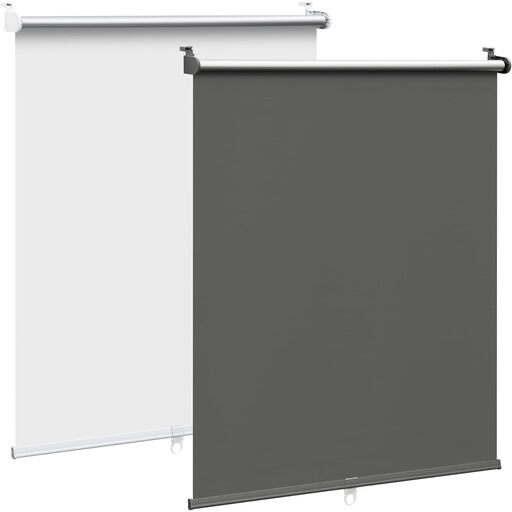
Why it's a great fit: The top choice for bedrooms and children's rooms. The cordless operation eliminates the strangulation hazard posed by loose chains or cords, offering enhanced safety for children and pets.
The fabric width is precisely designed for blackout purposes. By choosing the correct order width (glass width + 4 cm), side light gaps—a common issue with standard blinds—are effectively minimised.
Near 100% blackout effect due to a silver coating; child-safe, cordless design with a spring-loaded mechanism for smooth operation.
We have compiled a complete, up-to-date list of products that fully meet these strict selection criteria and comply with UK safety regulations.
Durability largely depends on the quality of the clamp brackets. Models with adjustable brackets and a metal core are significantly more stable and long-lasting than simple, rigid plastic clips. When correctly installed on a suitable window sash, high-quality systems provide a reliable hold for years.
Yes, if two conditions are met. First, the fabric must have a true blackout coating. Second, the blind must be measured correctly and ordered wide enough to cover the glass pane with an overlap of about 2 cm on each side. This is the only way to prevent annoying light gaps at the edges.
Yes. Its function is based on reflection. In summer, the silver or aluminium-coated exterior reflects solar radiation, helping to keep the room cooler. In winter, this layer acts as an additional insulation barrier, reflecting heat from the room back inside and reducing heat loss through the window.