
Lieferung heute & morgen

Qualitätsgarantie

Willkommens-Angebote freischalten: KOSTENLOSE Lieferung | Bis zu 80 % RABATT | Kostenlose 30-Tage-JoyPlus-Testphase
App herunterladen
A no-drill roller blind promises a simple, damage-free solution for privacy and sun protection. This seems like the ideal choice, especially in rental properties where structural changes are often prohibited. However, the market is flooded with products of widely varying quality. Many buyers only discover after installation that their new blind doesn't live up to its promises.
As your Joybuy Product Recommendation Officer, I'll help you identify the typical pitfalls and make an informed decision. We'll focus on the three most common flaws that lead to frustration and unnecessary expense.
To avoid these problems, you should check three core aspects. These define the functionality and longevity of your roller blind.
The mounting method is the heart of any no-drill roller blind. The most common method is the clamp-on roller blind.
The fabric determines how well the blind performs its function. Think carefully about what you need.
This is the most critical step to avoid light gaps at the sides. The rule is:
Here are some product recommendations tailored to specific use cases and requirements.
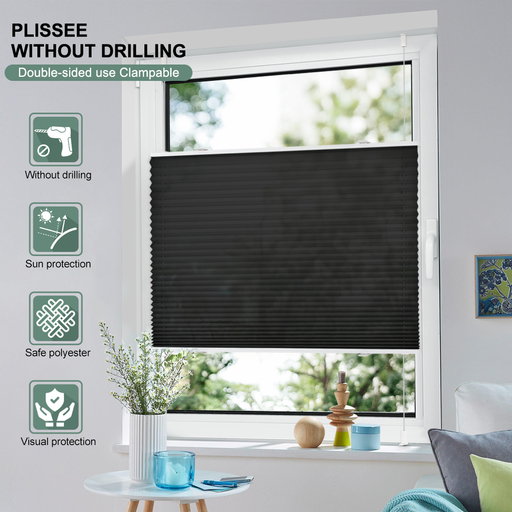
Why it's a great fit: Ideal for a first apartment or for rooms that need a simple and functional solution for privacy and sun protection. The installation is tool-free and leaves no damage, which is crucial for rental properties.
The product relies on a proven clamp-on system designed for common window frame thicknesses, thus avoiding the pitfall of weak brackets. The opaque fabric provides reliable privacy.
Tool-free clamp mounting and flexible positioning of the pleated blind on the window for on-demand privacy.

Why it's a great fit: Perfect for bedrooms, children's rooms, and workspaces. The blackout function ensures restful sleep, while the cordless design enhances safety for children. The thermal coating helps regulate room temperature.
According to the manufacturer, the silver-coated backing provides 100% blackout, avoiding the pitfall of insufficient light blocking. The clear measuring instructions help prevent light gaps.
Cordless design for enhanced child safety and a thermal coating to improve the room's climate and potentially save energy.
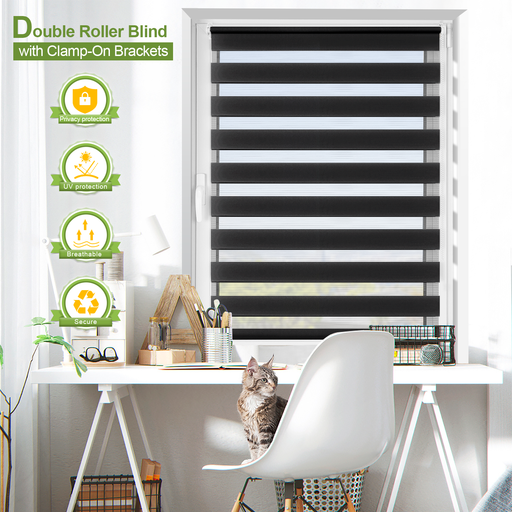
Why it's a great fit: For anyone who values aesthetics and flexible light control. The dual roller blind allows for a seamless transition from transparent to opaque and integrates perfectly into living and working spaces with its modern design.
The use of an aluminium top rail suggests greater stability compared to all-plastic constructions. The precise chain mechanism allows for reliable control of the fabric panels.
Infinitely variable control of light and privacy thanks to the two parallel, alternately woven fabric panels.
We have compiled a complete, up-to-date list of products that fully meet these strict selection criteria and German regulations.
The lifespan of a clamp-on roller blind depends on the quality of its components and the frequency of use. A model with sturdy clamp brackets (ideally with metal reinforcement) and high-quality fabric can last for several years with normal use. The mechanics of the pull mechanism are also a crucial factor for longevity.
Yes, most clamp-on systems are also suitable for balcony or patio doors, provided they have a compatible window sash for clamping. Before purchasing, check the maximum permissible frame thickness for the clamp bracket and ensure that the blind does not obstruct the operation of the door handle. For large glass fronts without opening sashes, adhesive or suction cup solutions are a possible alternative.
Generally, no. High-quality clamp brackets are designed to grip the frame firmly without damaging it. They often include small protective pads made of plastic or silicone to prevent pressure marks or scratches on the window frame. This is one of the main advantages for renters.