
Lieferung heute & morgen

Qualitätsgarantie

Willkommens-Angebote freischalten: KOSTENLOSE Lieferung | Bis zu 80 % RABATT | Kostenlose 30-Tage-JoyPlus-Testphase
App herunterladen
As a Joybuy Product Recommendation Officer, I see daily how a thoughtful product choice can significantly enhance home comfort. A no-drill roller blind is a practical solution for privacy and sun protection, ideal for tenants and homeowners who wish to preserve their window frames. However, the market is flooded with products of widely varying quality. Incorrect measurements, unstable brackets, or unsuitable fabrics often lead to disappointment.
This guide will help you identify the crucial features and avoid common purchasing mistakes, ensuring you find a suitable and long-lasting solution for your windows.
Many buyers focus on colour and price, overlooking the technical details that determine functionality and durability. Here are the three most common problems to avoid:
To avoid the mistakes mentioned above, you should focus on three core aspects. These will determine whether a blind meets your needs and proves to be a satisfying long-term purchase.
The drill-free installation is the main advantage, but the methods vary.
The fabric determines the primary function of your blind.
Besides the classic roller blind, there are two innovative alternatives that offer more flexibility.
Based on the criteria above, we have identified some products that are well-suited for specific use cases.
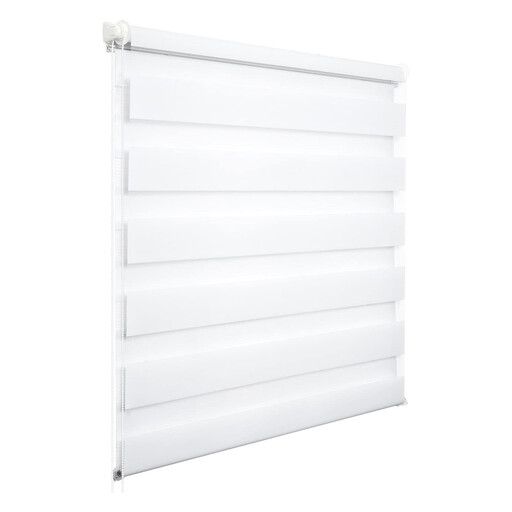
Why This Fits Their Persona: Ideal for living rooms and offices where lighting needs to be adjusted based on the time of day and activity. The dual-fabric function allows for a quick switch between privacy and brightness.
The clamp brackets are designed for a common window frame thickness of 13–23 mm. The clear instructions for measuring (glass width + 4 cm) help prevent light gaps at the sides.
Seamlessly adjust light levels with alternating transparent and opaque fabric panels. The chain pull can be flexibly mounted on the left or right.

Why This Fits Their Persona: Perfect for bedrooms, children's rooms, or home cinemas where maximum darkness is required. The added thermal function is a bonus for rooms that get too hot in summer or too cold in winter.
The silver coating on the back ensures reliable blackout and thermal insulation, going beyond the function of a simple privacy blind.
Provides blackout and thermal insulation in one product. The cordless design enhances safety in households with children and pets.
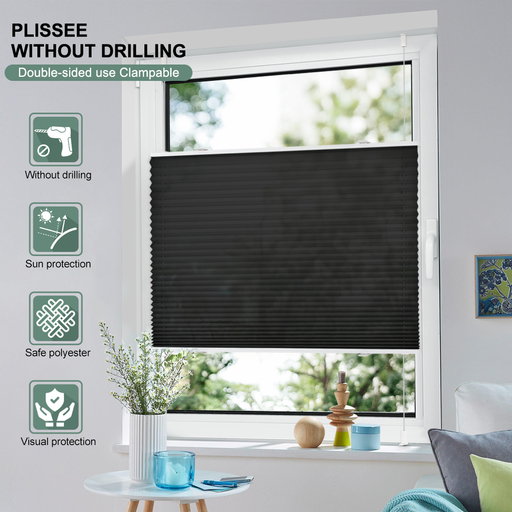
Why This Fits Their Persona: Suitable for users seeking a minimalist and flexible solution. A pleated blind is less bulky than a roller blind and is ideal for kitchens, bathrooms, or narrow windows where every centimetre counts.
The clamp-fit system is specifically designed for tool-free installation, preventing damage to the window frame. The opaque fabric provides reliable privacy without completely darkening the room.
The folded structure is very space-efficient. Many pleated blinds can also be freely positioned on the window (adjustable from both top and bottom), allowing for highly targeted control of privacy and light.
We have compiled a complete, up-to-date list of products that fully meet these strict selection criteria and local safety regulations.
Precisely measure the width of the window pane (glass width). For optimal privacy and light control, the fabric width should overlap the glass by about 2 cm on each side. The order width is the total width of the blind, including the brackets. Follow the manufacturer's instructions, which usually state: Order Width = Glass Width + approx. 4 cm. Ensure the blind does not interfere with the window handle.
Clamp-fit blinds are designed for most modern uPVC windows with a rubber seal and an opening sash. They are generally not suitable for wooden windows, fixed-pane windows (that don't open), or sloped roof windows. Always check the compatible window frame thickness specified by the manufacturer before purchasing.
Yes, many blackout blinds also offer a thermal effect. Models with a special silver or white coating on the exterior-facing side are particularly effective at reflecting sunlight. This helps keep the room cool in the summer. In the winter, the coating acts as an additional insulating layer, reducing heat loss through the window. Such a thermal blind can therefore contribute to a better indoor environment year-round.