
Lieferung heute & morgen

Qualitätsgarantie

Willkommens-Angebote freischalten: KOSTENLOSE Lieferung | Bis zu 80 % RABATT | Kostenlose 30-Tage-JoyPlus-Testphase
App herunterladen
A no-drill roller blind is a practical solution for renters and anyone wanting a hassle-free installation without damaging window frames or walls. However, the market is flooded with products of widely varying quality. Incorrect measurements, unstable brackets, or low-quality fabrics often lead to disappointment. This guide will help you identify the crucial features and make an informed choice.
Many buyers focus on colour and price, overlooking technical flaws that severely impact functionality and durability. Pay close attention to these three pitfalls:
To avoid these problems, you should check three core parameters before buying. These determine whether a no-drill window blind will reliably serve its purpose.
The most common method is the clamp-on roller blind. Here, adjustable brackets are clamped directly onto the window sash.
Alternatively, there are adhesive or suction cup solutions suitable for fixed glazing where the window sash cannot be opened. A clip-on pleated blind is also a very popular and flexible option, often installed under tension, allowing it to be moved in both directions.
The fabric determines the primary function of your blind.
This is the most critical step. To avoid light gaps on the sides, proceed as follows:
Here are some product recommendations tailored to different needs and living situations.
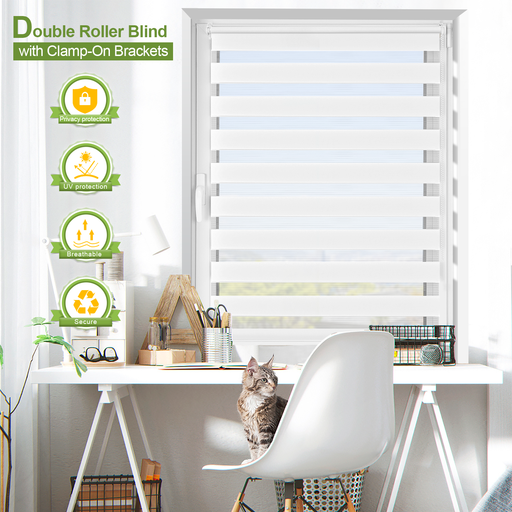
Why This Fits Their Persona: Ideal for rental apartments where a flexible solution for living rooms or home offices is needed. The dual roller blind allows for a seamless transition between transparent and opaque without breaking the bank.
The clamp brackets are designed for common window sash thicknesses and provide a secure hold when installed correctly. The mechanism allows for a clean alignment of the fabric panels for effective light control.
Flexible light and privacy control with alternating transparent and opaque stripes. Simple, tool-free installation.

Why This Fits Their Persona: Perfect for the bedroom or home cinema, where maximum darkness and a comfortable room temperature are priorities. The thermal function is an added bonus for the energy-conscious.
The product description provides clear measuring instructions to prevent light gaps. The silver coating ensures reliable blackout performance, which is not guaranteed with simple fabrics.
Offers 100% blackout capability according to the manufacturer. The thermal coating helps regulate room temperature. The material is OEKO-TEX certified.
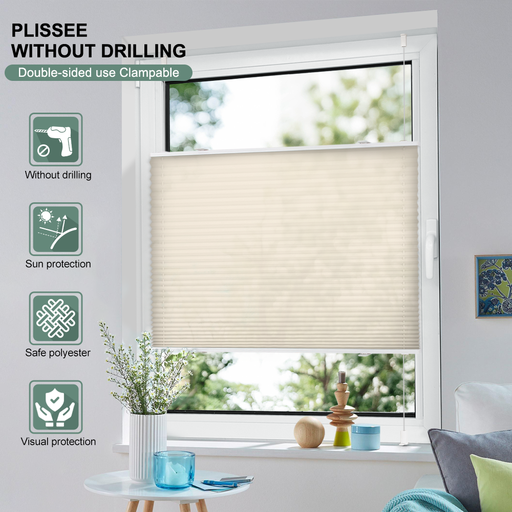
Why This Fits Their Persona: For those seeking a more modern and structured alternative to the classic roller blind. The pleated design looks elegant and offers maximum flexibility in controlling light and privacy, thanks to its top-down, bottom-up adjustability.
The tensioned installation between the clamp brackets ensures the pleated blind does not swing, even when the window is tilted. Width specifications for pleated blinds are often more precise, designed for installation within the glass bead.
Freely positionable from the top and bottom for customised privacy. Modern, folded aesthetic and stable guidance via side tension cords.
We have compiled a complete, up-to-date list of products that fully meet these strict selection criteria and German regulations.
A clamp-on roller blind holds very securely, provided the thickness of your window sash matches the clamp bracket's specifications (e.g., 15-23 mm) and it is installed according to the instructions. The design is optimised for standard, inward-opening uPVC windows. They are generally not suitable for fixed-pane windows, skylights, or wooden windows.
Yes, this is possible if the material is suitable for damp rooms. Look for terms like "moisture-resistant" or materials like 100% polyester in the product description, as they are often water-repellent and mould-resistant. Good ventilation in the bathroom is also recommended to ensure the blind's longevity.
The order width refers to the total width of the blind, including the side mounting hardware. The fabric width is always narrower than the order width (usually by about 4 cm). To completely cover the window pane and minimise side light gaps, the order width should be about 4 cm wider than the glass area of the window. Always check that the window handle can still be operated freely.