
Lieferung heute & morgen

Qualitätsgarantie

Willkommens-Angebote freischalten: KOSTENLOSE Lieferung | Bis zu 80 % RABATT | Kostenlose 30-Tage-JoyPlus-Testphase
App herunterladen
As a Joybuy Product Recommendation Officer, I see the challenge many renters and homeowners face every day: they need effective privacy and sun protection but want to avoid damaging their window frames with drill holes. A no-drill roller blind is a practical and straightforward solution for this.
This article serves as your guide. It explains the different types available, offers tips for making the right selection, and presents specific product options that allow for tool-free installation. The goal is to provide you with an informed basis for your decision so you can find the perfect no-drill window blind for your living spaces.
Before you make a decision, there are a few functional aspects to consider. The right choice depends on your individual needs for light control, privacy, and interior design.
Not every blind serves the same purpose. The choice of fabric and construction is crucial for its ultimate function.
The most common installation method for no-drill blinds is the clip-on blind. With this system, brackets are clamped directly onto the window sash. To ensure the blind fits perfectly, precise measurement is essential.
Based on functionality, ease of installation, and material properties, we have compiled a selection of models that cover a range of different requirements.
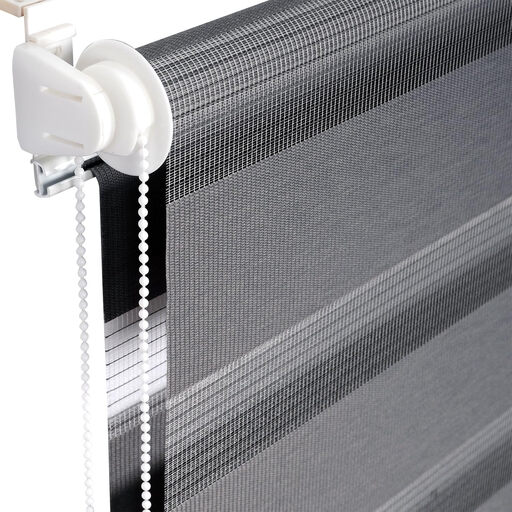
Why it's a great choice: This Zebra Blind combines modern design with high functionality. The alternating semi-transparent and opaque fabric panels made of 100% polyester allow for precise control over light and privacy. Installation is your choice: drill-free with clamp brackets or traditional with screws.
Advantages:
Who it's for: Ideal for users who want a flexible solution for light and privacy in living rooms or offices and appreciate a modern design.
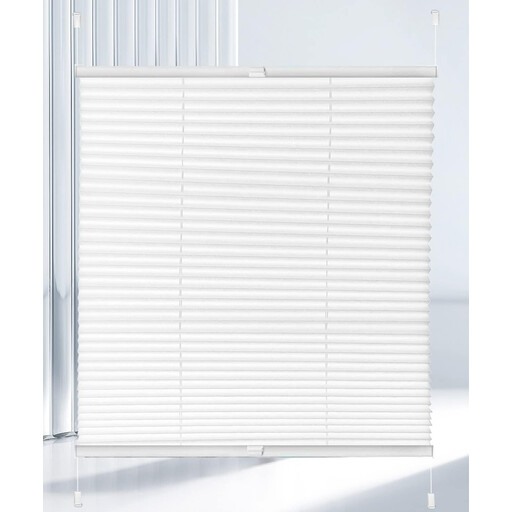
Why it's a great choice: The no-drill pleated blind from Dream-seeker offers a subtle and elegant window treatment. It gently filters daylight and provides privacy without completely darkening the room. The clip-on installation is straightforward and protects the window frame.
Advantages:
Who it's for: A great choice for living rooms, offices, or kitchens where daylight is desired, but direct views from the outside should be prevented.
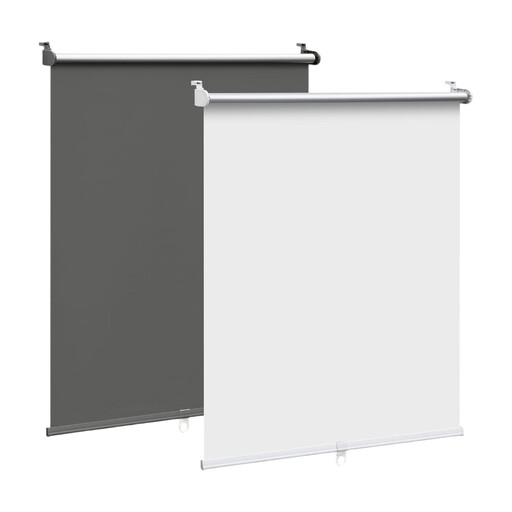
Why it's a great choice: This blackout blind is designed for maximum functionality. The silver thermal coating on the back blocks 100% of light and helps regulate room temperature. The cordless design increases safety in households with children or pets.
Advantages:
Who it's for: Especially recommended for bedrooms, children's rooms, or home cinemas. The cordless operation makes it a safe option for parents and pet owners.
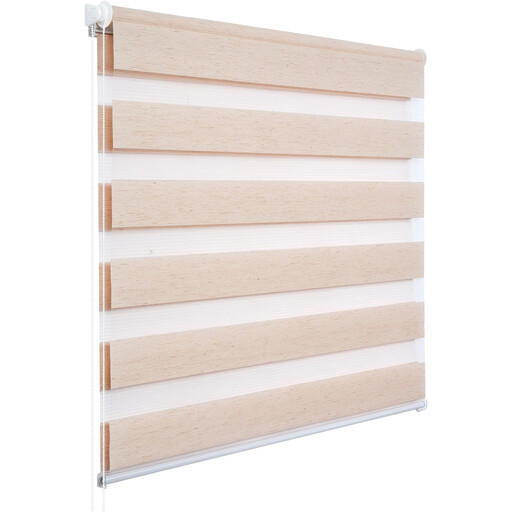
Why it's a great choice: This model combines the practical functionality of a dual roller blind with a warm, natural aesthetic. The wood-look fabric gives the room a cosy atmosphere without sacrificing the modern light control of a Zebra Blind.
Advantages:
Who it's for: For style-conscious users who are looking for a homely alternative to solid-coloured blinds and appreciate the functionality of a dual roller blind.
The models presented here already cover many use cases. If you haven't found the right solution for your windows or interior style yet, there are more alternatives to discover.
Browse our entire selection of adjustable blinds to find more designs, colours, and sizes that suit your needs.
A no-drill roller blind is most often attached using a clip-on system. Adjustable clamp brackets are simply placed over the top edge of the opened window sash and tightened. The blind is then hooked into these brackets. This method leaves no marks and is completely reversible.
Yes, when installed correctly and within the manufacturer's specified maximum frame thickness, clamp brackets provide a secure and stable hold for daily use. They are designed for vertical, inward-opening uPVC windows. They are generally not suitable for skylights or wooden windows.
A dual roller blind (also called a Zebra Blind) consists of two fabric panels with alternating opaque and transparent stripes. The amount of light is regulated by moving the panels relative to each other. A pleated blind consists of a single, pleated fabric panel. It is often tension-mounted directly on the window and can be moved flexibly from the top and bottom to cover specific areas of the window.