
Lieferung heute & morgen

Qualitätsgarantie

Willkommens-Angebote freischalten: KOSTENLOSE Lieferung | Bis zu 80 % RABATT | Kostenlose 30-Tage-JoyPlus-Testphase
App herunterladen
No-drill roller blinds are a practical choice for rented homes, children’s bedrooms, offices and balcony doors, as they leave window frames and walls undamaged during installation. However, not every clip-on roller blind will fit every window. Incorrect measurements, incompatible brackets or a mistaken idea of how much light the fabric lets through can often lead to the wrong purchase.
The Joybuy Product Recommendation Officer explains which details matter before you buy and which model suits different living spaces.
For many roller blinds, the stated width is the overall width, including the brackets. The actual fabric may be around 3 to 5 cm narrower. If you measure only the glass and don’t account for the overall width, you may not get enough privacy or sun protection.
For the best possible coverage, the width you order should often be around 4 cm wider than the glass. At the same time, the blind must not obstruct the window handle.
A light-filtering or privacy roller blind can reduce visibility from outside while still letting light through. A no-drill day and night blind has alternating sheer and opaque stripes, giving you flexible control over the light. For bedrooms or rooms with a projector, a blackout blind with a coated backing is a better choice.
Claims such as “Blackout” or “100% blackout” should always be considered alongside side light, fabric width and the type of window. Even a dense fabric won’t necessarily prevent light from coming through gaps at the edges.
Clip-on roller blinds and blinds with clamp brackets require a frame of a particular thickness. Depending on the model, the stated ranges might be 13 to 23 mm, 16 to 22 mm or just 1 to 10 mm. Installation is often not possible on wooden windows, roof windows, sliding windows or very irregular frames.
Before ordering, also check that the window sash can still open fully or tilt when the brackets are fitted.
With no-drill roller blinds, there are three main fitting options:
Check the fitting instructions, the permitted frame thickness and any exclusions. A blind may be very well made but still not suit your window.
Different rooms have different requirements:
With chain-operated blinds, keep a safe distance between the chain and children or pets. A cordless blind operated by a handle can be a practical alternative for families.
Polyester is commonly used for indoor blinds because it can be easy to wipe clean and hold its shape. According to the product description, a heat-cut edge helps prevent fraying. Coated backings can reflect light and affect heat absorption, although the actual effect depends on the window, room ventilation and exposure to sunlight.
A soft brush or slightly damp cloth is usually enough for cleaning. Harsh cleaning products and vigorous rubbing can damage coatings or the fabric.
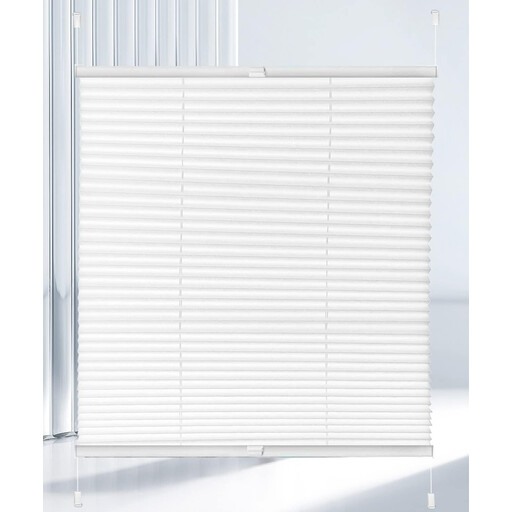
Why this product suits this profile: This no-drill pleated blind is designed for windows and doors, filtering daylight without completely darkening the room.
The product description specifies both clamp and adhesive fitting without drilling. Check the frame surface and measurements before buying.
Light-filtering polyester fabric, measuring 80 x 200 cm and designed for windows and doors.

Why this product suits this profile: This thermal blind combines clamp fitting with a cordless handle system and is designed for bedrooms, living rooms and workspaces.
The required frame thickness of 16 to 22 mm is clearly stated, so you can check whether the clamp will fit before ordering.
According to the product description, it features 200 g/m² polyester, a silver-coated backing, OEKO-TEX certification and operation using a bottom aluminium rail.
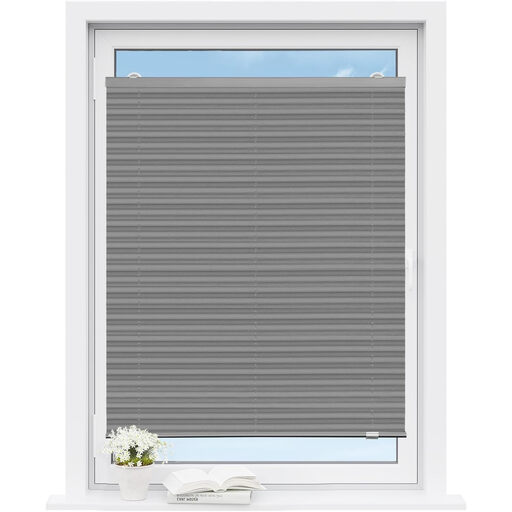
Why this product suits this profile: This no-drill pleated blind is designed for smooth glass or tiled surfaces, making it a flexible option for suitable areas.
Its suitability for smooth surfaces is clearly stated. Suction cups should not be relied on for rough or textured surfaces.
Removable suction-cup fitting, a wipe-clean fabric and a semi-transparent design for softly filtered light.
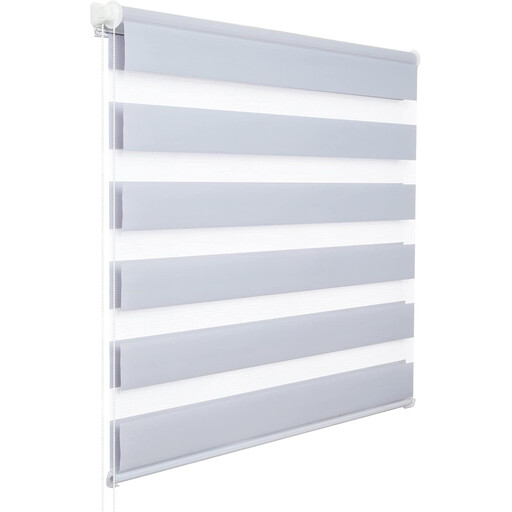
Why this product suits this profile: This no-drill day and night blind is a good fit for tall windows or doors where you want daylight during the day and more privacy in the evening.
The specifications state a clamp frame range of 13 to 23 mm and explain that the fabric is narrower than the overall width.
Alternating sheer and opaque fabric, adjustable light control and a control mechanism that can be fitted on either the left or right.
We’ve put together a complete, regularly updated list of products that meet these strict selection criteria and fully comply with the safety regulations applicable in the EU.
First measure the visible width of the glass, then the height of the entire window sash. Compare these measurements with the overall size of the blind you want. For many models, the fabric is narrower than the overall width. The frame thickness must also be compatible with the clamp bracket.
How securely they stay in place depends on the frame shape, material, how often they’re used and whether they’ve been fitted correctly. Make sure the frame is clean and dry before fitting. The brackets should be secure without distorting the seals, and you should check regularly that they remain firmly in place.
A manually operated blind normally uses no electricity, so there are no running costs. When choosing a blind, the main considerations are its material, fitting method, size, operation and the level of light control you want. A thermal blind can reduce the amount of sunlight entering through the window, but it’s not possible to give a general estimate of energy savings without details of the window, room and how it’s used.