
Lieferung heute & morgen

Qualitätsgarantie

Willkommens-Angebote freischalten: KOSTENLOSE Lieferung | Bis zu 80 % RABATT | Kostenlose 30-Tage-JoyPlus-Testphase
App herunterladen
As a Joybuy Product Recommendation Officer, my role is to provide you with clear and objective information. Many tenants and homeowners face the same challenge: they need effective privacy and sun protection but are unable or unwilling to drill holes into their window frames. A no-drill roller blind is a smart and practical solution for this situation.
This article serves as your guide. It explains the different types, offers tips for selection, and presents several models that stand out for their ease of installation and functionality. The goal is to provide you with an informed basis for your purchasing decision.
Before you decide on a model, several fundamental aspects should be considered. The right choice depends on your window type, the desired level of light control, and the specific requirements of the room.
The most common method for drill-free installation is the clamp-fit system. With this method, clamp brackets are simply clipped onto the open window sash and tightened. This system is ideal for standard uPVC windows with a frame thickness of about 13 to 23 mm. It is stable, can be removed without leaving any residue, and is perfect for rental properties.
An alternative is mounting with adhesive strips or suction cups. While adhesive solutions provide a more permanent fixture, suction cups offer maximum flexibility. They are particularly useful for fixed glazing, skylights, or glass doors where clamp brackets cannot be attached.
The function of your roller blind is largely determined by its fabric. Consider what purpose the interior sun protection for your windows should serve:
A common mistake is confusing the fabric width with the order width. Measure the width of the glass pane and add about 2 cm on each side to minimise light gaps. The result is your recommended order width. Note that the fabric width is typically about 4 cm narrower than the specified order width, as the brackets and mechanism require space.
Based on functionality, ease of installation, and material properties, we have compiled a selection of products that cover a range of different needs.
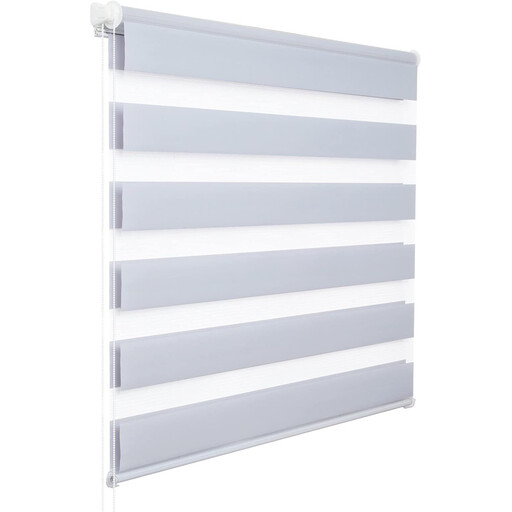
Why it stands out: This day and night blind offers exceptionally flexible light control thanks to its two parallel fabric panels with alternating opaque and transparent stripes. It combines the functionality of a venetian blind with the cosy aesthetic of a fabric roller blind.
Advantages:
Who it's for: Ideal for living rooms, offices, or kitchens where light levels need to be precisely adjusted depending on the time of day and activity.
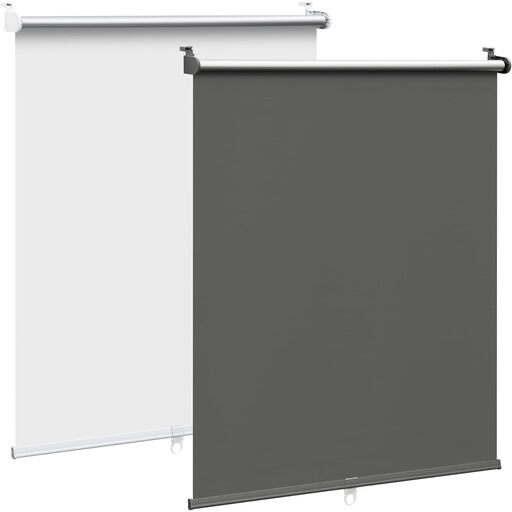
Why it stands out: This roller blind combines a complete blackout function with thermal properties. The silver coating on the back effectively reflects sunlight and helps to insulate the room. The cordless design increases safety, especially in households with children.
Advantages:
Who it's for: Perfect for bedrooms, children's rooms, and home cinemas where maximum darkness and a quiet environment are desired. Also a great choice for home office workstations to prevent screen glare.
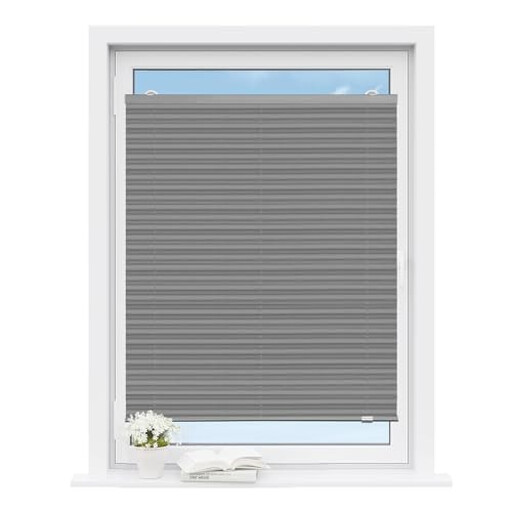
Why it stands out: This pleated blind for windows completely forgoes clamp or adhesive mechanisms, instead relying on strong suction cups for attachment. This makes it extremely flexible to use and allows it to be installed even on skylights or balcony doors.
Advantages:
Who it's for: For users who need a maximally flexible and mobile solution, or whose windows (e.g., skylights, fixed glass elements) do not permit a clamp-fit installation.
The products presented cover common use cases. For more specific requirements, such as solutions for campervans or other vehicle types, other innovative products are available.
Browse our Day and Night RV Window Blinds category to discover an expanded selection.
When correctly installed on a suitable window sash, the clamp-fit system is very reliable. The clamp brackets are tightened securely onto the frame and hold the blind firmly in position, even with daily use. It is important that the thickness of the window frame matches the manufacturer's specifications (usually between 13 and 23 mm).
A roller blind consists of a smooth panel of fabric that is wound up and down on a tube. A pleated blind, on the other hand, is made of a fabric folded into pleats, which is compressed and expanded like an accordion. Pleated blinds are often more flexible in their positioning, as they can frequently be opened from both the top down and the bottom up.
As a rule, clamp-fit systems are not recommended for wooden windows. The clamping mechanism is designed for the standardised profiles of uPVC windows. With wooden windows, there is a risk that the paint or the material itself could be damaged by the pressure from the brackets. For wooden windows, drill-free alternatives like adhesive or suction cup systems, or a classic screw installation into the wall above the window, are better suited.