
Lieferung heute & morgen

Qualitätsgarantie

Willkommens-Angebote freischalten: KOSTENLOSE Lieferung | Bis zu 80 % RABATT | Kostenlose 30-Tage-JoyPlus-Testphase
App herunterladen
A no-drill roller blind promises a simple, damage-free solution for privacy and sun protection—ideal for rental properties or for anyone who dreads using a power drill. However, the market is flooded with products of widely varying quality. Before you make a hasty decision that ends in loose brackets or inadequate blackout, you should know the typical pitfalls.
As your Joybuy Product Recommendation Officer, I filter the essential information for you, so you can make an informed choice and avoid bad buys. We'll focus on the three most common flaws found in clamp-on blinds and how to spot them.
To steer clear of these problems, you should check three core aspects before you buy. These define the functionality and durability of your new roller blind.
The most common method is the clamp-fit roller blind. Here, adjustable brackets are simply clamped onto the window sash.
The choice of fabric determines how well the blind fulfils its purpose of providing privacy or sun protection.
This is the most critical step to avoid the "Fit Trap."
Here are some product suggestions tailored to different use cases and requirements.
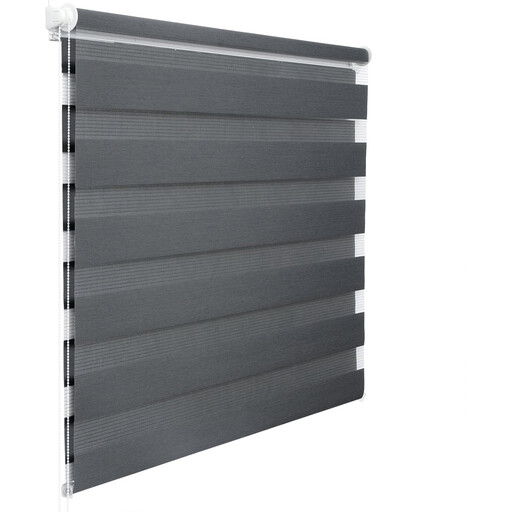
Why This Fits Their Persona: Ideal for living rooms and home offices in a rental property. The dual-roller function allows for flexible light adjustment without completely darkening the room. The no-drill installation protects the window frames.
The clamp brackets are designed for a common window frame thickness of 13-23 mm. The manufacturer's measuring guide (glass width + 4 cm) helps to avoid the fit trap.
Seamless light control via alternating transparent and opaque stripes. The chain pull can be mounted on either the left or right side.
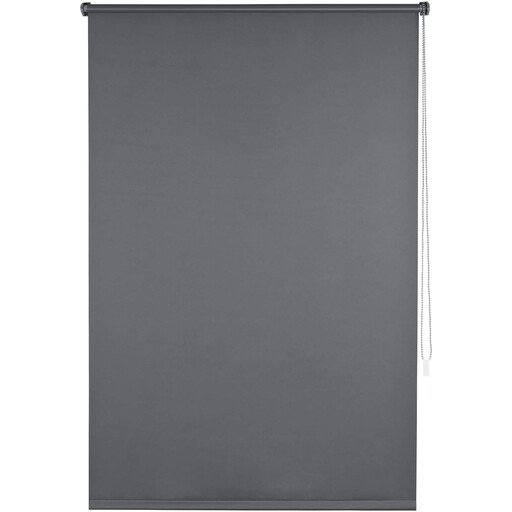
Why This Fits Their Persona: Perfect for bedrooms and children's rooms where darkness is crucial for restful sleep. The thermal coating also helps regulate room temperature—cooler in summer, warmer in winter.
According to the manufacturer, the special aluminium coating on the back effectively blocks light, countering the problem of fabric that doesn't provide a true blackout effect.
Offers blackout and thermal insulation in one. The clamp-fit installation is suitable for rental properties, and an alternative screw-in installation is also possible.
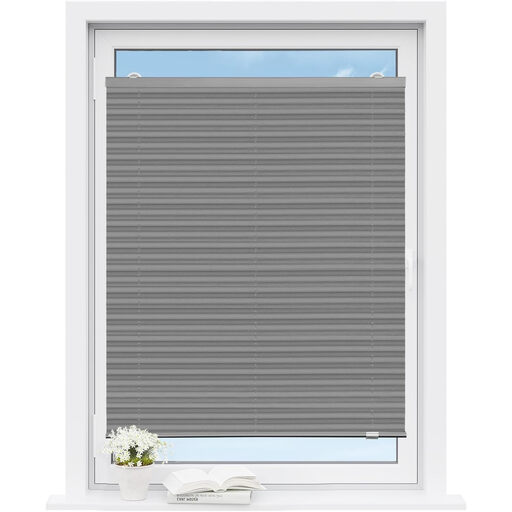
Why This Fits Their Persona: A practical choice for windows where clamp brackets won't work, such as fixed-pane glass, patio doors, or even slanted skylights. The suction cups adhere directly to the glass pane.
Completely bypasses the issue of incompatible window frames by mounting directly onto the glass surface. There are no clamp brackets that could break or fail to fit.
Extremely flexible, tool-free installation on any smooth glass surface. The pleated blind can be freely positioned from both the top and bottom for precise light control.
We have compiled a complete, real-time list of products that fully satisfy these strict selection criteria and UK safety regulations.
The stability of a clamp-fit blind depends critically on the quality of the clamp brackets and correct installation. If the brackets are designed for your window frame's thickness and are tightened securely, they provide a reliable hold for everyday use. For very wide or heavy blinds, additional support from adhesive pads or an optional screw-in mount may be advisable, if offered by the manufacturer.
Most clamp brackets are designed for modern uPVC windows with a standard rebate thickness. On old or very solid wooden windows, the shape of the frame may prevent installation. Some manufacturers explicitly state that their products are not suitable for wooden windows. Therefore, always check the product description or consider an alternative, such as a pleated blind with suction cups.
A dual roller blind (also known as a zebra blind) consists of two parallel layers of fabric with alternating opaque and transparent stripes. By shifting the layers, you can regulate the amount of light coming through. A pleated blind is made from a single, folded (pleated) piece of fabric. It is often tension-mounted directly within the glazing bead or on the window frame and can be flexibly moved from both the top and bottom, allowing for very precise placement of the privacy screen.