
Lieferung heute & morgen

Qualitätsgarantie

Willkommens-Angebote freischalten: KOSTENLOSE Lieferung | Bis zu 80 % RABATT | Kostenlose 30-Tage-JoyPlus-Testphase
App herunterladen
As a Joybuy Product Recommendation Officer, I see daily how the right product choice can decisively improve home comfort. For renters and homeowners, a no-drill roller blind is a practical solution for sun and privacy protection. However, the market is flooded with products of widely varying quality. Misleading claims often lead to frustration and unnecessary expense.
This guide will show you what to look for to avoid the most common pitfalls and find a solution that is durable, functional, and meets your specific needs.
Many buyers focus solely on colour and price, overlooking critical technical flaws. Three problems are particularly common:
To avoid a bad purchase, you should check three core parameters. These determine the product's durability, functionality, and fit.
The most reliable no-drill installation is the clamp-fit roller blind. This method involves clamping adjustable brackets directly onto the window sash. Look for the following features:
These criteria apply equally to a no-drill pleated blind or a no-drill venetian blind.
The fabric determines the utility of your blind. Choose based on its intended purpose:
To minimise light gaps at the sides, measuring correctly is crucial. Follow this simple rule:
Here are some product recommendations tailored to specific needs and use cases.

Why This Fits Their Persona: Ideal for children's rooms and bedrooms. The cordless design eliminates the strangulation hazard from loose chains, while the blackout and thermal functions ensure a peaceful sleep and a comfortable room climate.
The clamp brackets are designed for common frame thicknesses (16–22 mm). The product description explicitly states that the fabric width is approx. 4 cm narrower, allowing for accurate measurement planning.
Cordless Design: Enhanced safety for children and pets. Thermal Coating: Provides blackout functionality and helps regulate temperature.
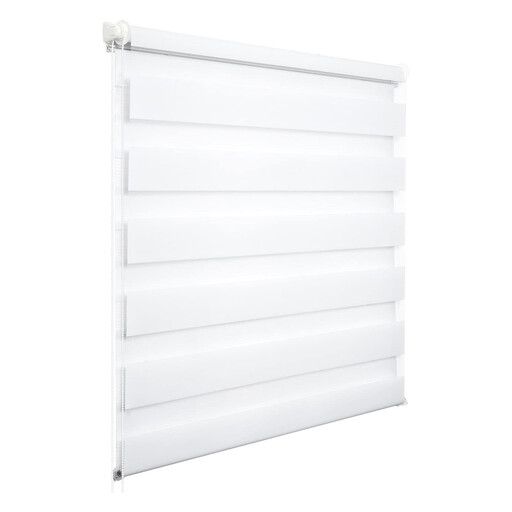
Why This Fits Their Persona: Perfect for living rooms or home offices where lighting conditions vary throughout the day. The dual roller blind allows for seamless control over light and privacy without sacrificing a modern aesthetic.
The product comes with robust clamp brackets for frame thicknesses of 13-23 mm. The polyester fabric's hot-cutting technology prevents the edges from fraying, ensuring a long-lasting, clean look.
Flexible Light Control: Switch between sheer and opaque using the chain mechanism. Installation Flexibility: The chain pull can be mounted on the left or right side.

Why This Fits Their Persona: For anyone who values thermal insulation in addition to privacy and sun protection. The honeycomb structure creates air pockets that act as a buffer against heat in the summer and cold in the winter.
The sturdy construction with a metal frame and tear-resistant polyester fabric prevents material fatigue. The clamp brackets are designed for a common frame thickness of 10-23 mm, ensuring a secure hold.
Honeycomb Structure: Offers improved thermal and acoustic insulation compared to standard roller blinds. Flexible Operation: Can be adjusted from both the top and the bottom.
We have compiled a complete, up-to-date list of products that fully meet these strict selection criteria and safety standards.
The stability of a clamp-fit blind depends on the quality of the clamp brackets and correct installation. High-quality systems with adjustable brackets made from robust material hold very reliably on standard uPVC/vinyl window frames (within the specified frame thickness). It is important to tighten the brackets firmly and evenly. For very heavy blinds, wooden windows, or in high-use situations, a screw-mounted installation may be more stable.
Yes, a clamp-on window blind can typically be mounted on balcony or patio doors, provided they have a suitable sash frame like a window. Measure the frame thickness and ensure the maximum height of the blind is sufficient for the door. The installation process is the same as for a window.
A dual roller blind (also known as a zebra blind) consists of two parallel layers of fabric with alternating sheer and opaque stripes. By shifting these layers, you can seamlessly adjust the amount of light coming in. A pleated blind is made from a single, pleated piece of fabric. Many pleated blinds can be flexibly adjusted from both the top and bottom, allowing for highly versatile positioning on the window.