
Lieferung heute & morgen

Qualitätsgarantie

Willkommens-Angebote freischalten: KOSTENLOSE Lieferung | Bis zu 80 % RABATT | Kostenlose 30-Tage-JoyPlus-Testphase
App herunterladen
The search for the right privacy and sun protection for a rental apartment or new home often hits a key challenge: drilling is either not allowed or simply undesirable. A no-drill roller blind seems like the ideal solution. However, the market is flooded with products whose promises don't always hold up in practice. Before you make a decision, it's crucial to understand the common pitfalls that can lead to frustration and unnecessary expense.
As your Joybuy Product Recommendation Officer, I'm here to help you separate marketing hype from facts. We'll shed light on three common problems:
A well-considered purchase based on objective criteria will save you from these issues.
To find a durable and functional no-drill roller blind, don't be swayed by promotional images. Instead, focus on the technical specifications. These three points are critical.
The most common method is installation using a "clamp-fit" system. This involves clamping adjustable brackets directly onto the window sash. The critical factor here is the window frame thickness.
clamp-fit roller blind is only as good as its mounting.The name of the blind often reveals its primary function. There are clear differences that are relevant to its intended use.
Honeycomb Pleated Blind) offer improved thermal and sound insulation due to the trapped air.A common mistake is incorrect measurement. Pay close attention to the manufacturer's instructions. A common recommendation is:
blind for a balcony door.Here are some product recommendations tailored to specific needs and the quality criteria mentioned above.
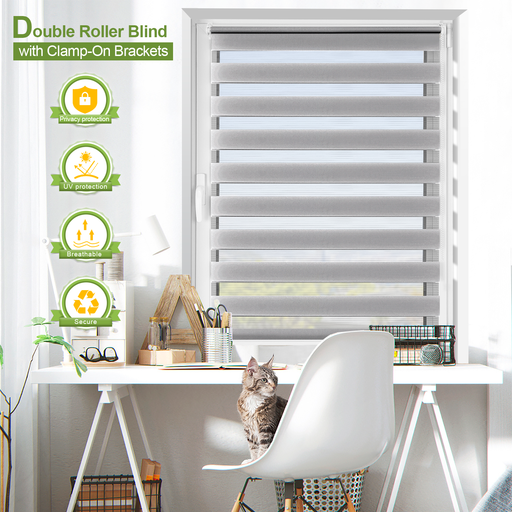
Why This Fits Their Persona: A straightforward and flexible solution for standard windows in rental apartments. The dual roller design allows for variable control of light and privacy without needing multiple products.
The included clamp brackets are designed for common window frame thicknesses. Correct measurement prevents slipping. The alternating transparent and opaque stripes offer honest light regulation instead of a false blackout promise.
Flexible light and privacy control thanks to two fabric layers (zebra blind effect). Simple, tool-free installation.
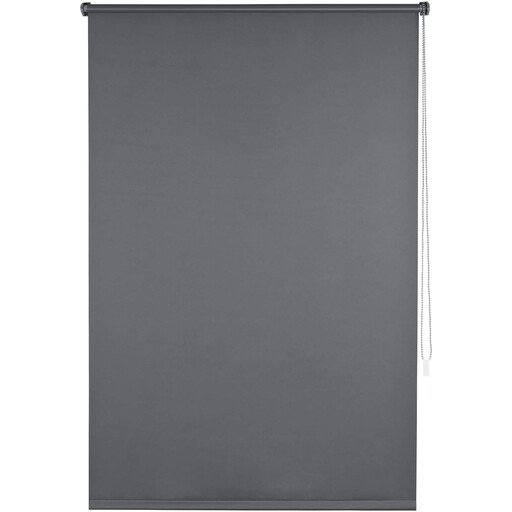
Why This Fits Their Persona: Ideal for bedrooms or children's rooms where complete darkness and a stable room climate are desired. The thermal function aids insulation in both summer and winter.
This blind avoids the "pseudo-blackout" trap with a special aluminium coating on the back that blocks light. The clamp-fit brackets are designed for a specific frame thickness (1–2 cm), ensuring stability.
Near-100% blackout due to the rear coating. Additional thermal effect for insulation.

Why This Fits Their Persona: Perfect for users seeking a modern look and maximum flexibility in light control. The pleated blind can be freely positioned from the top and bottom, ideal for ground-floor apartments or bathrooms.
The installation guide is tailored to the clamp-fit system for frame thicknesses of 10-23 mm, avoiding complexity. The honeycomb structure provides a demonstrable thermal and sound-insulating property that goes beyond that of a simple fabric blind.
Infinitely adjustable from both top and bottom. Honeycomb structure provides improved thermal and sound insulation.
The stability of a clamp-fit blind depends heavily on two factors: correctly measuring the window frame thickness and proper installation. The clamp brackets are designed for specific thickness ranges (e.g., 10–23 mm). If your window frame falls within this range and the brackets are tightened securely, they provide a reliable and durable hold for daily use.
Yes, many models are also suitable for balcony or patio doors. The key is to choose a product with the right length; many manufacturers offer lengths up to 220 cm or more. Measure the entire height of the door sash and ensure the fabric width does not block the door handle. A blind for a balcony door is a practical, damage-free solution.
A dual roller blind (also known as a zebra blind) controls light by sliding two layers of fabric with alternating transparent and opaque stripes past each other. A no-drill pleated blind consists of a single, folded panel of fabric. Its main advantage is often its flexibility: many models can be freely positioned anywhere on the window, moving from both the top down and the bottom up, to provide targeted privacy exactly where it's needed.