
Lieferung heute & morgen

Qualitätsgarantie

Willkommens-Angebote freischalten: KOSTENLOSE Lieferung | Bis zu 80 % RABATT | Kostenlose 30-Tage-JoyPlus-Testphase
App herunterladen
A roller blind offers effective privacy and sun protection, but installation with a drill and screws leaves permanent damage on the window frame. This is often a problem, especially in rented apartments. A no-drill roller blind promises a simple, damage-free solution. However, not all models are created equal, and certain weaknesses can quickly lead to frustration.
Before you make a decision, you should be aware of the most common pitfalls that lurk in budget-friendly or poorly described products:
To avoid these problems, you should base your selection on objective criteria. The following three points are crucial for long-term satisfactory performance.
The most common method is the clamp-fix roller blind. Here, adjustable brackets are simply clamped onto the window sash. The decisive factor for a secure hold is the window frame thickness. Measure the thickness of your open window sash (without the rubber seal). Most clamp brackets are designed for a thickness of about 15 to 22 mm. Check this specification carefully in the product description to ensure compatibility. For fixed glazing or windows that cannot be opened, adhesive blinds, which are glued directly onto the pane, are an alternative.
The function of your blind is determined by its fabric. There are clear differences here:
To prevent light gaps on the sides, correct measurement is essential. Stick to this simple rule:
Order Width = Width of the window pane + approx. 4 cm (2 cm per side)
Make sure the blind does not interfere with the window handle. The width specified in the product data is usually the total width of the blind (order width). The fabric width itself is typically about 3 to 4 cm narrower.
Here are some recommendations tailored to different needs and living situations.
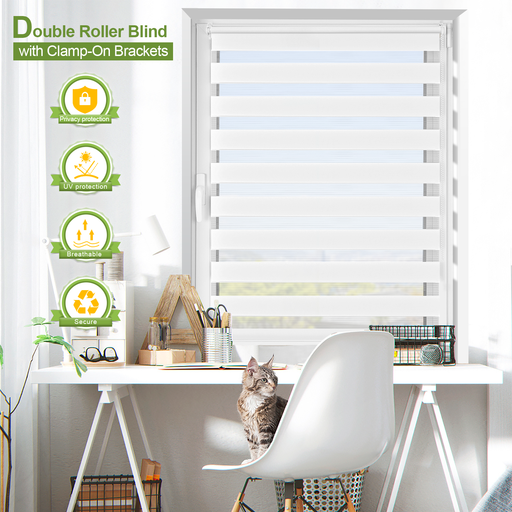
Why it's a great fit: Ideal for renters seeking a straightforward and flexible solution for standard windows in living areas or a home office. The dual-roller function allows for easy light adjustment without having to fully raise or lower the blind.
The clamp brackets are designed for common window frame thicknesses, providing a stable, wobble-free installation. The zebra-stripe design offers a clear functional separation between privacy and light filtering.
Seamless light control thanks to alternating transparent and opaque stripes. Simple, tool-free installation.
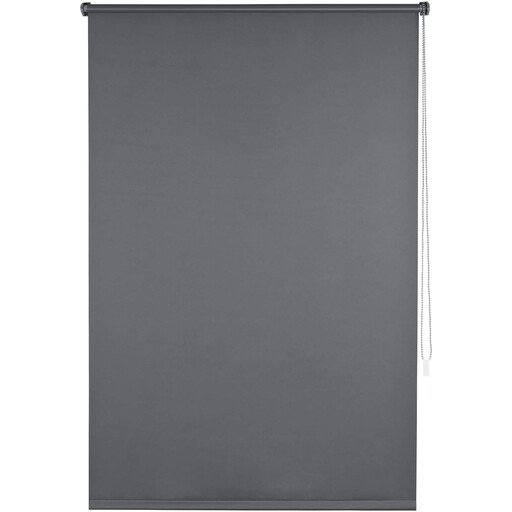
Why it's a great fit: Designed for those who need maximum darkness in a bedroom or nursery. The thermal coating also helps regulate room temperature, enhancing sleep comfort in both summer and winter.
The product description explicitly mentions a light-blocking aluminium coating, which ensures nearly 100% blackout performance, thus avoiding the pitfall of misleading descriptions.
Effective blackout and thermal insulation in one product. The clamp-fix installation requires no drilling.
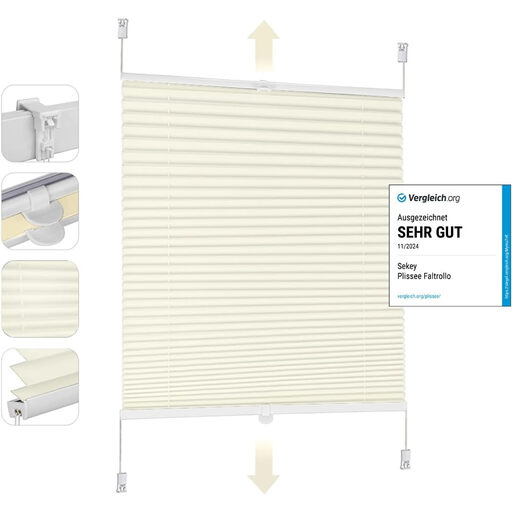
Why it's a great fit: For anyone who wants more than just "open" and "closed." The pleated blind can be adjusted from the top down as well as from the bottom up. This allows you to precisely tailor the light and privacy level to any situation—perfect for ground-floor apartments or offices.
The adjustable clamp brackets are designed for tool-free installation and provide a secure hold. The high-quality material combination of non-woven fabric and polyester is engineered for durability.
Maximum flexibility with top-down and bottom-up operation. Allows for precise control over privacy and light.
We have compiled a comprehensive, up-to-date list of products that fully meet these strict selection criteria and German safety regulations.
1. How do I measure correctly for a no-drill roller blind? Measure the width of your window's glass pane. Add about 2 cm to each side of this measurement to ensure good coverage. The resulting width is your order width. For example: for a 56 cm wide pane, an order width of 60 cm (56 + 2 + 2) would be a good choice. Double-check that it won't block the window handle.
2. Is a clamp-fix roller blind really secure? Yes, when installed correctly and on a compatible window frame thickness, a clamp-fix blind is very secure. It's important that the clamp brackets fit tightly on the frame and are suitable for its thickness. Models with metal components or high-quality, reinforced plastic generally offer greater stability than very cheap alternatives.
3. Can I also install a no-drill blind on a door? Yes, most clamp-fix blinds are also suitable for balcony or patio doors, as long as they have a compatible sash frame for clamping. Pay special attention to the correct height of the blind. For doors without a suitable frame, adhesive blinds can be an alternative.