
Lieferung heute & morgen

Qualitätsgarantie

Willkommens-Angebote freischalten: KOSTENLOSE Lieferung | Bis zu 80 % RABATT | Kostenlose 30-Tage-JoyPlus-Testphase
App herunterladen
As a tenant, you know the problem: you need effective privacy or sun protection but aren't allowed to drill into the window frames. Or perhaps you're a homeowner looking for a simple, fast installation solution. The market for no-drill roller blinds is vast, but not every product lives up to its promises. Many buyers are frustrated by unstable brackets, inadequate blackout effects, or unsightly light gaps along the sides.
This guide will help you navigate the common pitfalls. We'll show you the three critical features to look for before you buy to ensure you find a durable and functional solution for your windows.
Before making a decision, you should be aware of the most common reasons for a bad purchase. These issues often lead to a blind becoming unusable after just a few months or failing to deliver its intended function.
To avoid these problems, focus on the following technical specifications. They determine the functionality and longevity of your new roller blind.
The mounting mechanism is the core of any drill-free system. The most common method is the clamp-fit roller blind.
A privacy blind for windows serves a different purpose than a thermal blind. Choose the fabric specifically based on your needs.
Instead of a one-size-fits-all recommendation, we present products tailored to specific needs and living situations.
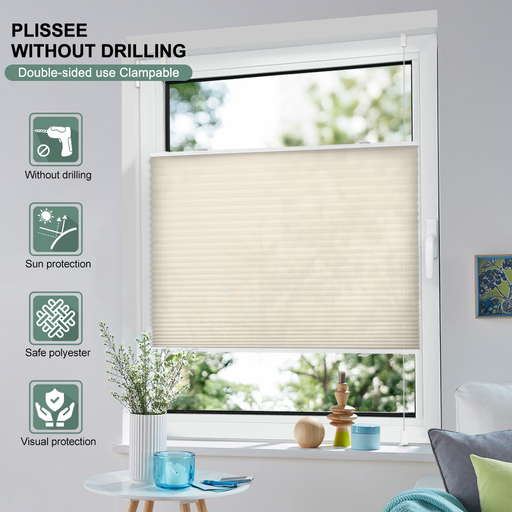
Why This Fits Their Persona: Ideal for tenants seeking a quick, straightforward, and affordable privacy solution for living rooms or home offices. The tool-free installation protects the window frame and is completed in minutes.
The system relies on simple yet functional clamp brackets. By checking your frame thickness beforehand, you ensure compatibility and avoid the pitfall of unstable mounts.
The opaque yet translucent fabric provides privacy without darkening the room. Its simple folding mechanism makes it a practical choice for everyday use.

Why This Fits Their Persona: Designed for individuals who require absolute darkness for sleep. The cordless design also eliminates strangulation hazards, making it a safe choice for children's rooms.
This blind solves the problem of misleading fabric claims. The silver coating on the back ensures a verifiable 100% blackout effect, reliably blocking all light.
Cordless operation for enhanced safety and ease of use. The thermal coating also provides noticeable protection against heat and cold.
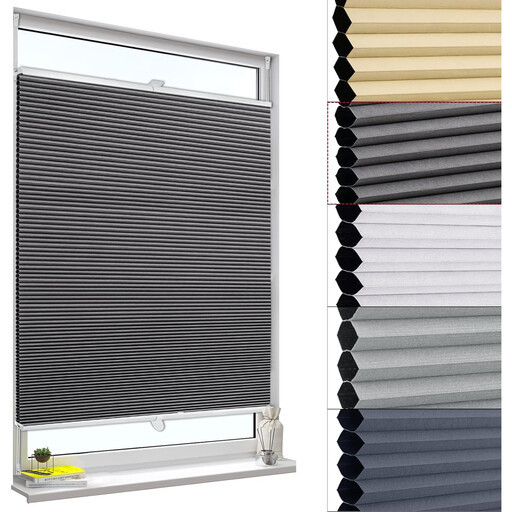
Why This Fits Their Persona: For users who value energy efficiency and a high-end look. In addition to privacy and sun protection, the honeycomb blind offers improved thermal and sound insulation.
This product goes beyond standard thermal blinds. The honeycomb structure creates an air cushion that provides a physically measurable insulating effect, not just one based on a thin coating.
The honeycomb structure provides effective thermal and acoustic insulation. Additionally, the blind is infinitely adjustable from both the top and bottom for maximum flexibility in light control and privacy.
We have compiled a complete, up-to-date list of products that fully meet these strict selection criteria and quality standards.
First, measure the width of the glass pane. For optimal coverage and to prevent light gaps on the sides, the fabric width should be approximately 4 cm wider than the glass pane. Since the order width indicates the total width including the brackets, the fabric is usually 4 cm narrower. Therefore, choose an order width that is at least as wide as the glass. Also, measure the thickness of your window frame to ensure the clamp brackets will fit.
Yes, with correct installation and the selection of a quality product, a clamp-on roller blind is a very stable and durable solution. It is crucial that the clamp brackets are suitable for the thickness of your window frame and are tightened securely. Models with metal components or reinforced plastic generally offer greater longevity than very cheap, all-plastic versions.
The main difference lies in their construction and operation. A roller blind consists of a single, smooth piece of fabric that rolls up and down onto a tube. A pleated blind (also known as a plissé or folding blind) is made of a fabric folded into pleats, which collapses and expands like an accordion. Many pleated blinds can be flexibly positioned from both the top and bottom, allowing for more precise control over light and privacy.