
Lieferung heute & morgen

Qualitätsgarantie

Willkommens-Angebote freischalten: KOSTENLOSE Lieferung | Bis zu 80 % RABATT | Kostenlose 30-Tage-JoyPlus-Testphase
App herunterladen
As a Joybuy Product Recommendation Officer, I see every day which products satisfy users and which lead to disappointment. A no-drill roller blind promises a simple solution for privacy and sun protection, especially in rental apartments. However, the market is flooded with models whose weaknesses only become apparent after a few weeks. This guide will help you navigate the common pitfalls and make an informed decision.
At first glance, many no-drill roller blinds look identical. The crucial differences, however, lie in the details and can mean the difference between a durable solution and a constant source of frustration.
To avoid these problems, you should check three core aspects before buying. These define the functionality and longevity of your roller blind.
The most common method is the clamp-on roller blind. This involves clamping adjustable brackets directly onto the window sash. Compatibility with the thickness of your window sash (the sash thickness) is crucial here. Measure it precisely. Most systems are designed for a thickness of 15 to 22 mm. A good clamp-on window blind features robust brackets made of metal or high-quality plastic with rubber inserts that protect the frame and ensure a non-slip grip.
The function of the blind is determined by its material. There are clear differences here:
In addition to the classic roller blind, there are specialised versions:
Here are some recommendations tailored to specific use cases and the quality criteria mentioned above.
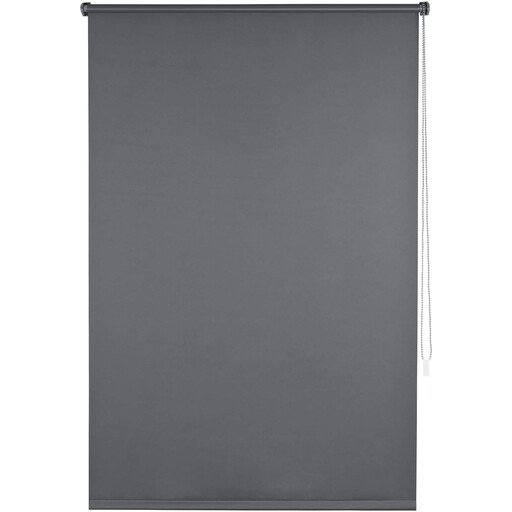
Why This Fits Their Persona: A straightforward and functional solution for renters who need effective blackout and heat protection for standard windows without damaging the building structure.
The aluminium light-stop coating on the back ensures high blackout performance, avoiding the "fake" blackout fabric trap. The clamp brackets are designed for common window sash thicknesses.
Offers both blackout and thermal insulation benefits thanks to its thermal coating. Installation is tool-free due to the clamp-on system.

Why This Fits Their Persona: Safety comes first. The cordless design eliminates the strangulation hazard from loose chains or cords, making it a suitable choice for children's rooms or households with pets.
It is operated via a handle on the bottom rail, which is not only safer but also requires a robust mechanism. The silver coating provides reliable blackout, which is important for afternoon naps.
Cordless design for enhanced child safety. According to the manufacturer, the material is OEKO-TEX certified, water-repellent, and tear-resistant.
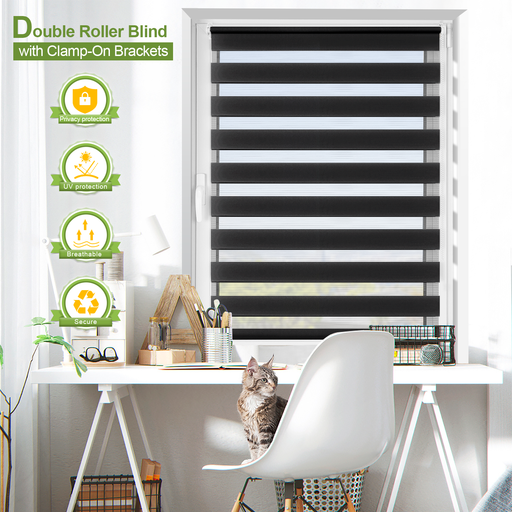
Why This Fits Their Persona: Ideal for home offices or living rooms where lighting conditions need to be flexibly adjusted—from bright, glare-free daylight to full privacy in the evening.
The dual roller function provides true, variable light control instead of just switching between "open" and "closed." The clamp brackets are designed for easy installation without damaging the window frame.
Seamless regulation of light and privacy with two parallel fabric layers. The chain pull can be mounted on either the left or right side.
We have compiled a complete, up-to-date list of products that fully meet these strict selection criteria and German regulations.
Measure the width of the glass pane and add about 2 cm to each side to minimise light leakage. The resulting width is your order width. Make sure the blind does not interfere with the window handle. The height usually corresponds to the height of the entire window sash. Also, measure the thickness of the window sash to ensure the clamp brackets will fit.
With correct installation and high-quality clamp brackets, the risk is minimal. Ensure the brackets have protective pads and are not overtightened. The brackets should be secure but not permanently compress the seal. On modern windows, this is generally not an issue.
A dual roller blind consists of two layers of fabric with alternating transparent and opaque stripes that can be moved against each other to control the light. It rolls up and down like a classic roller blind. A pleated blind is a folded fabric (concertina-style) that collapses like an accordion. It often offers the ability to be positioned freely on the window (from the top, bottom, or in the middle), allowing for even more precise control over privacy and light.