
Lieferung heute & morgen

Qualitätsgarantie

Willkommens-Angebote freischalten: KOSTENLOSE Lieferung | Bis zu 80 % RABATT | Kostenlose 30-Tage-JoyPlus-Testphase
App herunterladen
As a renter or homeowner looking for a hassle-free solution for privacy and sun protection, a no-drill roller blind is an obvious choice. The ability to install it without tools and without causing permanent damage to window frames or walls is a key advantage. However, the market is flooded with products of widely varying quality and functionality. Before you make a decision, it's important to understand the most common pitfalls that can lead to frustration and unnecessary expense.
This guide will help you separate the wheat from the chaff and find a product that precisely meets your needs.
The simple installation is the main selling point, but this is often where the biggest problems lie. Watch out for these three typical weaknesses:
To avoid these mistakes, you should check three core aspects before buying. These will largely determine the functionality and longevity of your new roller blind.
The most common method is the clamp-on roller blind. This involves clamping adjustable brackets directly onto the window sash.
The fabric determines the primary purpose of the blind. Think carefully about which function is most important to you.
This is the most critical step. The rule is: the fabric width is always narrower than the ordering width. The difference is typically 3 to 5 cm.
Based on the criteria mentioned, we have identified some products that are well-suited for different user profiles.
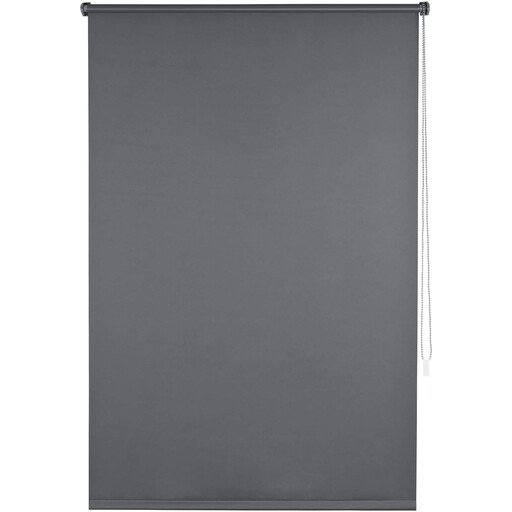
Why This Fits Their Persona: Ideal for rental apartments where a simple, residue-free solution for bedrooms or children's rooms is required. Offers reliable blackout without drilling and easy installation.
The special light-blocking aluminium coating on the back ensures true blackout, not just privacy. The clamp brackets are designed for a specific window frame thickness, ensuring compatibility.
Thanks to the aluminium coating, it also provides a thermal insulation function, reflecting heat in the summer and helping to retain warmth in the winter.
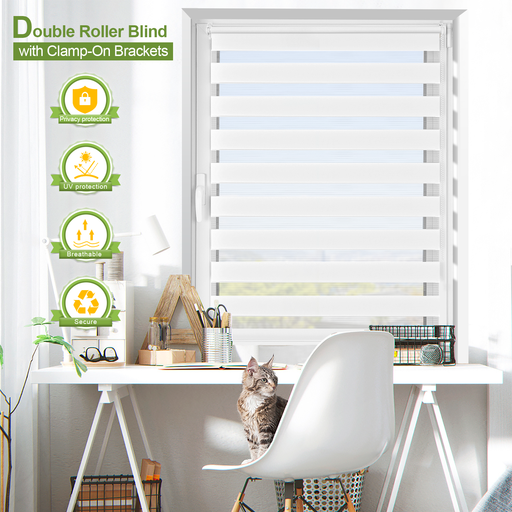
Why This Fits Their Persona: Perfect for living rooms and home offices where lighting conditions need to be adjusted throughout the day—from bright daylight to complete privacy.
The dual roller blind principle, with its alternating transparent and opaque stripes, is clearly designed for flexible light control, avoiding the 'all-or-nothing' trap of a standard blackout blind. Installation uses a straightforward clamp-on system.
Infinitely variable regulation of light and privacy by simply adjusting the fabric panels via the chain mechanism. The installation is tool-free and does not damage the window frame.

Why This Fits Their Persona: Suits users who value high-quality aesthetics and feel in addition to functionality. The honeycomb structure of the pleated blind has a modern, cosy look and offers additional benefits.
The honeycomb structure is not just a design feature; it creates an air cushion that demonstrably contributes to thermal and sound insulation. The ability to operate it from both the top and bottom offers maximum design freedom and functionality.
Combines aesthetic design, a blackout function, and enhanced insulation properties thanks to the honeycomb structure. Installation is also drill-free via clamp brackets.
We have compiled a complete, up-to-date list of products that fully meet these strict selection criteria and UK safety regulations.
The reliability depends on the quality of the clamp brackets and the correct installation. High-quality systems designed for the specific thickness of your window frame provide a very secure hold for daily use. It is crucial to follow the manufacturer's installation instructions precisely and to tighten the brackets evenly without overtightening the plastic.
Yes, a thermal blind with a special coating (often aluminium or pearlescent) can have a noticeable impact on room temperature. In the summer, the coating reflects solar radiation, reducing the heating of the room. In the winter, it acts as an additional insulating layer in front of the cold window pane, helping to reduce heat loss. The effect is greatest when the blind fits snugly.
A classic no-drill window roller blind consists of a smooth panel of fabric that is rolled up and down onto a tube. It is usually operated with a side chain. A no-drill pleated blind consists of a folded (pleated) fabric that collapses like an accordion. Many pleated blinds are tension-mounted and can be moved from both the top down and the bottom up. This allows for more flexible positioning of the privacy screen, for example, only in the lower third of the window.