
Lieferung heute & morgen

Qualitätsgarantie

Willkommens-Angebote freischalten: KOSTENLOSE Lieferung | Bis zu 80 % RABATT | Kostenlose 30-Tage-JoyPlus-Testphase
App herunterladen
As your Joybuy Product Recommendation Officer, I see countless people every day searching for a simple solution to bring order to their shower. A no-drill shower caddy seems like the ideal answer, but the market is flooded with products whose promises quickly dissolve in the humid reality of a bathroom. Before you make a decision you'll later regret, let's look at the most common pitfalls and the crucial quality features.
Many products look practical at first glance but turn out to be a bad investment after a short time. Watch out for these three typical weaknesses to avoid disappointment.
To find a durable and functional no-drill bathroom shelf, you should focus on three core parameters instead of trusting marketing promises.
The type of installation is the most critical factor. Your choice depends on the texture of your shower walls and your desire for flexibility.
The material determines the durability and maintenance of your shower caddy.
The shape should match the architecture of your shower to make the best use of space.
Here are some products that are suitable for different needs and bathroom types, based on objective features.
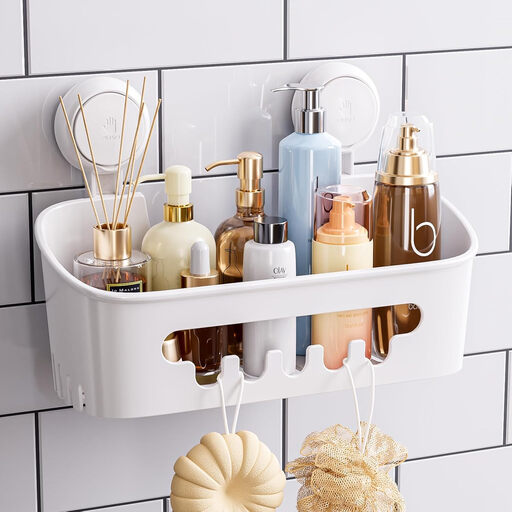
Why This Fits Their Persona: Ideal for anyone looking for a flexible, damage-free, and ready-to-use solution. Perfect for rental apartments, as the caddy can be moved without leaving residue or taken with you when you move.
According to the manufacturer, the TPE suction cup system is based on bionic principles for a strong hold, thus avoiding the pitfall of weak, conventional suction cups. Installation is done by pressing and requires no waiting time.
High Load Capacity: Holds up to 10 kg (22 lbs) according to the manufacturer. Good Drainage: 22 drainage holes and a sloped bottom keep contents dry.
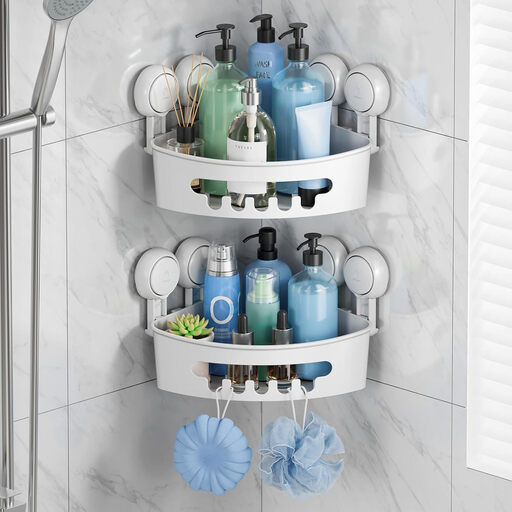
Why This Fits Their Persona: Perfect for small shower enclosures where every inch counts. This corner shelf transforms an unused corner into valuable storage space without getting in the way.
The design with wrap-around drainage holes effectively prevents water pooling and soap scum. The ABS material is inherently rust-proof, solving the problem of corrosion.
Specific Corner Design: Makes optimal use of space in 90-degree corners. Detachable for Cleaning: The basket can be easily detached from the suction cup, simplifying cleaning.
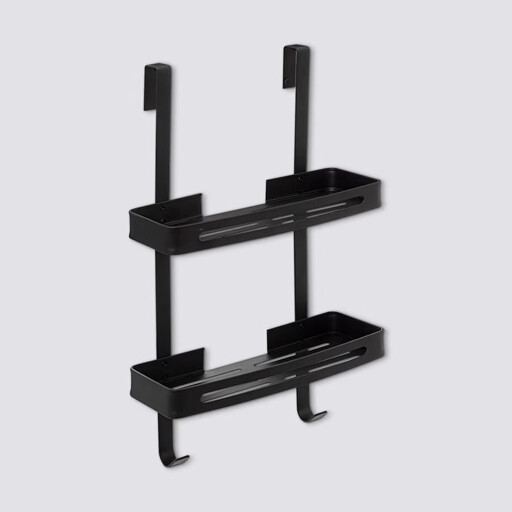
Why This Fits Their Persona: For users who value a modern, uncluttered aesthetic. The black aluminium and simple hanging design blend seamlessly into contemporary bathrooms.
By using aluminium as the base material, the risk of rust is completely eliminated. The open basket design ensures maximum air circulation and water drainage.
High-Quality Material: Aluminium is lightweight and completely rust-proof. Simple Installation: The hanging system requires no assembly and is ready to use instantly.
We have compiled a complete, up-to-date list of products that fully meet these strict selection criteria and applicable safety regulations.
How long does a suction cup shower caddy really last? The durability heavily depends on the quality of the suction cup and the condition of the surface. High-quality systems made from materials like TPE can last for years on smooth, clean, and non-porous surfaces (e.g., glass, smooth tiles). However, they may need to be reattached occasionally, depending on fluctuations in temperature and humidity. Thoroughly cleaning the surface and the suction cup before installation is crucial.
Can I remove an adhesive shower caddy later? Yes, most modern adhesive systems are designed for residue-free removal. Typically, the adhesive pad is heated with a hairdryer to soften the glue. The mount can then be carefully pried off the wall. Any remaining adhesive residue can often be removed with a cleaning agent. It is important to follow the manufacturer's specific instructions.
What is the best material for a shower caddy to avoid rust? To reliably prevent rust, aluminium and high-quality plastic (like ABS) are the safest material choices. Both materials are naturally corrosion-resistant and ideal for the permanently damp environment of a shower. You should be cautious with stainless steel products, as only certain, more expensive alloys remain rust-free in the long term, while cheaper versions can rust if the surface is damaged.