
Lieferung heute & morgen

Qualitätsgarantie

Willkommens-Angebote freischalten: KOSTENLOSE Lieferung | Bis zu 80 % RABATT | Kostenlose 30-Tage-JoyPlus-Testphase
App herunterladen
Installing a towel holder in the bathroom or kitchen can be a challenge for many renters and homeowners. Drill holes in tiles are permanent, can lead to cracks if done improperly, and are often prohibited in rental properties. A drill-free towel holder offers a practical and damage-free alternative. However, the market is flooded with products of widely varying quality. This guide will help you avoid common purchasing mistakes and find the right solution for your needs.
Before making a decision, it's important to understand the typical weaknesses of low-quality products, which often only become apparent after a few weeks or months in a humid bathroom environment.
To find a stable and functional long-term solution, you should evaluate three core aspects. These will help you separate the wheat from the chaff and choose a product that reliably serves its purpose.
The type of adhesive is crucial for stability. Look for products that use brand-name adhesives or specify a particular bonding technology. A key indicator is the maximum load capacity in kilograms, as stated by the manufacturer. For a no-drill towel bar intended to hold a large bath towel, this should be at least 5 kg. Also, carefully review the instructions for surface preparation. A clean, dry, and grease-free surface is essential for a lasting bond.
Material choice is critical for bathroom use. A stainless steel towel holder is often a good choice, but there are differences. Look for specifications like SUS304 stainless steel. This grade is known for its high corrosion resistance and performs well even in persistently damp conditions. While the surface finish—be it brushed or polished—is primarily an aesthetic choice, a high-quality finish provides additional protection for the material.
Consider what you plan to hang. For small guest towels next to the sink, a compact and adhesive towel ring is often sufficient and space-saving. For large shower or bath towels, a longer towel bar with a width of 40 cm to 60 cm is the better choice, as it allows the towel to spread out and dry completely. Models with additional hooks also offer space for washcloths or brushes.
Here are some recommendations tailored to different user profiles and the quality criteria mentioned above.
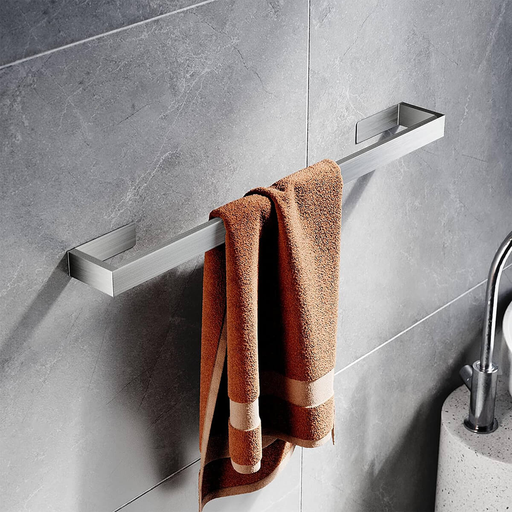
Why This Fits Their Persona: Ideal for users seeking a straightforward, functional solution for a large bath towel. The minimalist design fits into almost any modern bathroom.
The self-adhesive backing is designed for reliable adhesion on smooth surfaces. Its brushed stainless steel construction effectively prevents rust.
The 600 mm length provides ample space for a bath towel to dry completely. Installation is tool-free and quick.
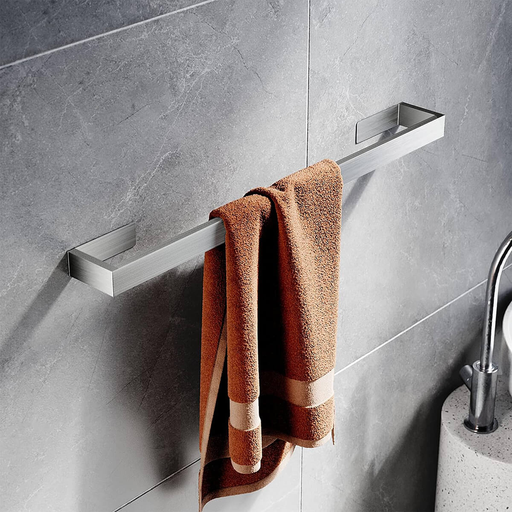
Why This Fits Their Persona: Perfect for guest bathrooms or small spaces where every inch counts. This towel ring offers a space-saving and stylish solution for a single hand towel.
The adhesive surface is optimised for the lighter weight of a hand towel, providing a secure hold. The stainless steel material resists moisture around the sink area.
Compact, space-saving design. The ring shape ensures the towel hangs securely and won't slip off.
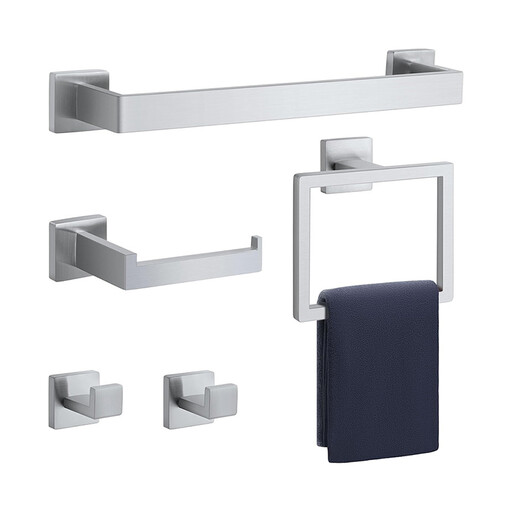
Why This Fits Their Persona: For those who want a complete and visually cohesive set for the entire bathroom. This set covers every need, from bath towels to washcloths.
It offers consistent material quality (stainless steel) and adhesive performance across all components, eliminating the risk of quality discrepancies that can come from buying individual parts.
A comprehensive all-in-one solution that includes a towel bar, ring, and hooks. It creates a harmonious and organised look in the bathroom.
We've compiled a complete, up-to-date list of products that fully meet our strict selection criteria and quality standards.
Durability depends on three main factors: the quality of the adhesive, the condition of the wall surface, and correct installation. A high-quality product installed on a smooth, clean tile can last reliably for several years. It is crucial to strictly follow the manufacturer's specified curing time (often 24-48 hours) before applying any weight.
Generally, this is not recommended. Most adhesives are designed for non-porous, smooth surfaces like tile, glass, metal, or painted wood. On wallpaper, the adhesive can damage the surface or peel off along with the paper layer. Plaster surfaces are often too rough and porous to ensure a secure, long-lasting bond. Always check the manufacturer's specifications for suitable substrates.
Most high-quality adhesive bonds can be loosened with heat. Gently warm the adhesive area with a hairdryer to soften the glue. Then, you can slowly try to pry the holder away from the wall. A thin wire or dental floss can often be used to cut through the adhesive layer by carefully sliding it between the holder and the wall. Any remaining residue can usually be removed with a special adhesive remover or rubbing alcohol. Always test the cleaning agent on an inconspicuous area first.