
Lieferung heute & morgen

Qualitätsgarantie

Willkommens-Angebote freischalten: KOSTENLOSE Lieferung | Bis zu 80 % RABATT | Kostenlose 30-Tage-JoyPlus-Testphase
App herunterladen
Whether you're a renter or a homeowner, you know the dilemma: you want more privacy or effective sun protection, but you don't want to damage your window frames with drill holes. The search for a suitable solution that is both functional and aesthetically pleasing can quickly become overwhelming.
This article serves as a practical guide. We'll introduce you to various drill-free mounting methods and provide specific tips on what to look for when making your choice. Additionally, we'll present a selection of products that stand out for their simple installation and smart features.
Before you decide on a model, a few considerations will help you find the right solution for your windows.
The most common method for a no-drill window privacy screen is installation with clamp brackets. These are simply clipped onto the open window sash.
The fabric determines not only the look but also the function of your privacy screen.
Measure your window carefully before ordering. For clip-on systems, you typically measure the width of the glass pane plus the desired overlap. Manufacturers usually provide detailed instructions for this. An accurate measurement ensures the privacy screen fits perfectly and functions as intended.
Here is a selection of products that meet different needs for privacy and sun protection without drilling.
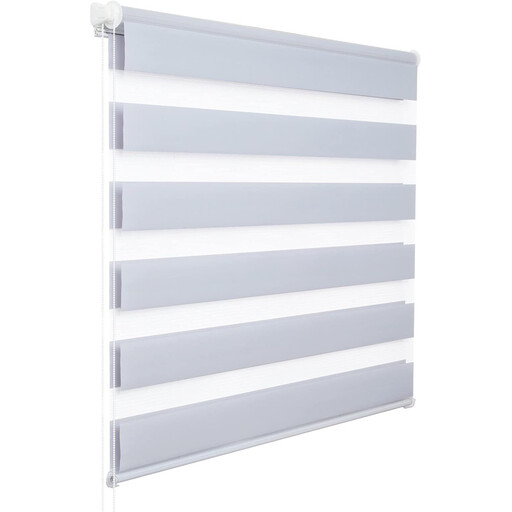
Why it stands out: This dual roller blind combines the functions of a privacy screen and a venetian blind. Thanks to two parallel fabric panels with alternating opaque and transparent stripes, you can precisely and seamlessly control the light—from nearly sheer to completely opaque.
Advantages:
Who is it for? For anyone looking for a flexible solution for living and working spaces, where light and privacy can be easily adjusted depending on the time of day and needs.
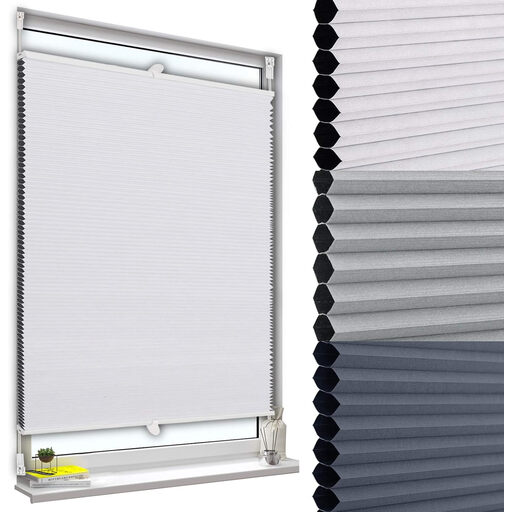
Why it stands out: This honeycomb blind is a multifunctional powerhouse. Its hexagonal honeycomb structure creates an air pocket that serves as an effective insulation layer. According to the manufacturer, the integrated aluminium coating provides a 100% blackout effect and contributes to sound and thermal insulation.
Advantages:
Who is it for? For energy-conscious consumers, families with children, and anyone who values absolute darkness and a quiet atmosphere in bedrooms or relaxation areas.
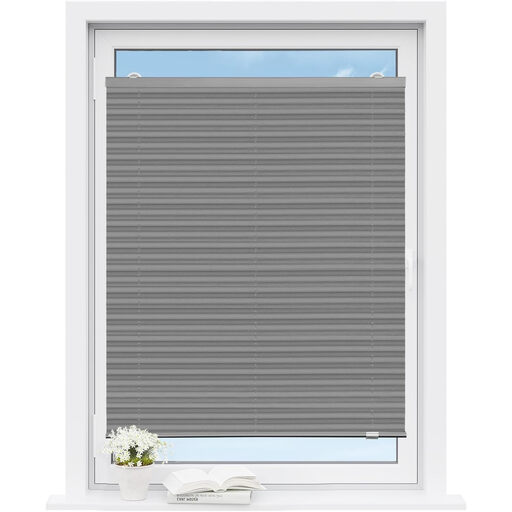
Why it stands out: The greatest strength of this pleated blind is its extreme flexibility. Thanks to its suction cup mounting, it can be attached to any smooth glass surface—without tools and without leaving residue. This makes it the ideal solution for situations where clamp brackets won't work.
Advantages:
Who is it for? For renters with special window types (e.g., fixed glazing), owners of skylights, or anyone who needs a temporary and residue-free solution.
The products featured here cover many common use cases. However, if you need a different size, colour, or want to outfit a special type of window, there is a wide range of other solutions available.
Discover a wider selection of privacy and sun protection products in our Patio & Veranda Blinds category.
1. How does a no-drill pleated blind stay on the window? A no-drill pleated blind is usually attached with adjustable clamp brackets. These are clipped onto the top and bottom edges of the window sash. The tension from the pleated cords holds the brackets firmly in place. Alternatively, there are models with adhesive strips or suction cups that stick directly to the frame or the glass.
2. Can you install a no-drill roller blind on a balcony door? Yes, this is usually possible without any issues, as long as it's a door that can be opened. A blind for a balcony door is attached to the door sash with clamp brackets, just like on a window. Pay attention to the maximum height of the blind to ensure it covers the entire glass area. The WOLTU Dual Roller Blind featured above, with a height of 220 cm, is suitable for many standard balcony doors.
3. What is the difference between a pleated blind and a honeycomb blind? A standard pleated blind consists of a single, folded panel of fabric. A honeycomb blind, on the other hand, is made of two fabric panels joined in the middle to form a honeycomb structure. This structure traps air, providing significantly better thermal and sound insulation compared to a simple pleated blind.