
Lieferung heute & morgen

Qualitätsgarantie

Willkommens-Angebote freischalten: KOSTENLOSE Lieferung | Bis zu 80 % RABATT | Kostenlose 30-Tage-JoyPlus-Testphase
App herunterladen
Purchasing a new fridge-freezer is a major decision for any household. A modern appliance should not only keep food reliably fresh but also operate efficiently and quietly. The No-Frost fridge-freezer feature is particularly high on many wish lists, as it promises an end to the tedious task of defrosting. However, the market is flooded with appliances whose marketing promises don't always stand up to reality. Before you make a decision, it's crucial to understand the most common pitfalls that can lead to dissatisfaction and unnecessary costs.
The 3 Most Common Traps When Buying a Refrigerator:
To make an informed choice that meets your needs, you should focus on a few critical technical features. These will help you objectively evaluate an appliance's performance and running costs.
Since 2021, the new EU energy label with classes from A to G has been in effect. Operating an energy-efficient refrigerator means looking beyond just the letter. Far more telling is the annual energy consumption in kilowatt-hours (kWh), which is stated directly on the label. A Class C appliance might, in some cases, have lower annual consumption than a smaller Class B model. Modern appliances with an inverter compressor continuously adjust their power to match the cooling demand. This not only makes them more economical but also significantly quieter in operation.
Size is crucial. As a rule of thumb:
Consider how you will use the space. Do you need a fridge with a large freezer compartment, or is a smaller freezer section sufficient? A classic freestanding fridge-freezer with the freezer at the bottom is the standard. For large families or those with significant storage needs, a side-by-side refrigerator with separate doors for the fridge and freezer sections can be the more practical solution.
A quiet refrigerator is essential for home comfort, especially in open-plan kitchens. Pay attention to the decibel (dB) value on the energy label:
Appliances with inverter compressors often have an advantage here, as they switch on and off at full power less frequently, instead running at a consistently low level.
We have filtered models from our range that meet specific requirements based on objective technical data and avoid the pitfalls mentioned.
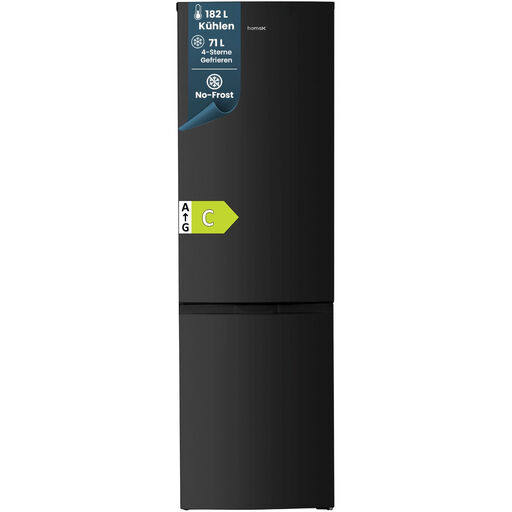
Why This Fits Their Persona: With 253 litres of capacity, this model offers ample space for a small family. It focuses on essential features without driving up the price with complex extras. A solid choice for everyday use.
The Total No-Frost technology prevents ice build-up throughout the entire appliance, not just the freezer. At 39 dB, the unit is pleasantly quiet for its price class and suitable for most kitchen environments.
Good energy efficiency class C with an annual consumption of just 141 kWh. The Super-Frost function allows for rapidly freezing fresh food.
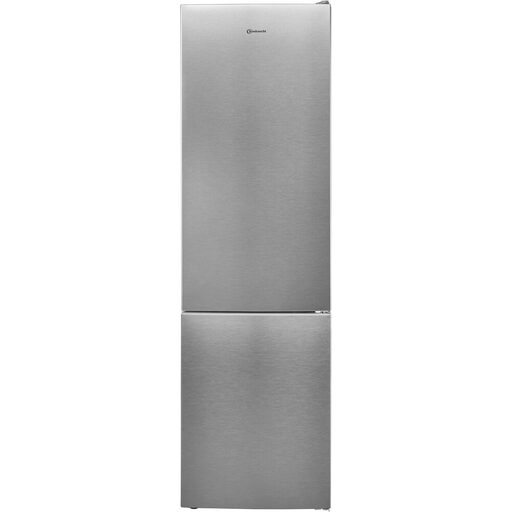
Why This Fits Their Persona: For those who value top-tier efficiency, durability, and low operating noise. With 355 litres, this appliance offers plenty of space and flexible storage options for discerning households.
At just 32 dB, thanks to its inverter compressor, this model is extremely quiet and ideal for open-plan kitchens. The SN-T climate class covers a wide temperature range from 10°C to 43°C, ensuring reliable operation.
Outstanding energy efficiency class A with only 112 kWh of annual consumption. The Multi Zone allows one compartment to be flexibly used as either a fridge or freezer section.
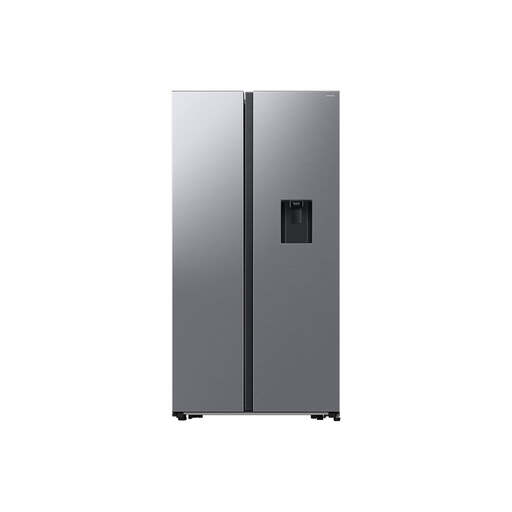
Why This Fits Their Persona: This smart refrigerator is ideal for large households seeking cutting-edge technology and maximum storage space. Wi-Fi connectivity and the water dispenser offer a high level of convenience and control.
The No Frost+ technology reliably prevents ice formation. The AI Energy Mode learns usage patterns and optimises energy consumption to keep costs low despite the appliance's large size.
Enormous usable capacity of 578 litres thanks to SpaceMax technology. Control and monitoring are possible from anywhere via the SmartThings App.
We have compiled a complete, up-to-date list of products that fully meet these strict selection criteria and all relevant safety standards.
The climate class indicates the ambient temperature range in which the appliance will function optimally. The most common classes are:
The actual consumption depends on the energy efficiency class, size, usage habits, and ambient temperature. A good benchmark is the annual consumption in kWh stated on the EU energy label. To estimate your annual electricity costs, multiply this value by your current electricity rate per kWh (e.g., 200 kWh/year * ?0.25/kWh = ?50 per year). No-Frost appliances are not inherently more power-hungry; in fact, ice build-up in appliances without this technology would significantly increase consumption.
A value of 39 dB is comparable to a quiet whisper or the ambient noise in a library. For most people, this is a very acceptable noise level that is barely noticeable in the course of a normal day in the kitchen. For noise-sensitive individuals or in a very quiet environment, a model rated at 35 dB or less might be a better choice, as this difference is already clearly perceptible.