
Lieferung heute & morgen

Qualitätsgarantie

Willkommens-Angebote freischalten: KOSTENLOSE Lieferung | Bis zu 80 % RABATT | Kostenlose 30-Tage-JoyPlus-Testphase
App herunterladen
A no-frost freezer promises convenience and an end to tedious maintenance. However, choosing the right appliance is fraught with pitfalls that can lead to unexpected costs and frustration. Many models are advertised with features whose practical disadvantages only become apparent in daily use. As your Joybuy Product Recommendation Officer, I'll help you distinguish marketing promises from genuinely useful features and make an informed decision.
The most common purchasing mistakes are quickly identified:
To avoid a poor purchase, you should carefully examine three technical parameters. These determine whether a deep freezer fits your needs, your household, and your budget.
The usable capacity, specified in litres, is the first key criterion. As a rule of thumb:
A freestanding freezer offers maximum flexibility in placement. However, pay attention not only to the height but also to the depth and width of the appliance, especially if it needs to fit into an alcove. Also, plan for sufficient space for ventilation on the sides and at the back to ensure efficient cooling.
Since 2021, the new EU energy label with a scale from A (very efficient) to G (inefficient) has been in effect. Appliances that were previously rated A+++ are now often found in classes C, D, or E. An energy efficiency class C freezer is already an excellent choice and ensures moderate running costs. Compare the annual consumption in kilowatt-hours (kWh/annum) indicated on the label to better estimate the long-term costs.
The intended location is crucial. For a garage or basement freezer, you need a model that is approved for low ambient temperatures. Look for manufacturer specifications like "WinterProof" or an explicit suitability for temperatures down to -15°C.
If the appliance is to be placed in the kitchen or an open-plan living area, a quiet freezer is essential. The noise emission is specified in decibels (dB).
Here are three models tailored to specific user profiles that take the above criteria into account.

Why This Fits Their Persona: Ideal for families who prioritise low running costs and ample storage space. The combination of a large capacity, high energy efficiency, and full no-frost technology makes it a cost-effective long-term solution for bulk food storage.
This model offers true No-Frost technology, making manual defrosting obsolete. Furthermore, with its Energy Efficiency Class C and suitability for cold environments down to -15°C, it is a future-proof investment that protects against high electricity bills and malfunctions in the basement.
Excellent energy efficiency (Class C) and a large usable capacity of 286 litres. Its suitability for unheated rooms offers maximum placement flexibility.
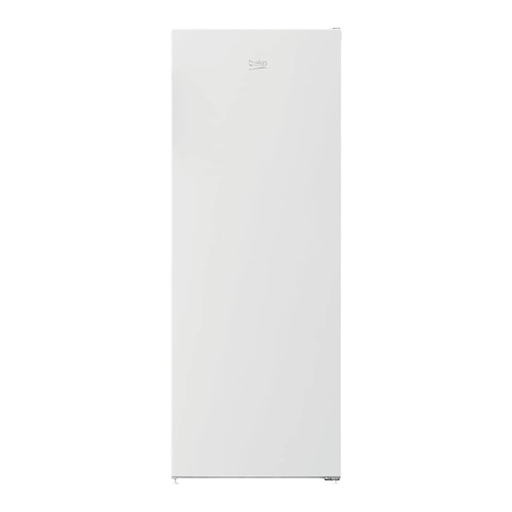
Why This Fits Their Persona: Perfect as a secondary appliance for homeowners looking for a reliable deep freezer for the basement or garage. Its compact height and guaranteed operation in cold temperatures make it a worry-free choice for unheated utility rooms.
This model is explicitly designed for operation in ambient temperatures as low as -15°C, thus bypassing the climate class trap. The full No-Frost technology ensures that no manual maintenance is required, even in a hard-to-reach location.
Reliable operation in cold environments and a maintenance-free No-Frost function. With 177 litres, the Beko freezer offers ample space for bulk purchases.
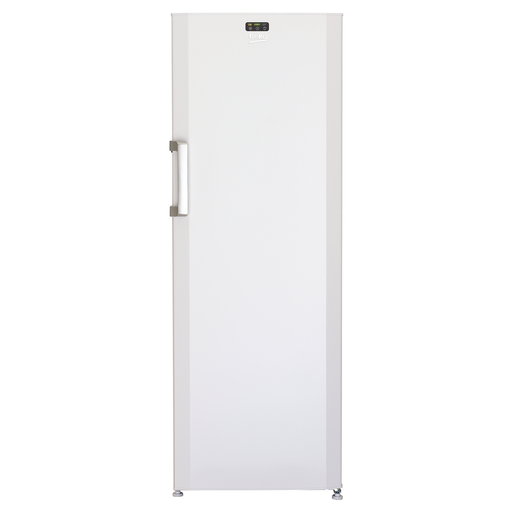
Why This Fits Their Persona: A pragmatic choice for users who need maximum storage space and want to reduce maintenance, but don't necessarily require a full no-frost system. Ideal for storing large quantities of food.
This model uses MinFrost technology. It's important to understand that this greatly reduces ice build-up but does not prevent it completely. It's a compromise that makes defrosting less frequent and easier, but doesn't eliminate it. This way, you won't fall into the trap of having false expectations.
Very large usable capacity of 244 litres at an attractive price-performance ratio. The quiet operation at 36 dB and its suitability for cold rooms down to -15°C are further objective advantages.
We've compiled a complete, up-to-date list of products that fully meet these strict selection criteria and EU safety regulations.
An appliance with true No-Frost technology theoretically never needs to be manually defrosted. The circulating air system prevents the formation of ice layers. However, for hygiene reasons, it is recommended to empty the interior and clean it with a mild detergent about once or twice a year.
Yes, this is possible, but only if the appliance is explicitly designed for it. Pay attention to the manufacturer's specifications on the climate class (e.g., SN-T, which covers a wide temperature range) or special labels like "FrostProtect," "WinterProof," or approval for operation in ambient temperatures down to -15°C. A standard appliance can fail in the cold.
Not necessarily. The No-Frost system uses a fan for air circulation, which can produce a quiet sound. However, modern appliances are very well soundproofed. A look at the decibel (dB) rating on the energy label provides clarity: models below 40 dB are considered quiet and are well-suited for use in living areas.