
Lieferung heute & morgen

Qualitätsgarantie

Willkommens-Angebote freischalten: KOSTENLOSE Lieferung | Bis zu 80 % RABATT | Kostenlose 30-Tage-JoyPlus-Testphase
App herunterladen
A French door refrigerator is often the centerpiece of a modern kitchen. With its generous capacity and elegant design, it's a real eye-catcher. But behind the stylish facade lie technical details that can mean the difference between satisfaction and frustration. Many buyers fall into traps obscured by clever marketing – from misleading capacity claims to only partially functional No-Frost technology. This guide will help you separate the wheat from the chaff and find a model that truly fits your household's needs.
Before you make a decision, you should be aware of the typical problems that often only become apparent after the purchase.
To avoid a bad purchase, you should focus on objective, technical specifications. These three factors are crucial for long-term satisfaction.
Especially in open-plan kitchens, a loud refrigerator can significantly disrupt your quality of life. The volume is specified in decibels (dB). A quiet refrigerator with No Frost should not exceed a value of 38 dB. Models below 35 dB are barely perceptible and ideal for noise-sensitive environments. Look for appliances with an inverter compressor, as it continuously adjusts its performance, making it quieter and more energy-efficient than conventional compressors.
For a large family, it's not just the total volume that's important, but also the intelligent layout of the interior. A French door fridge-freezer offers continuous, wide shelves in the refrigerator section, ideal for large platters or baking sheets. A multi-door refrigerator often has additional drawers or compartments with separate temperature controls, allowing for more flexible storage of different foods. Check whether the compartments and drawers suit your storage habits.
Since 2021, the new EU energy label with classes from A (very efficient) to G (less efficient) has been in effect. An appliance in class D or E can still be a good choice, as the requirements have become stricter. The annual electricity consumption in kilowatt-hours (kWh) provides the clearest indication of the expected operating costs. An efficient refrigerator with a stainless steel finish can save several hundred pounds in electricity costs over its lifespan.
Here are some models that are suitable for different requirement profiles based on their technical data and features.
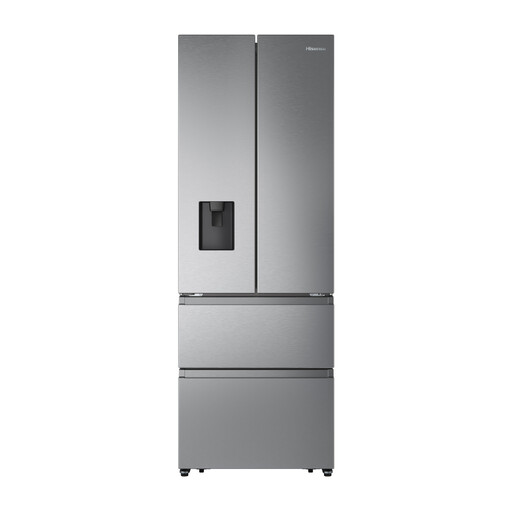
Why this model is a good fit: This Hisense model offers a high capacity and all the essential features like No-Frost and a water tank, without the need for a plumbed-in connection. A practical solution for rental properties or kitchens without the necessary plumbing.
The integrated water tank bypasses the installation hurdle of a fixed water connection while still providing chilled water at the touch of a button. The NoFrost Plus technology prevents ice build-up in both sections.
Generous net capacity of 485 litres and special freshness zones (CrispZone) for fruit and vegetables, with a moderate noise level of 38 dB.
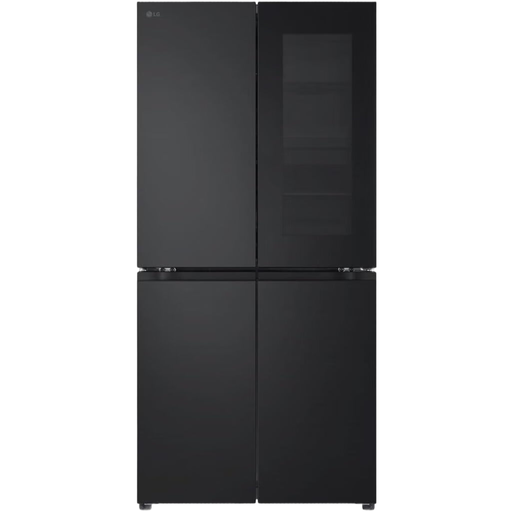
Why this model is a good fit: It combines a slim, modern design in black with innovative features like InstaView. At only 83.5 cm wide, it fits into narrower alcoves without sacrificing the spacious feel of a multi-door appliance.
The "Total No Frost" technology applies to the entire interior, completely eliminating the need for manual defrosting. The slim design solves the problem of bulky appliances in standard kitchens.
The InstaView feature reduces cold air loss by minimising the need to open the door. The slim design (Slim Fit) allows for flexible integration into the kitchen layout.
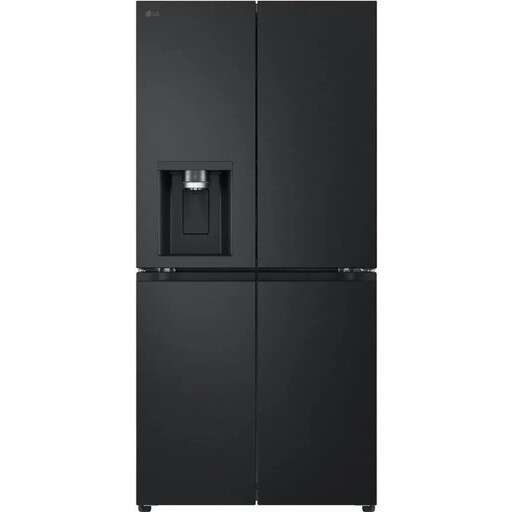
Why this model is a good fit: This model is equipped with LG ThinQ app control, allowing for remote monitoring and adjustment. The UVnano water dispenser, which the manufacturer claims reduces bacteria, highlights its high-tech credentials.
The 506-litre capacity is thoughtfully divided, with flexible drawers and the Slim SpacePlus Ice System, which maximises storage space and avoids the capacity bluff.
Smart control via the ThinQ app and hygienic water purification through UVnano technology. The Inverter Linear Compressor ensures quiet operation.
We have compiled a complete, up-to-date list of products that fully meet these strict selection criteria and local safety regulations.
1. What is the difference between a French Door and a Multi-Door refrigerator? A classic French Door refrigerator has two doors at the top for the fridge section and one or two large drawers at the bottom for the freezer. A Multi-Door refrigerator also has two doors at the top, but the bottom section is often accessible via two additional doors, allowing for more flexible organisation and temperature zones.
2. How important is No-Frost technology really? It is a crucial convenience feature. Without No-Frost technology, a layer of ice forms in the freezer and sometimes in the fridge compartment. This must be removed manually on a regular basis, which is time-consuming. Furthermore, the ice build-up increases the appliance's energy consumption. A model with "Total No Frost" completely saves you this chore.
3. Does a refrigerator with an ice dispenser always need a plumbed-in connection? No. Many modern appliances, especially those designed for flexible use in homes, are equipped with an integrated water tank. This can be easily removed, filled, and cleaned. This makes you independent of a water connection near the refrigerator. While models with a fixed water connection offer more convenience as they eliminate refilling, they do limit your placement options.