
Lieferung heute & morgen

Qualitätsgarantie

Willkommens-Angebote freischalten: KOSTENLOSE Lieferung | Bis zu 80 % RABATT | Kostenlose 30-Tage-JoyPlus-Testphase
App herunterladen
Finding a new fridge-freezer can be a challenge. The selection is vast, the technical specifications are complex, and the decision you make will impact your daily life and electricity bill for years to come. For families and multi-person households in particular, factors like capacity, energy efficiency, and low operating noise are crucial. And manual defrosting is a chore most would gladly do without.
As your Joybuy Product Recommendation Officer, my job is to provide you with clear and objective guidance. This article highlights the most important criteria for buying a freestanding No Frost fridge-freezer and presents a selection of models with different strengths. The goal is to give you an informed basis for your decision.
Before you buy a fridge-freezer, you should understand a few key technical features and their practical benefits. Three aspects are particularly relevant.
Since 2021, the new EU energy label with classes from A (very efficient) to G (less efficient) has been in effect. An appliance with a high energy efficiency class like A or B may be more expensive to purchase, but it can lead to significant savings on your electricity costs over its lifespan. Pay attention to the specified annual energy consumption in kilowatt-hours (kWh) to better estimate the long-term running costs. An energy-efficient appliance is not only easier on your wallet but also better for the environment.
Capacity, measured in litres, is a crucial criterion. As a rule of thumb:
A large capacity is especially important for families who store weekly groceries. Also, look for a flexible interior layout with adjustable shelves, spacious door compartments, and special crisper drawers for fruit and vegetables.
In modern, open-plan kitchens, a quiet-running refrigerator is essential. The noise level is specified in decibels (dB). Appliances under 40 dB are considered quiet, while models around 35 dB are barely perceptible.
No Frost technology is a standard feature in high-end appliances today. It prevents ice build-up in the freezer compartment, which means manual defrosting is no longer necessary and cooling performance remains consistently high. An Inverter Compressor further contributes to efficiency and quiet operation by adjusting its power as needed and minimising temperature fluctuations.
Here is a selection of freestanding fridge-freezers that cover different needs and budgets.
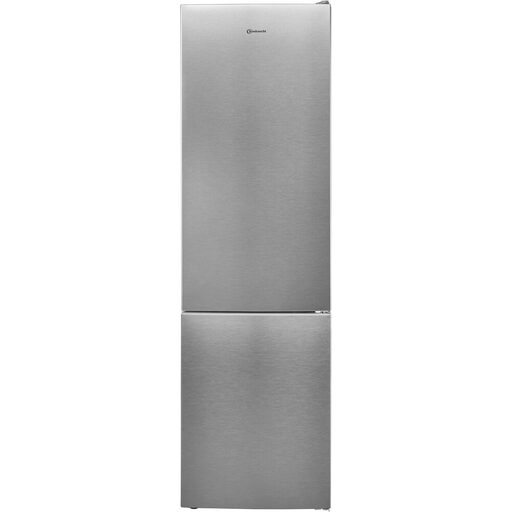
Why it stands out: This Bauknecht fridge-freezer sets the standard for efficiency and noise level. With an A energy efficiency class and an annual consumption of just 112 kWh, it is extremely economical to run. The Inverter Compressor ensures extremely quiet operation at just 32 dB. A special feature is the Multi Zone, which allows one compartment to be used flexibly as either a fridge or a freezer.
Advantages:
Who it's for: For quality-conscious households that value maximum energy efficiency, minimal noise, and flexible usage options, and are willing to invest in a durable, top-tier appliance.
See details for the Bauknecht KGDNF 203 A
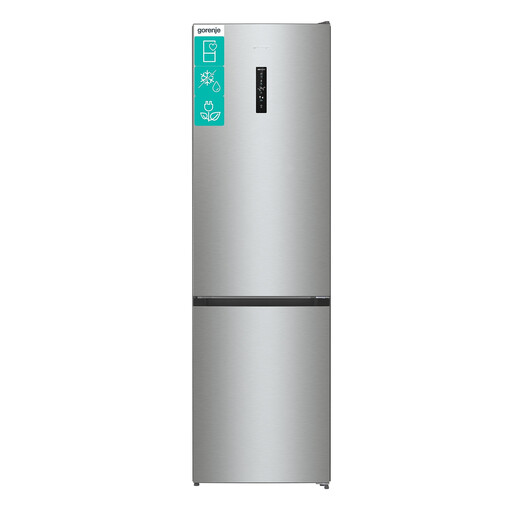
Why it stands out: The Gorenje fridge offers a well-balanced package of capacity, modern features, and great value for money. With 331 litres of capacity, it's ideal for families. No Frost technology in both compartments and the Multi-Airflow system ensure even cooling and long-lasting freshness. At 35 dB, this model is also very quiet.
Advantages:
Who it's for: For families looking for a reliable and spacious freestanding fridge with No Frost that offers modern convenience features without breaking the bank.
See details for the Gorenje NRK620CA2XL4
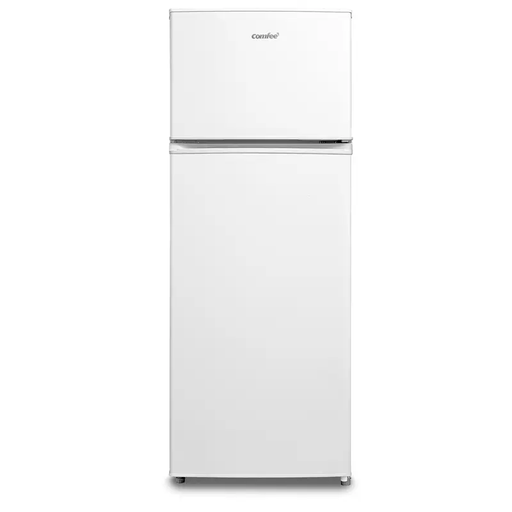
Why it stands out: The model from Comfee is a compact and budget-friendly solution for smaller households. With a total capacity of 204 litres (163 L fridge, 41 L freezer), it also fits into kitchens with limited space. It's important to note that, unlike the other models presented, this one requires manual defrosting of the freezer compartment.
Advantages:
Who it's for: For singles, couples, or as a secondary appliance where budget and compact dimensions are the priority, and the absence of a No Frost feature is acceptable.
See details for the Comfee RCT284WH2A
If the capacity of a classic fridge-freezer isn't enough for your household, a model with even more space could be the right choice. These appliances often offer additional compartments and advanced freshness technologies.
Discover our selection of more spacious alternatives on our Side-by-Side Refrigerators category page.
No Frost is a technology that prevents the build-up of ice and frost in the freezer compartment. A ventilation system circulates dry air and removes moisture from the freezer. This eliminates the tedious and energy-consuming task of manual defrosting. It also keeps food from sticking together and ensures the appliance's energy efficiency remains consistently high.
The noise level is measured in decibels (dB). A value below 40 dB is considered quiet and is suitable for most living situations, including open-plan kitchens. Models with ratings around 35 dB (like the Gorenje NRK620CA2XL4) or even 32 dB (like the Bauknecht KGDNF 203 A) are barely audible and offer maximum comfort.
Since the introduction of the new EU energy label in March 2021, the scale ranges from A (highest efficiency) to G (lowest efficiency). Appliances in classes A and B are the most economical on the market and lead to the lowest long-term operating costs. Models in class C or D often represent a good compromise between purchase price and energy consumption. Appliances below class E are generally less recommended, as the higher electricity consumption can quickly offset any initial savings.