
Lieferung heute & morgen

Qualitätsgarantie

Willkommens-Angebote freischalten: KOSTENLOSE Lieferung | Bis zu 80 % RABATT | Kostenlose 30-Tage-JoyPlus-Testphase
App herunterladen
Finding a new fridge-freezer can be a challenge. Older appliances are often energy-intensive, lack the space for a family's weekly shopping, and make the tedious chore of manual defrosting a recurring task. This article serves as a guide. It highlights the key technical features to consider when making your choice and presents a selection of models tailored to the specific needs of modern households.
Choosing a new major home appliance is a long-term investment. Three key criteria will help you find the right model: energy efficiency, usable capacity, and convenience features.
An energy-efficient fridge-freezer is not only better for the environment but also for your budget. Since 2021, the new EU energy label has been in effect, with classes ranging from A (very efficient) to G (less efficient). A Class C appliance can mean significant savings on annual electricity costs compared to an older Class F model. A crucial component for efficiency is the compressor. Models with a fridge with an inverter compressor continuously adjust their power to meet the actual cooling demand. This reduces energy consumption, minimises temperature fluctuations, and results in quieter operation.
The required capacity depends on your household size and shopping habits. A good rule of thumb is about 100 litres of fridge space for the first person and 50 litres for each additional person. For a family of four, a large fridge-freezer with a total capacity of over 300 litres is often a great choice. Pay attention to a well-designed interior layout. A fridge with the freezer at the bottom is ergonomically superior, as the more frequently used refrigeration section is at eye level. Modern appliances also feature a Multi-Air Flow System, which distributes cold air evenly on all levels, keeping food fresher for longer.
In open-plan kitchens, a quiet fridge is especially important. Noise emission is measured in decibels (dB). Appliances with ratings below 35 dB are considered very quiet and are barely perceptible in daily life. The most important convenience feature is undoubtedly No Frost technology. It prevents the build-up of ice and frost in the freezer compartment, completely eliminating the need for manual defrosting. This not only saves time and effort but also ensures consistent cooling performance and more efficient operation.
Here is a selection of appliances that are well-suited for different needs, thanks to their specific features and technical specifications.
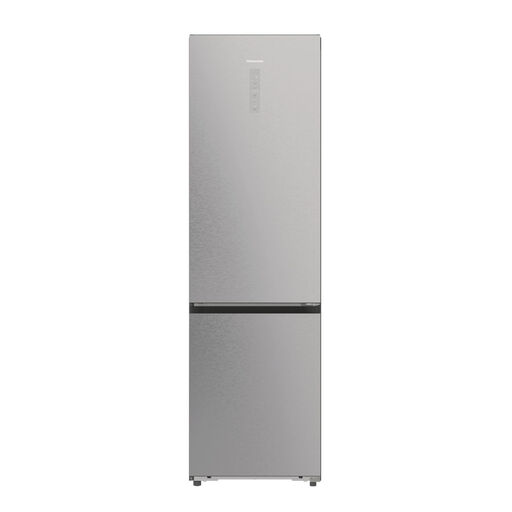
Why it stands out: This model from Hisense combines a very large capacity with modern technology and quiet operation. Its stainless steel finish and app control make it a great option for tech-savvy households.
Pros:
Who is it for? For families and multi-person households looking for a very spacious, quiet, and smart fridge who also value a modern design.
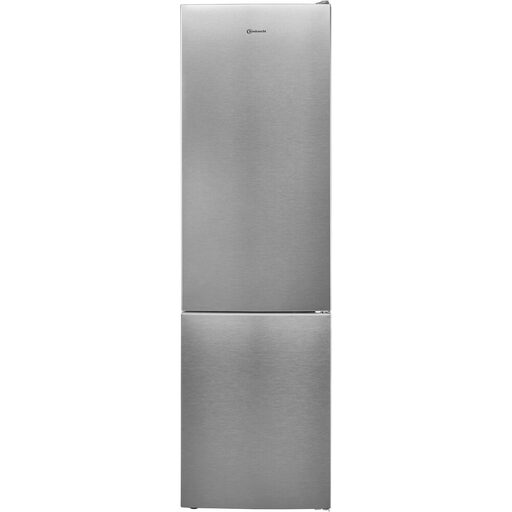
Why it stands out: The Bauknecht model is distinguished by its outstanding energy efficiency and flexible Multi Zone. It is one of the quietest appliances on the market and offers sophisticated features for food preservation.
Pros:
Who is it for? For environmentally and cost-conscious users who demand the highest standards of energy efficiency and whisper-quiet operation, and who appreciate the flexibility of a convertible cooling zone.
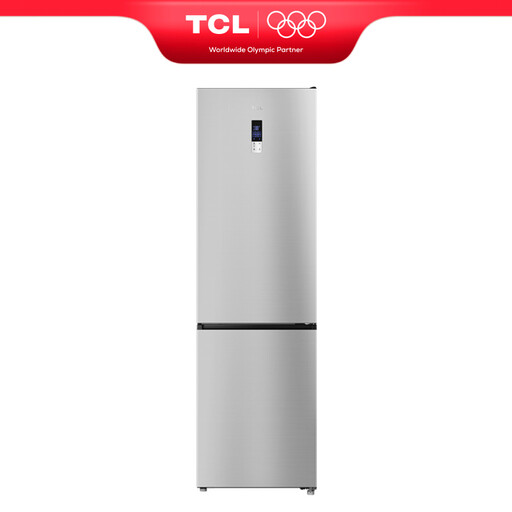
Why it stands out: As the name "MEGA SPACE" suggests, the focus of this TCL model is on maximum storage. Thanks to a special insulation technology (VIP), the walls are thinner, resulting in an exceptionally large interior within standard external dimensions.
Pros:
Who is it for? For very large families or shared living spaces that need to maximise available space and require a solution for storing large quantities of food.
The models presented here cover common requirements. However, if you have different priorities, such as a different size, colour, or specific features, you can find a wider selection in our main category.
? Discover more freestanding refrigeration appliances
1. What does "Total No Frost" mean in a fridge-freezer? "Total No Frost" is a system that controls air circulation in both the fridge and freezer compartments. It actively removes moisture, preventing the formation of ice and frost on the interior walls and on your food. This completely eliminates the need for manual defrosting.
2. How important is the energy efficiency class for a new fridge? The energy efficiency class is very important, as a fridge runs 24 hours a day. An appliance with a high efficiency class (e.g., A or B on the new EU label) consumes significantly less electricity than one with a lower class (e.g., F or G). Over the appliance's 10-15 year lifespan, this can save you several hundred euros in electricity costs.
3. What is an inverter compressor and what are its advantages? A conventional compressor switches on at full power when needed and then switches off again. An inverter compressor, on the other hand, continuously adjusts its speed and thus its power output to match the actual cooling demand. The advantages include lower energy consumption, a more stable internal temperature which keeps food fresher for longer, and significantly quieter operation, as the compressor usually runs at a low speed.