Joybuy Insights

No-Frost Fridge-Freezer Buying Guide: Avoid Costly Mistakes

A modern No-Frost fridge-freezer promises convenience: never defrost manually again and always enjoy optimally chilled food. However, the selection process is fraught with pitfalls that can quickly turn this labour-saving promise into a costly mistake. Misinterpreting technical data or overlooking key details can often lead to high electricity bills, disruptive operating noise, or inadequate cooling performance.

As your Joybuy Product Recommendation Officer, I'm here to help you navigate these common errors. We will focus on the crucial, objective criteria to help you find an appliance that precisely matches your household and your needs.

The 3 Most Common Pitfalls When Buying a Fridge-Freezer

Many purchasing decisions are based on advertising promises that prove problematic in practice. Pay special attention to these three points:

  1. The Energy Efficiency Trap: A low initial price can be quickly negated by high running costs. An appliance with Energy Efficiency Class E often consumes significantly more electricity than a Class B or C model. Over a lifespan of 10-15 years, this can result in several hundred pounds in additional costs.
  2. The "Quiet" Illusion: A low decibel (dB) rating on the spec sheet is only half the story. The type of noise is just as important. The constant, low hum of an inverter compressor is often perceived as less disruptive in an open-plan kitchen than the sudden, loud switching on and off of a conventional compressor, even if the dB rating is similar on paper.
  3. The "No-Frost" Ambiguity: Not every appliance advertised with automatic defrosting offers "Total No Frost." Some cheaper models only feature "Low Frost" or a No-Frost function exclusively in the freezer section. This means condensation and ice can still form in the fridge compartment, requiring manual cleaning and defrosting, which undermines the original reason for buying.

What Really Matters: The Decisive Parameters

To make an informed decision, you should examine three core technical features. These will determine the long-term satisfaction and the true cost of your appliance.

Energy Efficiency Class and Annual Consumption (kWh/a)

The new EU energy label, with a scale from A (very efficient) to G (less efficient), has been in effect since 2021. An energy-efficient fridge-freezer is a long-term investment.

  • Energy Efficiency Class: Models in classes B and C are often more expensive to purchase but pay for themselves through lower electricity costs.
  • Annual Consumption in kWh/a: This figure is even more telling. It indicates the estimated annual electricity consumption and allows for a direct cost comparison between different models. Multiply this value by your current electricity price per kilowatt-hour (kWh) to determine the annual running costs.

Usable Capacity and Design

The right size and design are crucial for everyday usability. An appliance that is too large wastes energy, while one that is too small leads to a lack of space.

  • Usable Capacity: As a rule of thumb, allow for approx. 100 litres of usable capacity for one person, plus an additional 50 litres for each subsequent person in the household. Pay attention to the ratio between the fridge and freezer compartments to match your shopping habits.
  • Design: A freestanding fridge-freezer offers maximum flexibility in placement. Measure the available niche precisely and plan for sufficient ventilation space (usually 5-10 cm at the sides and back). Models with a reversible door hinge can adapt to any kitchen layout.

Operating Noise and Compressor Technology

In modern, open-plan living spaces, a quiet fridge is essential.

  • Sound Power Level in Decibels (dB): Values below 38 dB are considered very quiet and are well-suited for open-plan kitchens. Appliances rated at 40 dB or more can already be perceived as disruptive.
  • Compressor Type: Inverter compressors continuously adjust their power to meet cooling demands. They run more consistently and quietly than conventional compressors, which can only switch on and off. This leads to fewer temperature fluctuations and lower energy consumption.

Recommended Products for Different Needs

Here are three models tailored to different household sizes and needs, specifically chosen to avoid the pitfalls mentioned.
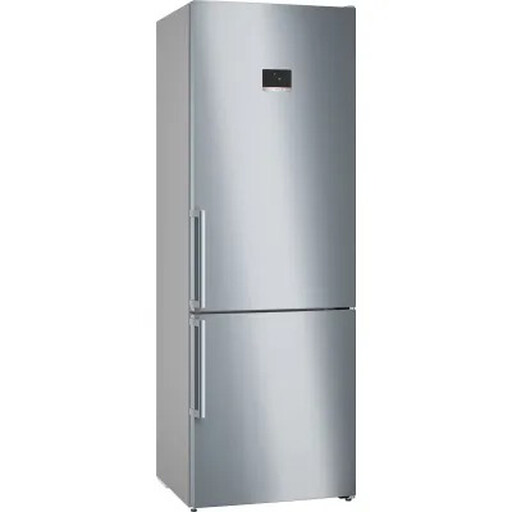
MATCH FOR: The Quality-Conscious Household
Bosch KGN49AIBT Series 6 Freestanding Fridge-Freezer Combination, 440 L, VitaFresh XXL, NoFrost, Energy Class B

Bosch KGN49AIBT Series 6 Freestanding Fridge-Freezer, 440 L, VitaFresh XXL, NoFrost, Energy Class B

Why This Fits Their Persona: Ideal for families or discerning couples who value maximum freshness, high energy efficiency, and very low operating noise. The large 440-litre capacity offers ample space for a week's worth of groceries.

How It Avoids the Trap

With Energy Class B (142 kWh/a), it bypasses the energy cost trap. The quiet inverter compressor, at just 35 dB, avoids the noise trap in open-plan kitchens. Total NoFrost ensures that defrosting is a thing of the past.

Key Advantage & Pros

The VitaFresh XXL system, with special drawers for fruit, vegetables, fish, and meat, provides demonstrably longer food preservation. The high-quality stainless steel fridge front with an anti-fingerprint coating is easy to clean.
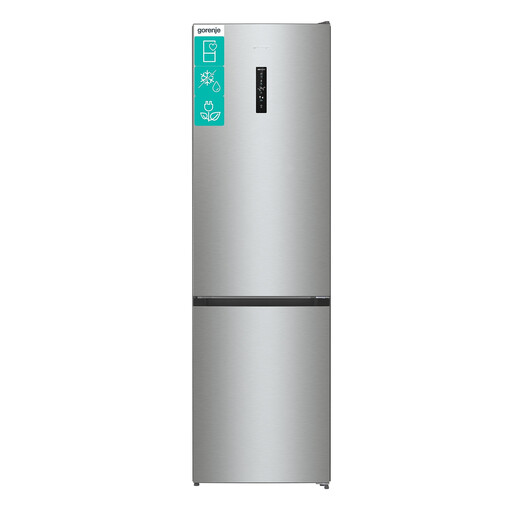
MATCH FOR: The Pragmatic Family
Gorenje NRK620CA2XL4 Freestanding Fridge Freezer, 331L Total Capacity, No Frost, Super Cool & Fast Freeze, Silver

Gorenje NRK620CA2XL4 Freestanding Fridge-Freezer, 331L, No Frost, Silver

Why This Fits Their Persona: An excellent choice for families looking for a spacious and reliable appliance with modern features at a reasonable price. With 331 litres, it offers plenty of space for weekly shopping.

How It Avoids the Trap

Energy Class C (158 kWh/a) ensures moderate running costs. At just 35 dB, the appliance is extremely quiet and suitable for open-plan kitchens. The complete No-Frost technology prevents ice build-up in both compartments.

Key Advantage & Pros

Offers an excellent balance of usable capacity, energy efficiency, and price. Features like Super Cool and Fast Freeze help to quickly lock in the freshness of groceries.
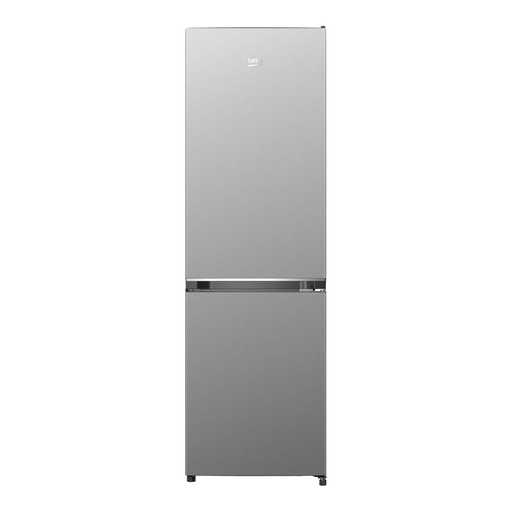
MATCH FOR: The Modern City Apartment
Beko B3RCNO255XB Freestanding Fridge-Freezer 250L (180L Fridge / 70L Freezer) No Frost Energy Class D Inox

Beko B3RCNO255XB Freestanding Fridge-Freezer, 250L, No Frost, Inox

Why This Fits Their Persona: Perfect for singles or couples in apartments with limited space. Its slim 54 cm width allows it to be integrated even into smaller kitchens without sacrificing convenience.

How It Avoids the Trap

This model is a full-featured freestanding fridge with No Frost, avoiding the defrosting trap. At 39 dB, it is quiet enough for living spaces. Energy Class D is a trade-off that becomes attractive for smaller budgets due to its lower purchase price.

Key Advantage & Pros

The compact 54 cm width and reversible door hinge offer maximum placement flexibility. A special feature is its ability to operate in unheated rooms down to -15 °C, allowing it to be used in cellars or garages.

Looking for More Options?

We have compiled a complete, up-to-date list of products that fully meet these strict selection criteria and all relevant safety standards.

Frequently Asked Questions (FAQ)

What does the climate class mean on a fridge-freezer?

The climate class indicates the optimal ambient temperature range in which the appliance operates efficiently. The most common classes are:

  • SN (Subnormal): +10 °C to +32 °C
  • N (Normal): +16 °C to +32 °C
  • ST (Subtropical): +16 °C to +38 °C
  • T (Tropical): +16 °C to +43 °C An appliance with an SN-T class covers the entire range from +10 °C to +43 °C, making it suitable for most locations, including cooler cellars.

How much space does a freestanding fridge-freezer need from the wall?

For adequate air circulation and to prevent overheating and increased energy consumption, a gap of 5-10 cm at the sides and back is generally recommended. However, some modern appliances with a "Perfect Fit" design can be placed directly against a wall or in a niche. Always check the manufacturer's instructions in the user manual for specific details.

Is a No-Frost fridge-freezer really worth it?

Yes, in most cases, the investment is worthwhile. The benefits significantly outweigh the often small additional cost:

  • No manual defrosting: You save time and effort.
  • Consistent cooling performance: Without a layer of ice, the appliance operates more efficiently.
  • Better food hygiene: Ice build-up can cause temperature fluctuations and affect frozen goods. No Frost keeps food items separate and prevents them from freezing into a solid block.
  • Lower energy consumption: A thick layer of ice acts as insulation, forcing the compressor to work harder, which increases electricity consumption.