
Lieferung heute & morgen

Qualitätsgarantie

Willkommens-Angebote freischalten: KOSTENLOSE Lieferung | Bis zu 80 % RABATT | Kostenlose 30-Tage-JoyPlus-Testphase
App herunterladen
Purchasing a new fridge-freezer is a decision that will shape your daily kitchen routine for years to come. But the market is saturated with marketing promises and technical jargon that often confuse more than they clarify. Many buyers invest in features they don't need or overlook critical flaws that only become apparent during operation. This guide will help you navigate the common pitfalls and find an appliance that truly fits your needs.
Before we dive into the important features, let's clear up the most widespread misconceptions that often lead to poor purchasing decisions.
To make an informed decision, focus on these three objective criteria. They are the primary determinants of your new appliance's real-world usability and long-term running costs.
The first question should always be: How much space do I need? A common rule of thumb is:
Different designs are suitable depending on the available space and your needs:
Energy consumption is a critical cost factor over the appliance's lifespan. Pay attention to the annual consumption (kWh/a) indicated on the energy label. An inverter compressor is a clear technical advantage here. Unlike conventional compressors that only switch on or off, it continuously adjusts its power to meet cooling demands. The results:
A modern No Frost fridge-freezer should do more than just prevent ice build-up. Look for a combination with a Multi-Airflow System. This system uses vents on every level to distribute chilled air evenly throughout the interior. This quickly compensates for temperature fluctuations after opening the door, and food stays optimally chilled everywhere in the fridge, not just near the fan.
Here are some models that represent a considered choice for different households based on their technical specifications.
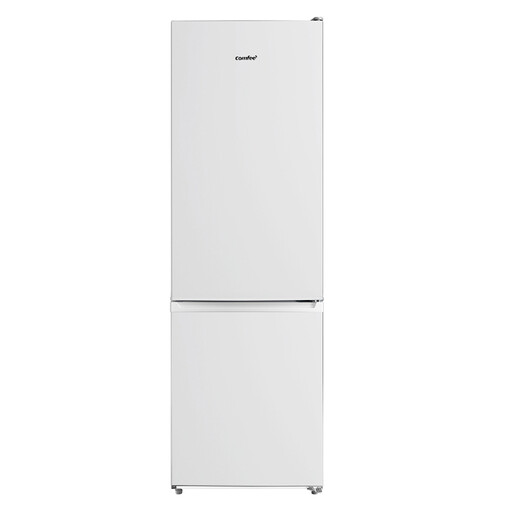
Why this model is a good fit: This appliance offers essential No-Frost technology and a solid 310-litre capacity, which is sufficient for small families or shared flats without breaking the bank. It focuses on the core features that truly matter in daily use.
The model bypasses the efficiency trap: Although it's rated Class E, its No-Frost technology prevents the loss of efficiency caused by icing, making it more economical in real-world use than many older appliances with supposedly better labels.
No-Frost Technology: No more manual defrosting required.
Practical Capacity: 310 litres total volume (224L fridge, 86L freezer).
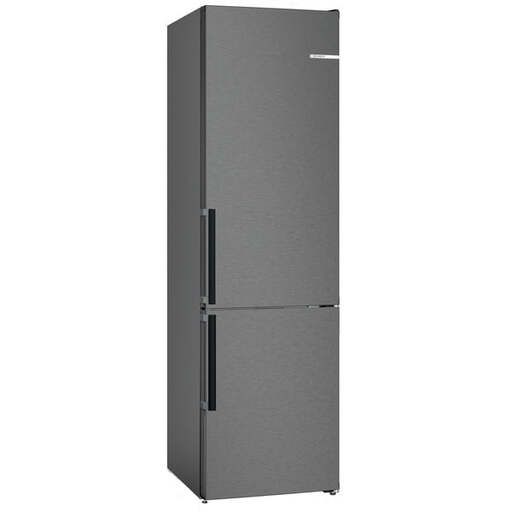
Why this model is a good fit: At just 35 dB, this appliance is extremely quiet and won't be a disturbance even in an open-plan kitchen. Its high Energy Efficiency Class C rating and generous 363-litre capacity make it an ideal choice for families who value low running costs and comfort.
This model directly addresses the noise trap with an objectively very quiet operation of 35 dB. Furthermore, the Multi-Airflow system ensures effective and even cooling, avoiding the drawbacks of simpler No-Frost systems.
Very Quiet Operation: At 35 dB, it's ideal for open kitchens.
High Energy Efficiency: Class C with only 162 kWh/a annual consumption.
VitaFresh System: Keeps fruit, vegetables, fish, and meat fresh for longer.
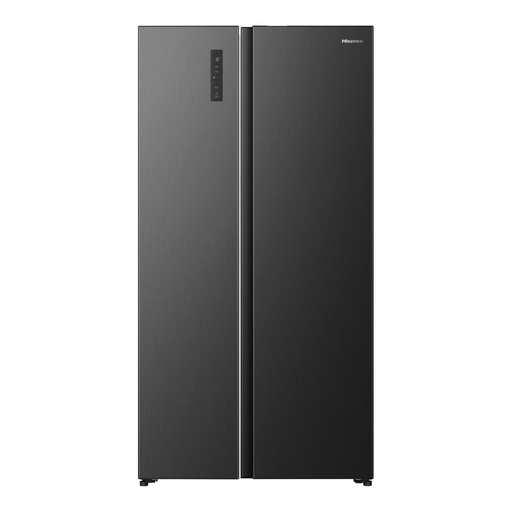
Why this model is a good fit: With a massive 544-litre capacity, this side-by-side refrigerator offers enormous space for bulk shopping. Its elegant design as a black refrigerator with a glass front and its quiet operation (35 dB) meet high standards for both aesthetics and comfort.
This model features "Total No Frost" for both the fridge and freezer compartments, as well as a Multi-Airflow system. This bypasses the trap of an ineffective No-Frost system. The quiet 35 dB operation is further proof of its thoughtful engineering.
XXL Capacity: 544 litres provide maximum storage space.
Total No Frost & Multi-Airflow: Even cooling without defrosting.
Elegant Design: PureFlat design in black with a glass surface.
We have compiled a complete, up-to-date list of products that fully meet these strict selection criteria and German safety regulations.
1. How much electricity does a No Frost fridge-freezer use? Consumption primarily depends on the energy efficiency class and size. A Class C model like the featured Bosch combination uses approx. 162 kWh per year, according to the manufacturer's specifications. A Class E appliance often consumes between 230 and 290 kWh. The No-Frost function itself only minimally increases consumption but prevents a significant loss of efficiency due to icing, which saves energy in the long run.
2. Is an inverter compressor really quieter and more economical? Yes. An inverter compressor flexibly adjusts its speed to meet cooling demands instead of constantly switching on and off at full power. This results in a smoother and significantly quieter operating noise, often below 38 dB. At the same time, energy consumption is reduced because the motor runs in an efficient partial load range most of the time.
3. What is the difference between "No Frost" and "Total No Frost"? The term "No Frost" sometimes refers only to the freezer compartment. "Total No Frost," on the other hand, guarantees that both the refrigerator and freezer sections are equipped with the air circulation technology. This prevents moisture and ice build-up throughout the entire appliance, making manual defrosting completely unnecessary.