
Lieferung heute & morgen

Qualitätsgarantie

Willkommens-Angebote freischalten: KOSTENLOSE Lieferung | Bis zu 80 % RABATT | Kostenlose 30-Tage-JoyPlus-Testphase
App herunterladen
Hanging pictures, towels, or kitchen utensils presents a recurring challenge for many renters and homeowners: How do you mount items without leaving permanent holes in your walls? Drill-free hooks are a practical solution. However, the market can be overwhelming, and not every product lives up to its promises. This guide will help you avoid common purchasing mistakes and find the perfect solution for your needs.
As your Joybuy Product Recommendation Officer, I filter the essential information for you, enabling you to make an informed decision based on facts, not just marketing promises.
Before you choose a product, you should be aware of the typical issues that can lead to frustration and unnecessary expense.
To avoid these issues, you should check three key criteria. These will help you objectively assess a hook's performance.
The mounting method is the most critical factor. The two most common systems are adhesive hooks and suction cups.
Read the manufacturer's product description carefully to determine which surfaces the hook is approved for. This overview provides general guidance:
The maximum load capacity is a guideline. Always allow for a safety margin and avoid loading the hook to its absolute limit. A drill-free towel hook intended to hold a damp bath towel needs a higher capacity than a hook for a light set of keys. Heavy-duty adhesive hooks for heavier items typically require a larger adhesive surface and more meticulous surface preparation.
Here are some product recommendations tailored to specific needs that meet the criteria mentioned above.
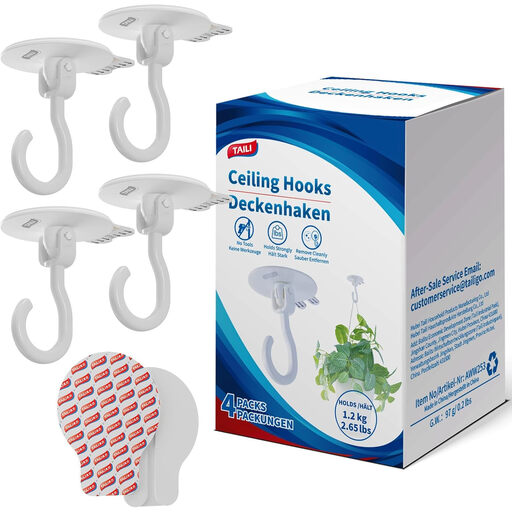
Why This Fits Their Persona: Ideal for people who frequently redecorate for seasons or holidays (e.g., string lights, garlands) and need a solution that can be removed without a trace from both walls and ceilings.
The patented adhesive system is designed for damage-free removal by stretching the strip. This avoids the problem of adhesive residue and stripped paint.
The 2-in-1 design with 180° tilt and 360° swivel functions allows for versatile use on both walls and ceilings. The load capacity of up to 1.18 kg (2.6 lbs) per hook is sufficient for light decorative items.
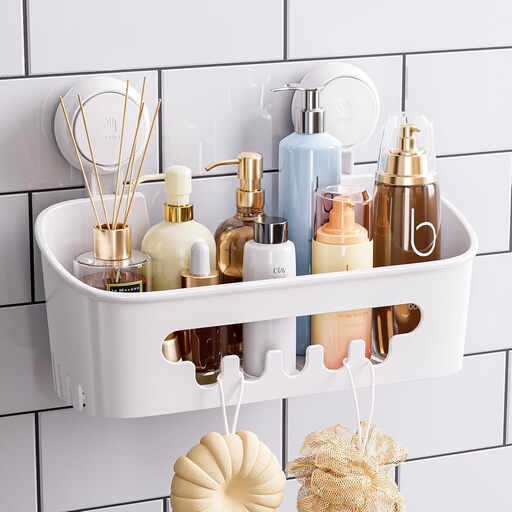
Why This Fits Their Persona: Perfect for renters who need a sturdy, spacious caddy for heavy shampoo bottles in the bathroom but are not allowed to drill into the tiles.
The suction cup technology bypasses the problem of adhesive residue and is specifically designed for smooth, non-porous surfaces like tiles. This prevents incorrect application and potential damage.
The high load capacity of up to 10 kg (22 lbs), according to the manufacturer, is designed for multiple shower essentials. Installation is tool-free, and the caddy is easily removable for cleaning or repositioning.
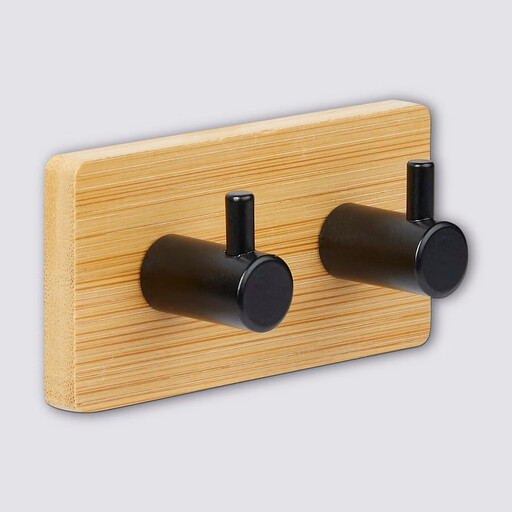
Why This Fits Their Persona: For users seeking a functional hanging solution whose design, featuring natural materials, blends harmoniously into a modern home aesthetic.
This product focuses on aesthetics without compromising on function. The clear instructions for indoor adhesive installation help prevent incorrect application on unsuitable surfaces.
The combination of bamboo and steel offers a visually appealing alternative to conventional plastic hooks. The design is both minimalist and functional.
We have compiled a complete, up-to-date list of products that fully meet these strict selection criteria and all applicable safety standards.
Using them on textured wallpaper is risky. The uneven surface of the wallpaper reduces the adhesive's contact area, which significantly decreases its holding power. Furthermore, there is a high risk of damaging the wallpaper or the paint underneath upon removal. Some manufacturers offer special adhesive strips for wallpaper. In these cases, it is essential to follow the manufacturer's instructions precisely.
The method depends on the mounting technology. Flexible adhesive strips (like tesa Powerstrips) should be pulled slowly and parallel to the wall to release the bond. For solid adhesive pads, gently heating them with a hairdryer can help soften the glue. Any remaining residue can often be removed with rubbing alcohol or a special adhesive remover. However, always test the cleaning agent on an inconspicuous spot first.
The lifespan depends on several factors: the quality of the adhesive, the load, the surface condition, and environmental factors like humidity and temperature fluctuations. On a clean, smooth, and dry surface, a high-quality product can last for several years. In damp environments, only water-resistant products specifically designed for such conditions should be used to ensure a long lifespan.