
Lieferung heute & morgen

Qualitätsgarantie
App herunterladen
Kategorien
Selecting headphones with Active Noise Cancellation (ANC) requires an analysis of technical specifications and their relevance to your intended use case. Whether for focused work in the office and home office, uninterrupted music enjoyment while travelling, or clear communication in noisy environments, the effectiveness of ANC headphones depends on the synergy of their components. This article analyses the crucial criteria and presents a selection of leading models for 2026.
The evaluation of noise-cancelling headphones should be based on objective parameters. The following technical aspects are relevant for making an informed decision.
ANC technology works by creating anti-noise. Microphones capture ambient sounds, and a processor generates an out-of-phase sound signal that neutralises the noise. There are three primary types:
The design of the headphones influences both wearing comfort and passive noise isolation.
Sound reproduction quality is a central criterion. Look for support for high-resolution audio codecs, which enable higher data rates over Bluetooth:
For use as a headset with a microphone, voice clarity is paramount. Modern systems use multiple microphones (beamforming arrays) and algorithms for background noise suppression (cVc, AI Noise Cancellation) to isolate the speaker's voice. A UC headset (Unified Communications) is also certified for platforms like Microsoft Teams or Zoom, ensuring seamless integration.
Long battery life is essential for all-day use. Runtimes of over 20 hours with ANC enabled are now standard. A fast-charging function, which provides several hours of playback after just a few minutes of charging, is a convenient feature.
Multipoint connection (also known as multipoint pairing) allows the headphones to be connected to two devices simultaneously, such as a laptop and a smartphone. This enables seamless switching between a video call on your PC and an incoming call on your mobile phone.
Based on the criteria above, we have compiled a selection of models that are well-suited for different user profiles based on their technical specifications.
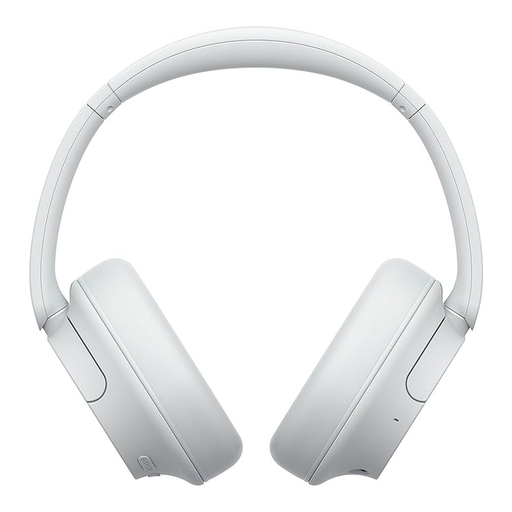
Why we recommend this product: The Sony WH-CH720N integrates the V1 processor, also found in the premium WH-1000XM5 model, to deliver solid ANC performance. At just 192 grams, it is one of the lightest over-ear headphones in its class, significantly enhancing comfort during long listening sessions. The combination of long battery life and multipoint connectivity makes it a versatile companion.
Pros:
Best for: Users seeking a lightweight and long-lasting Bluetooth headset for the daily commute, travel, and general music enjoyment, who also value reliable noise cancellation.
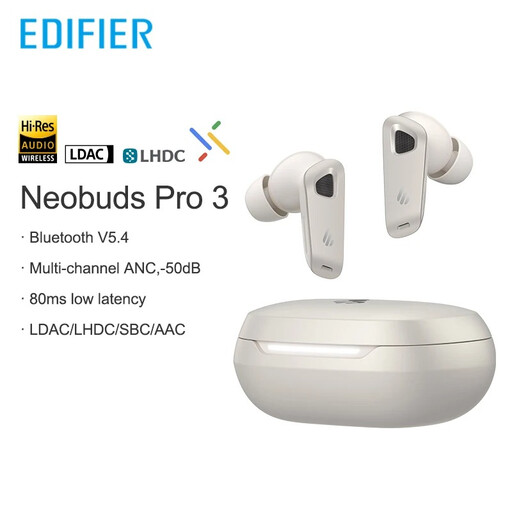
Why we recommend this product: The Edifier NeoBuds Pro 3 are positioned as in-ear earbuds for audiophile users. Support for Hi-Res Audio via LDAC and LHDC codecs enables highly detailed sound reproduction. The adaptive noise cancellation, with a specified reduction of up to -50 dB, is remarkable for this form factor. Features like Spatial Audio and an IP54 rating complete the technical profile.
Pros:
Best for: Tech-savvy music lovers who prioritise the highest sound quality and effective noise cancellation in a compact, portable format for use at home and on the go.
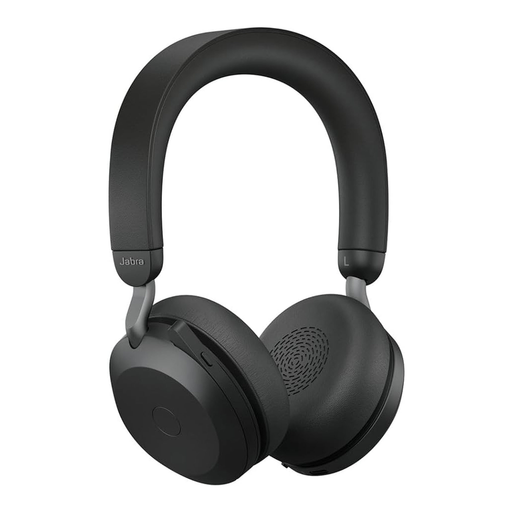
Why we recommend this product: The Jabra Evolve2 75 is a wireless headset purpose-built for professional use in the office and home office. Its 8-microphone technology ensures precise voice capture and effectively filters out ambient noise during calls. The UC compatibility, discreetly retractable boom arm, and integrated busylight are functional details that streamline the workday. The included charging stand offers added convenience.
Pros:
Best for: Professionals who need a reliable headset for the office and home office, where voice quality in calls and video conferences is the top priority.
The models featured here cover specific use cases. If you are looking for other form factors, price points, or specialised features, you can find a wider range of products in our main category.
Discover more Noise-Cancelling and Bluetooth Headphones
1. What is the difference between active and passive noise cancellation? Passive noise cancellation is created by the physical seal around the ear, such as the cushions of over-ear headphones or the snug fit of in-ear tips. It primarily dampens high-frequency sounds. Active Noise Cancellation (ANC) is an electronic technology that uses anti-noise to specifically neutralise low-frequency, monotonous ambient sounds like airplane engines or air conditioning.
2. Does noise cancelling affect sound quality? In the early days of ANC technology, a slight hiss or a change in the sound profile could be noticeable. However, modern, high-quality ANC systems are designed to have a minimal impact on audio quality. Many models also offer equaliser settings via an app to customise the sound to your personal preferences.
3. How important is a multipoint connection for headphones? A multipoint connection is particularly valuable for users who frequently switch between multiple devices. For example, you can listen to music from your laptop and seamlessly answer a call on your smartphone without having to manually switch the Bluetooth connection. For home office use or for commuters who use a laptop and phone in parallel, this provides a significant convenience boost.