
Lieferung heute & morgen

Qualitätsgarantie

Willkommens-Angebote freischalten: KOSTENLOSE Lieferung | Bis zu 80 % RABATT | Kostenlose 30-Tage-JoyPlus-Testphase
App herunterladen
Whether you're in a noisy open-plan office, on your daily train commute, or taking a long-haul flight, ambient noise can disrupt your concentration and detract from your music. Noise-cancelling headphones offer a technical solution to minimise these distractions and create your own personal listening environment. However, the selection of models is vast, and their technical specifications can be overwhelming.
This article serves as your guide. We'll explain the key features to consider when making your choice and present a selection of models with different specialities. Our goal is to provide you with an objective foundation for your purchasing decision.
To find the right model for you, it's helpful to understand a few technical fundamentals and key features.
Active Noise Cancellation, or ANC, is the core technology in these headphones. Small, outward-facing microphones on the headphones capture ambient sounds. A processor inside then generates an exact opposite of these sound waves (anti-noise). This anti-noise is sent to the headphone speakers along with your audio signal. When the sound and anti-noise waves meet, they cancel each other out. The result is a significant reduction in monotonous, low-frequency sounds like aeroplane engines, the rattle of a train, or air conditioning.
Some models also offer adaptive ANC, which automatically adjusts the level of noise cancellation to your surroundings.
Over-ear noise-cancelling headphones enclose the entire ear. This offers two advantages: Firstly, the physical barrier of the earcups provides passive noise isolation, which complements the ANC. Secondly, pressure is distributed around the ear rather than directly on it. This generally leads to greater comfort during extended use, such as in the office or while travelling. Look for soft padding and an adjustable headband to ensure a secure fit.
For use on the go, battery life is a crucial factor. Most current Bluetooth noise-cancelling headphones offer between 20 and 40 hours of playback with noise cancellation activated. Some models include a fast-charging feature, providing several hours of playback after just a few minutes of charging.
In addition to a wireless connection via Bluetooth, an optional 3.5mm audio jack is a practical feature. It allows you to use the headphones even when the battery is dead or with non-Bluetooth devices, such as an in-flight entertainment system.
Based on the criteria above, we have compiled a selection of models that cater to different user requirements.
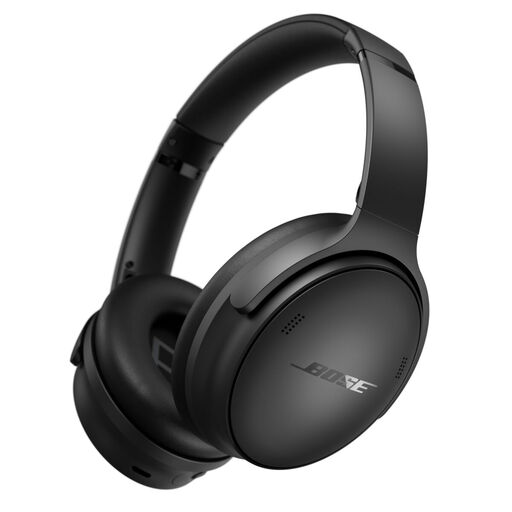
Why this model stands out: The Bose QuietComfort headphones offer flexible control over noise cancellation. 'Quiet Mode' aims for maximum isolation, while 'Aware Mode' selectively lets in ambient sound, allowing you to hear announcements or conversations. The sound can also be personalised with a customisable equaliser via the Bose Music App.
Advantages:
Who is this model for? This model is an excellent choice for users who need to flexibly adapt their noise cancellation to changing environments and who value personalised sound.

Why this model stands out: The Soundcore Space One places a strong focus on long battery life and high-resolution audio transmission. According to the manufacturer, its adaptive noise cancelling offers up to 98% noise reduction. Support for the LDAC codec enables wireless audio transmission with a higher level of detail than standard Bluetooth codecs when used with compatible players.
Advantages:
Who is this model for? Ideal for frequent travellers and users for whom maximum battery life is a top priority. Audiophiles who own a device with LDAC support can also benefit from the higher audio quality.
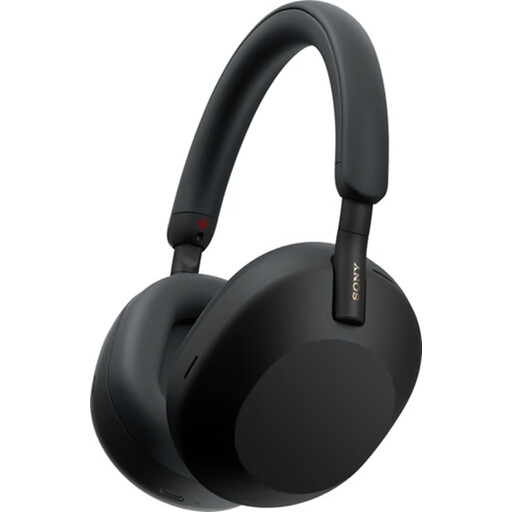
Why this model stands out: The Sony WH-1000XM5 is engineered for high performance in both noise cancellation and phone calls. The Auto NC Optimiser automatically adjusts the ANC based on wearing conditions and the environment. A standout feature is Multi-Point Connection, which allows the headphones to be paired with two Bluetooth devices simultaneously—for example, a laptop and a smartphone—to switch seamlessly between work and calls.
Advantages:
Who is this model for? This model is aimed at commuters and office professionals who frequently take calls and require reliable noise cancellation. The ability to connect to two devices at once is an especially practical feature in a professional setting.
The market for noise-cancelling headphones is diverse, with models to suit every need and budget. If the headphones featured here don't perfectly match what you're looking for, you may find the right product in our wider selection.
Explore our full range of Wireless Over-Ear Headphones and find the perfect model for your needs.
Passive noise cancellation (or noise isolation) is achieved through the physical design of the headphones. Well-sealed over-ear earcups or snug-fitting in-ear tips block sound waves mechanically. Active Noise Cancellation (ANC) is an electronic technology that uses microphones to detect ambient noise and neutralises it by generating anti-noise. Most ANC headphones use a combination of both methods.
With earlier generations of ANC headphones, the technology could audibly affect the sound profile. However, modern, high-quality models are engineered to minimise this effect. The signal processing is designed to preserve the original audio quality as much as possible. Many models also offer an equaliser in their companion app, allowing you to adjust the sound to your personal preferences.
Yes, the ANC function works independently of audio playback. You can put on the headphones and activate the noise cancellation to create a quiet environment without listening to music or podcasts. This makes them a useful tool for focused work, studying, or simply relaxing in noisy environments like trains or aeroplanes.