
Lieferung heute & morgen

Qualitätsgarantie

Willkommens-Angebote freischalten: KOSTENLOSE Lieferung | Bis zu 80 % RABATT | Kostenlose 30-Tage-JoyPlus-Testphase
App herunterladen
Non-alcoholic wine is designed for people who want to enjoy wine or sparkling wine with little or no alcohol. This includes drivers, those avoiding alcohol, calorie-conscious shoppers and, after consulting their doctor, pregnant women. The range extends from non-alcoholic red wine through non-alcoholic white wine and rosé to non-alcoholic sparkling wine.
As a Joybuy Product Recommendation Officer, I focus on verifiable information rather than marketing claims when selecting products. With de-alcoholised drinks in particular, it’s worth checking the label – because “non-alcoholic” and “0.0%” don’t always mean the same thing.
A product labelled as non-alcoholic may still contain a small amount of residual alcohol, depending on the labelling regulations. In the product data we have, for example, some variants are listed at 0.5% vol., while others are explicitly marked as 0.0% vol.
If you want to avoid alcohol completely, you should specifically look for non-alcoholic wine 0.0% and check the information on the product page and packaging. This is especially important for drivers and anyone who chooses not to drink alcohol for personal or health reasons.
De-alcoholised wine doesn’t automatically taste dry. In some products, the missing alcohol is compensated for by a noticeably sweet fruitiness. Details such as residual sugar, carbohydrates and acidity help you judge what you’re buying.
For comparison: the St. Antony Riesling Non-Alcoholic Sparkling Wine is listed with 27.0 g/l residual sugar and 6.0 g/l acidity. The Torres Natureo Sparkling, according to its product data, contains 42.3 g/l residual sugar and is described as medium-dry. If you prefer a drier taste, don’t choose solely by grape variety or brand name.
A non-alcoholic wine in a 6-pack can be convenient for parties and regular consumption, but it takes up more storage space and ties up more money. Individual 0.75-litre bottles are better for trying out a product or for households with lower consumption.
Once opened, non-alcoholic wines and sparkling wines should generally be kept cool and drunk promptly. With sparkling products, the freshness fades more quickly. Always follow the instructions on the label.
Check before you buy:
Even with 0.0% products, it’s sensible to speak to a medical professional if you are pregnant or have a specific health condition. No general health or therapeutic benefit can be inferred from the alcohol content alone.
A non-alcoholic Riesling often brings noticeable acidity and fresh fruit notes. Sauvignon Blanc is frequently associated with green, herbaceous aromas. With a non-alcoholic red wine, the grape variety, tannins and serving temperature are all important.
As a practical guide:
Calorie and sugar values are usually given per 100 ml. In the product data, the energy values of the featured products range from 5 to 28 kcal per 100 ml. However, a low calorie count doesn’t automatically mean a dry taste.
If you’re looking for organic non-alcoholic wine, check for a recognised organic certification mark and a control number. For vegan non-alcoholic wine, the manufacturer’s specific labelling is crucial, as winemaking methods can’t be judged by grape variety alone.
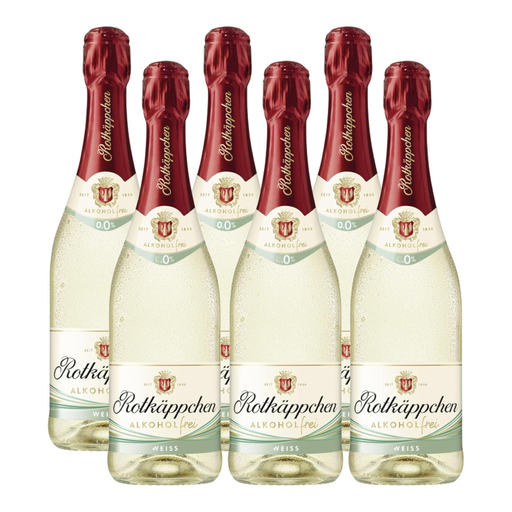
Why this product fits the profile: The 6-pack is ideal for households that regularly serve non-alcoholic sparkling wine at celebrations or as an aperitif.
The product data lists ingredients, sulphites, nutritional values and a recommended serving temperature of around 6 °C.
6 × 0.75 l, German origin and 27 kcal per 100 ml according to the product information.
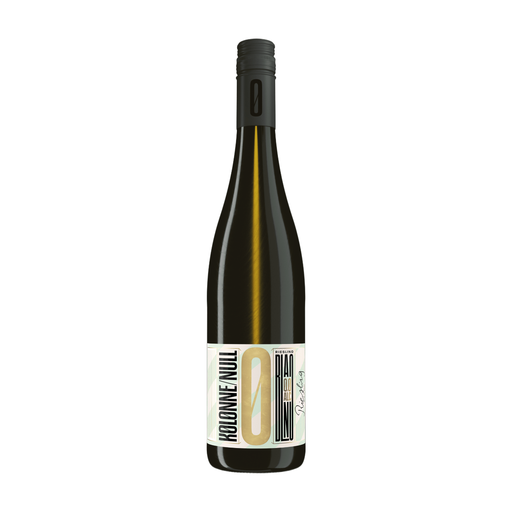
Why this product fits the profile: The stated Riesling grape variety, 0.0% vol. and organic control number provide clear guidance for discerning buyers.
The product page lists 0.0% vol., 6.3 g/l acidity, 28.0 g/l residual sugar and the organic control number DE-ÖKO-039.
100% Riesling, German origin and 16 kcal per 100 ml according to the product data.
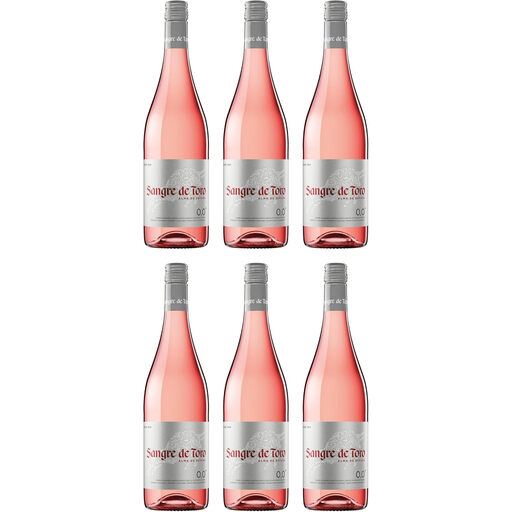
Why this product fits the profile: The 0.0% rosé in a 6-pack is perfect for garden gatherings, vegetarian dishes, pasta and non-alcoholic aperitifs.
Alcohol content, grape variety, serving temperature of 7–9 °C and ingredients are all clearly stated in the product information.
100% Garnacha Tinta, 0.0% vol. and 18 kcal per 100 ml according to the product data.
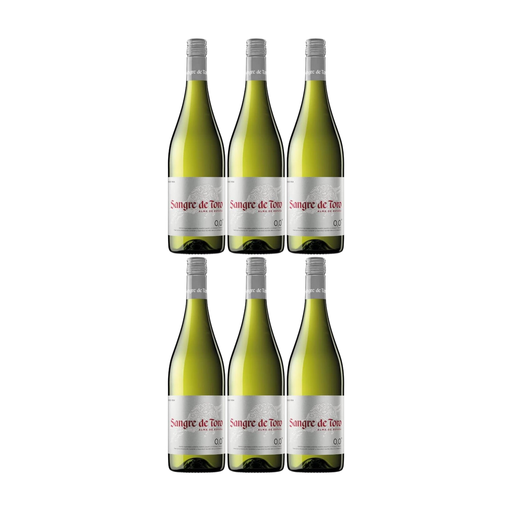
Why this product fits the profile: The 0.0% label and light white wine profile make this a clear choice for alcohol-free occasions with fish, poultry or vegetarian cuisine.
The product data lists 0.0% vol., ingredients, sulphites and a recommended serving temperature of 7–9 °C.
100% Moscatel, 6 × 0.75 l and 19 kcal per 100 ml according to the product information.
We’ve put together a full, regularly updated list of products that meet these strict selection criteria and comply with all applicable EU safety regulations.
No. The term can include a small amount of residual alcohol. If you prefer 0.0% vol., check the specific information on the label. The Torres and Kolonne Null products mentioned here state 0.0% vol.; other variants are listed at 0.5% vol. according to the product data.
The best-before date is on the packaging. Unopened bottles should be stored in a cool, dry place away from direct sunlight, following the manufacturer’s instructions. Once opened, keep them in the fridge and consume promptly. With sparkling wine, the fizz dissipates more quickly.
Although the alcohol is removed as a source of calories during de-alcoholisation, sugar, grape must or sweeteners may still be present. So compare the nutritional information per 100 ml and take into account how much you’re drinking.