
Lieferung heute & morgen

Qualitätsgarantie

Willkommens-Angebote freischalten: KOSTENLOSE Lieferung | Bis zu 80 % RABATT | Kostenlose 30-Tage-JoyPlus-Testphase
App herunterladen
A non-permanent marker might seem like a simple product, but choosing the wrong one can quickly lead to frustration: smeared presentation slides, illegible labels on lab equipment, or ink that can no longer be removed without a trace. Many users invest in pens that don't live up to their claims. Before you make a decision, it's crucial to understand the common pitfalls often hidden behind marketing promises.
To avoid these problems, you should check three core technical parameters before buying. These will determine whether a water-soluble pen is right for your application.
Line width is the most critical factor for legibility and intended use. The designations follow a clear system:
A non-permanent marker uses a special water-soluble ink. Unlike whiteboard markers, this ink is resistant to dry smudging once dry but can be removed effortlessly and without residue using a damp cloth. These damp-erase pens are specifically designed for smooth, non-porous surfaces like overhead transparencies, glass, plastic, or metal. Look for specifications like "suitable for overhead projection," as these inks are formulated to prevent beading and ensure high colour brilliance for clear projections. As such, a pen for glass and film is not an alternative to a dry-erase whiteboard marker.
A high-quality pen is distinguished by a durable barrel, often made of Polypropylene (PP). This material prevents the ink from drying out quickly and ensures a long service life. Another feature from quality manufacturers like STAEDTLER Lumocolor is refillability. Models compatible with a refill station not only reduce waste but also lower long-term costs, especially for high-volume use in offices, schools, or labs.
Based on these objective criteria, we have identified several products that are particularly well-suited for different user profiles.
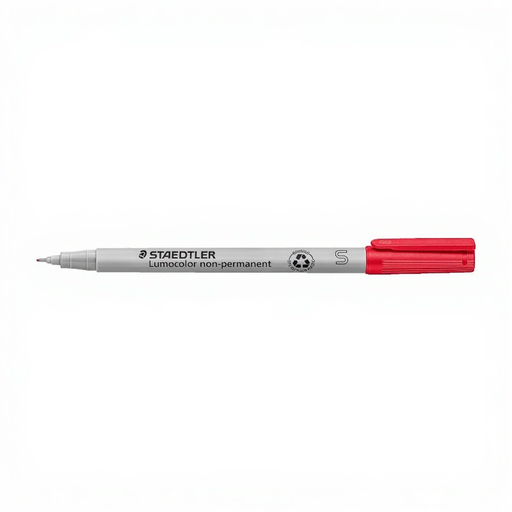
Why this product is a match: For users who need to label the smallest objects, such as microscope slides, test tubes, or technical components, an ultra-fine and stable tip is essential. The 0.4 mm tip allows for maximum precision.
The metal-encased synthetic tip prevents fraying or retracting (Pitfall 3). The ink is optimised for smooth surfaces and dries instantly, which prevents smudging (Pitfall 2).
The extremely fine 0.4 mm line width, combined with high colour brilliance, ensures excellent legibility even on the smallest labels.
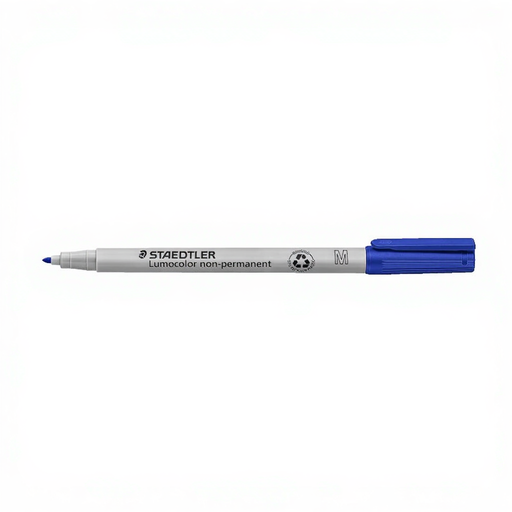
Why this product is a match: For daily use in meetings, lectures, or for general organisation, a reliable pen with a standard line width is essential. The M-tip (1.0 mm) is the established standard for OHP transparencies and general-purpose labelling.
The ink is specially formulated for film, preventing beading (Pitfall 1). The PP barrel and refillability combat premature wear and tear, making the pen a long-term solution.
The universal line width is ideal for writing and simple diagrams. The "Airplane-Safe" feature ensures leak-proof performance during travel, and the refill option is both economical and eco-conscious.
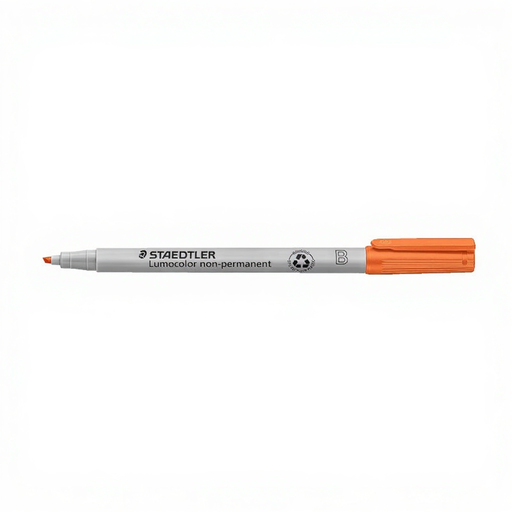
Why this product is a match: Anyone who wants to not only write but also visually organise content needs a flexible pen. The chisel tip (B) allows for both fine lines and broad strokes, ideal for headlines, mind maps, or colour-coding information.
The high-quality tip remains shape-stable even when alternating between broad and narrow strokes (Pitfall 3). The ink's high colour brilliance ensures a clear, bead-free application (Pitfall 1).
The chisel tip offers maximum flexibility by combining two line widths (approx. 1.0 mm and 2.5 mm) in one pen. This is ideal for dynamic presentations and creative organisation.
We have compiled a complete, up-to-date list of products that fully meet these strict selection criteria.
Technically, it's possible, but not recommended. The ink in these pens is damp-erase, not dry-erase. You will need a damp cloth for cleaning and cannot remove the ink with a standard whiteboard eraser. This can lead to streaks, colour residue, or damage to the whiteboard surface. For whiteboards, you should exclusively use designated whiteboard markers.
Most manufacturers recommend storing them horizontally. This ensures that the ink flows evenly to the tip and prevents it from pooling at one end of the ink reservoir or the tip from drying out. A high-quality barrel made of Polypropylene (PP), as used in many Lumocolor pens, provides additional protection against drying out and ensures a long shelf life.
The "Airplane-Safe" label indicates that the pen features automatic pressure equalisation. This mechanism prevents the pen from leaking during changes in air pressure inside an aircraft cabin, especially during take-off and landing. For people who travel frequently with their writing instruments, this is a key quality feature to avoid ink stains in bags or on documents.