
Lieferung heute & morgen

Qualitätsgarantie

Willkommens-Angebote freischalten: KOSTENLOSE Lieferung | Bis zu 80 % RABATT | Kostenlose 30-Tage-JoyPlus-Testphase
App herunterladen
A non-permanent marker might seem like a simple tool, but choosing the wrong one can quickly lead to frustration. Whether for a presentation, office organisation, or lab labelling, an unsuitable pen can create more problems than it solves. Many users are familiar with the typical annoyances: marks that leave an unsightly shadow, tips that fray after minimal use, or ink that dries out in the pen faster than it does on the transparency.
As a Joybuy Product Recommendation Officer, my goal is to provide you with objective criteria to help you find the right water-soluble universal pen for your needs and avoid common purchasing pitfalls.
Before we explore the solutions, let's identify the most frequent flaws found in low-quality pens:
A good pen for transparencies must avoid these exact problems and perform reliably.
To make an informed decision, you should check three core parameters. These will determine if a pen is suitable for your specific use case.
The term "non-permanent" is not standardised. For transparency pens, it usually means the ink is water-soluble. Unlike dry-erase whiteboard markers, these pens require a damp cloth for cleaning.
Pay attention to the product description: A high-quality erasable marker is distinguished by ink that can be completely removed from smooth, non-porous surfaces like glass, plastic films, or laminated paper without leaving any residue. The ink should also dry quickly to prevent smudging right after writing—a crucial feature, and not just for left-handers.
Choosing the right tip is crucial for the writing result. Manufacturers like Staedtler Lumocolor use standardised abbreviations:
For labelling objects like lab glassware, a fine glass marker is suitable, whereas an M or B tip makes more sense for presentations.
Two features distinguish high-quality pens from disposable products:
Based on the criteria above, we have selected a few models for specific user profiles.
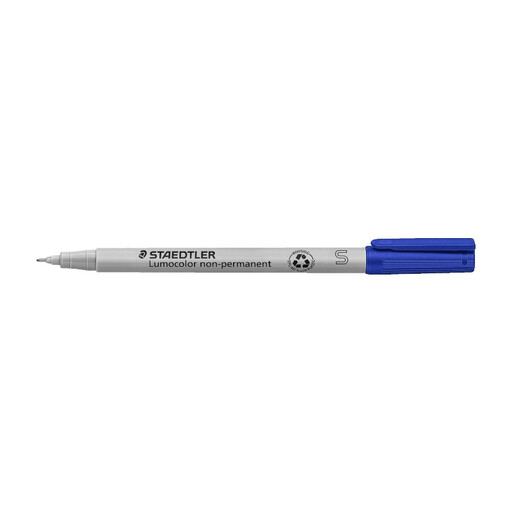
Why This Fits Their Persona: The superfine 0.4 mm tip is ideal for technical drawings, precise labelling of small components, or detailed notes on presentation slides where every millimetre counts.
The metal-encased tip offers high stability and prevents the typical fraying of fine tips. The high-quality, water-soluble ink ensures clean removal from smooth surfaces without "ghosting".
Ultra-fine precision (0.4 mm) for technical drawings; airplane-safe thanks to automatic pressure equalisation.
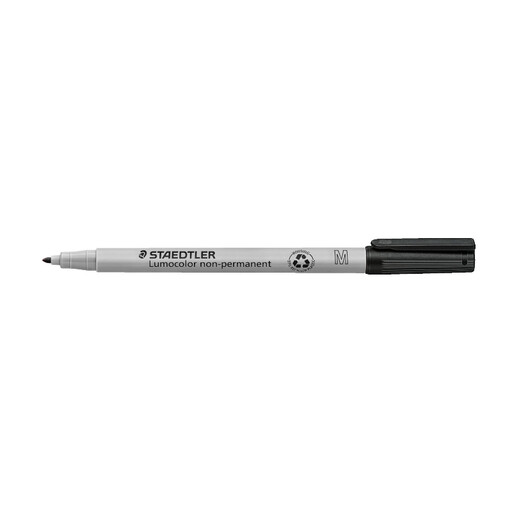
Why This Fits Their Persona: A reliable workhorse with a versatile 1.0 mm tip, suitable for both writing on (wet-erase) whiteboards and preparing OHP transparencies.
This marker is refillable, which counteracts the problem of drying out quickly and creating unnecessary waste. The polypropylene (PP) barrel also ensures a long shelf life.
Refillable for a longer lifespan and less waste; quick-drying and smudge-proof, ideal for left-handers.
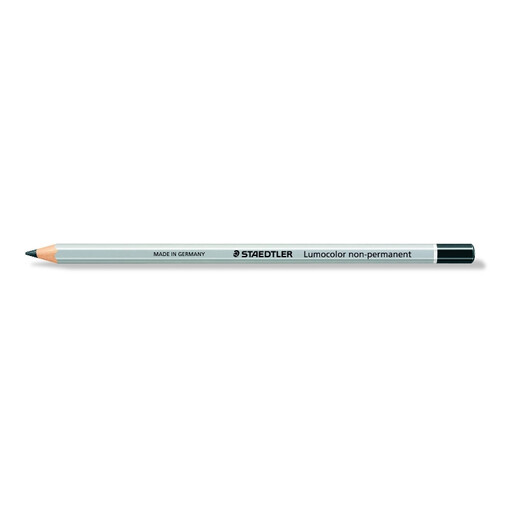
Why This Fits Their Persona: This wax-based pencil is specially designed for marking on difficult smooth surfaces like glass, metal, and plastic, where ink-based markers often fail.
As a pencil, it cannot dry out like an ink marker. Its special formula is designed for easy removal from non-porous surfaces, avoiding the permanent stains that unsuitable markers can leave behind.
Adheres to almost all smooth surfaces (glass, metal, plastic); no ink to dry out. The Lumocolor Omnichrom is a specialised tool.
We've curated a complete, up-to-date list of products that meet these strict selection criteria.
Yes, you can. Many wet-erase whiteboard pens are essentially universal pens. The key difference from classic whiteboard markers is the removal method: while dry-erase markers are removed with a dry eraser, water-soluble transparency pens require a damp cloth. They generally work very well on very smooth whiteboard surfaces.
"Airplane-safe" means the pen has an automatic pressure equalisation system. A valve inside the pen ensures that the internal pressure adapts to the ambient pressure, which changes during an aircraft's take-off and landing. This reliably prevents ink from leaking and staining clothes or documents.
To maximise their lifespan and ensure consistent ink flow, it is recommended to store transparency pens lying down (horizontally). This ensures that the ink constantly supplies the tip and doesn't collect at one end of the pen due to gravity. Always replace the cap firmly after use until you hear it click to prevent it from drying out.