
Lieferung heute & morgen

Qualitätsgarantie

Willkommens-Angebote freischalten: KOSTENLOSE Lieferung | Bis zu 80 % RABATT | Kostenlose 30-Tage-JoyPlus-Testphase
App herunterladen
By a Joybuy Product Recommendation Officer, 28 August 2026
Whether you're giving a presentation in a lecture hall, labelling storage boxes at home, or planning on a laminated calendar, an unreliable pen can quickly lead to frustration. The ink smudges, can't be removed without leaving a residue, or simply won't adhere to the smooth surface in the first place. Choosing the right non-permanent overhead pen is crucial to avoid these problems.
Many users choose the wrong product because they fall for common advertising claims or are unaware of the key technical differences. Here are the most common pitfalls:
This guide will help you navigate these issues and find a pen that is precisely tailored to your needs.
To make an informed decision, you should consider three core parameters. These determine whether a pen is suitable for your purposes.
The most important feature of a non-permanent overhead pen is its ink. This ink is water-soluble, meaning it can be easily and completely removed from non-porous surfaces with a damp cloth. This makes it the ideal wipeable pen for temporary markings.
Look for the explicit "non-permanent" or "water-soluble" label. In contrast, permanent markers use an alcohol- or solvent-based ink that is waterproof and can only be removed with special cleaning agents. For flexible applications where corrections are necessary, a damp-wipeable pen is the right choice.
The pen's tip determines the precision and legibility of your writing. Common line widths are:
A good non-permanent overhead pen is designed as a universal pen for smooth surfaces. Its ink contains special additives that ensure it adheres to materials like film, glass, plastic, metal, or laminated paper without beading. Models like the Staedtler Lumocolor are also often labelled as "Airplane-Safe." An automatic pressure equalisation system prevents the pen from leaking on flights—an important detail for educators and business travellers.
Instead of making a one-size-fits-all recommendation, we have selected products for three typical user profiles.
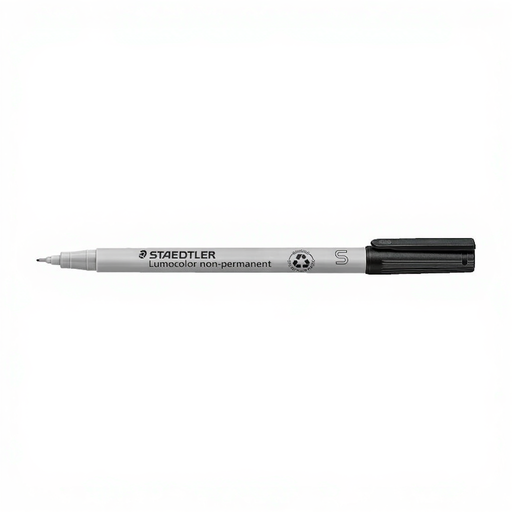
Why it's a good fit: Perfect for lecturers, students, and technicians who make detailed annotations on overhead transparencies, laminated diagrams, or in small calendar boxes. The superfine tip allows for clear, dense writing.
The quick-drying ink and precision tip prevent smudging, even when writing quickly on smooth surfaces. The ink adheres reliably without beading.
Line width of approx. 0.4 mm for maximum detail. The pen is also refillable (with refill station 487 15), which increases its longevity.
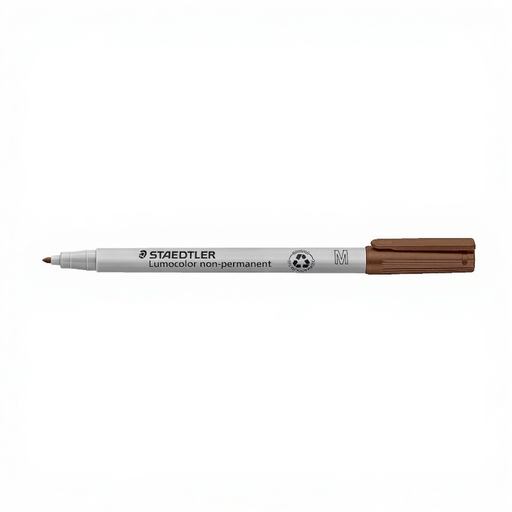
Why it's a good fit: Ideal for flexibly labelling storage containers, freezer bags, or wipe-clean family planners. The medium tip is robust and ensures legible writing on various household materials.
The ink is specially formulated for a variety of smooth surfaces and can be wiped away with a damp cloth without leaving residue or "ghosting," even after a long time.
The robust M-tip (approx. 1.0 mm) is durable. The Airplane-Safe technology makes it a reliable travel companion.
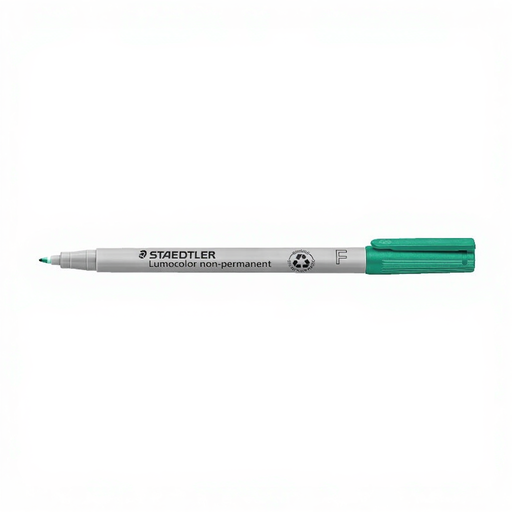
Why it's a good fit: For educators and workshop leaders who want to make their content more understandable through colour-coding and visual organisation. The fine tip offers a good compromise between detail and visibility.
According to the manufacturer, the ink is characterised by its very high colour brilliance. This ensures that even coloured markings remain clear and vibrant during projection, rather than appearing pale.
The F-tip (approx. 0.6 mm) is versatile. The pen is also refillable, which saves money and reduces waste with frequent use in different colours.
We have compiled a complete, up-to-date list of products that fully meet these strict selection criteria and applicable regulations.
The writing from a water-soluble overhead pen is best removed with a soft, slightly damp cloth. In most cases, plain water is sufficient. Avoid dry rubbing, as this can smear the pigments. You should also refrain from using harsh cleaning agents, as they can damage the surface (especially on transparencies).
Technically, it's possible, but it's not the intended application. Unlike special whiteboard markers, which are dry-erase, the ink of a non-permanent overhead pen must be wiped with a damp cloth. This is more cumbersome in the long run and can also lead to residue on low-quality whiteboard surfaces. For whiteboards, dry-erase markers are the better choice.
Some high-quality overhead pens, like those in the Staedtler Lumocolor series, are refillable. This means you don't have to dispose of the pen when the ink runs out. Instead, you can purchase a special refill station (e.g., models 487 15 or 487 17, depending on the pen type). The pen is simply inserted tip-down into the station and refills itself within a few hours. This is not only more environmentally friendly but also more cost-effective with frequent use.