
Lieferung heute & morgen

Qualitätsgarantie

Willkommens-Angebote freischalten: KOSTENLOSE Lieferung | Bis zu 80 % RABATT | Kostenlose 30-Tage-JoyPlus-Testphase
App herunterladen
A non-permanent transparency pen is an indispensable tool in offices, lecture halls, and organisational workflows. However, choosing the right one can be more complicated than it seems. Many users experience frustration when a pen advertised as "erasable" leaves stubborn shadows or when the tip becomes unusable after a short time. This guide will help you identify the crucial features and avoid making the wrong purchase.
When searching for a suitable pen, users often encounter recurring flaws that severely limit functionality.
To prevent these problems, you should check three central parameters before buying. These determine the performance and reliability of a transparency pen in daily use.
The most important distinction lies in the ink's composition.
The tip determines the pen's intended application. The most common line widths are indicated by letters:
The quality of the pen's barrel and useful additional features are indicators of a long-lasting product.
Based on these objective criteria, we have selected a few models for different user profiles.
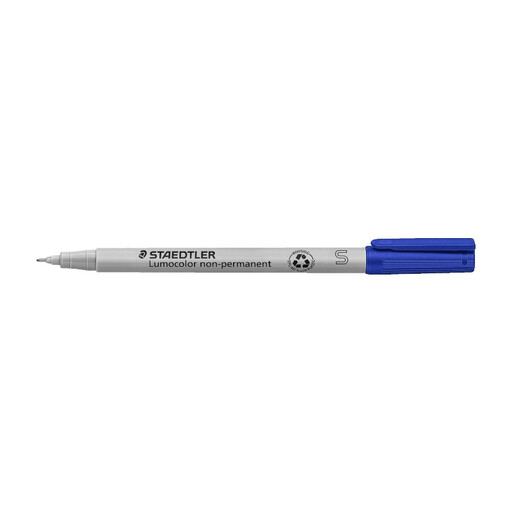
Why This Fits Their Persona: Ideal for students and office professionals who need to make detailed annotations on laminated charts, plastic dividers, or reusable calendars. The superfine tip ensures clean, space-saving writing.
The water-soluble ink can be completely removed with a damp cloth, leaving no "ghosting" on smooth surfaces. The durable tip maintains its shape.
The line width of approx. 0.4 mm is designed for fine details. The ink is fast-drying, making it suitable for left-handers as well.
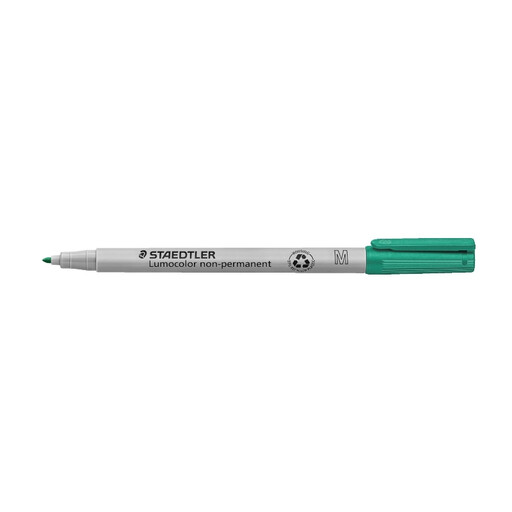
Why This Fits Their Persona: Perfect for teachers and lecturers who need clear, highly visible writing for presentations on overhead projectors or whiteboards. The medium tip ensures excellent readability.
The polypropylene (PP) barrel effectively protects the ink from drying out. The "Airplane-safe" technology prevents leakage during pressure changes.
The line width of approx. 1.0 mm and high colour vibrancy guarantee great visibility. The pen is refillable with the 487 17 refill station.
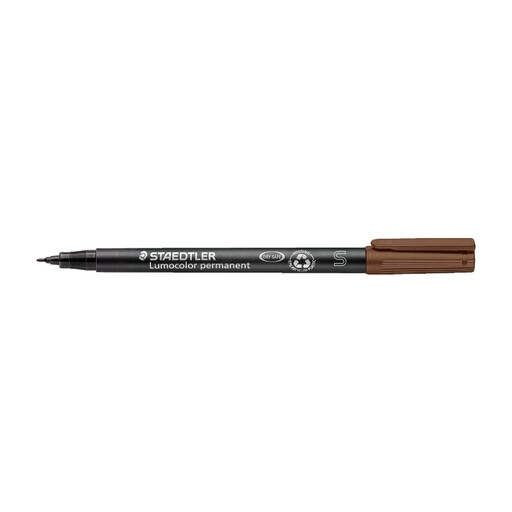
Why This Fits Their Persona: For users in logistics, labs, or workshops who require permanent, smudge-proof, and waterproof marking on various surfaces like glass, metal, or plastic.
This pen is explicitly permanent, avoiding the problem of accidental erasure common with temporary markers. Its DRY SAFE technology prevents it from drying out, even when left uncapped.
The ink is smudge-proof and waterproof on almost all surfaces. According to the manufacturer (per ISO 554), the DRY SAFE feature allows the pen to be left uncapped for days.
We've curated a complete, up-to-date list of products that fully meet these rigorous selection criteria.
While both are erasable, their composition is different. A non-permanent transparency pen uses water-soluble ink that is removed with a damp cloth. A whiteboard marker is a "dry-erase" pen; its ink forms a film after drying that can be wiped away dry. Using a transparency pen on a whiteboard will therefore always require a damp cloth for cleaning.
Make sure the cap clicks firmly into place after each use. Ideally, store the pens horizontally to ensure the ink evenly supplies the tip. Choosing a pen with a polypropylene (PP) barrel and features like "DRY SAFE" can further extend its life.
A water-soluble marker, often called a universal pen, adheres to almost all smooth, non-porous surfaces. These include overhead transparencies (OHP), glass, porcelain, plastics (e.g., document sleeves, CDs/DVDs), and laminated paper. However, on porous materials like paper or unsealed wood, the ink is permanent.