
Lieferung heute & morgen

Qualitätsgarantie

Willkommens-Angebote freischalten: KOSTENLOSE Lieferung | Bis zu 80 % RABATT | Kostenlose 30-Tage-JoyPlus-Testphase
App herunterladen
A non-slip runner rug can make your hallway, kitchen, entrance or living area more comfortable and easier to maintain. However, the label “anti-slip” alone is not enough to guarantee the right choice for everyday use. The underside, material, dimensions and intended location all play an important role.
Typical purchasing mistakes are particularly common in homes with children, pets or frequently used passageways. A narrow runner can move around if its underside is not suitable for the floor. A model with a thick pile can catch on doors. And a runner advertised as water-repellent is not automatically suitable for standing moisture or machine washing.
An anti-slip coating can reduce movement on many types of flooring. However, on very smooth tiles, laminate or sealed parquet, stability also depends on cleanliness, the floor surface and the material used on the back. Dust, grease or moisture between the floor and runner can reduce grip.
On particularly smooth surfaces, a suitable anti-slip underlay may be useful. The runner should lie completely flat, without raised or curled edges.
A hallway runner should be positioned so that doors can open and close without difficulty. A low overall height is practical for this purpose. In an entrance area, there must also be enough space for shoes and frequent movement.
You should therefore measure the length and width before buying. A non-slip runner for hallways and entrances does not necessarily need to be the same size as a runner rug for the kitchen, bedroom or living room.
“Easy to care for” does not always mean that a runner can go in the washing machine. For PVC or foam models, wiping is usually the recommended cleaning method. Textile runners may have different care requirements.
You should therefore check:
A PVC runner rug or a PVC foam model can be suitable for high-traffic areas when easy cleaning is important. PVC surfaces can generally be wiped clean with a damp cloth. Depending on their construction, textile runners offer a softer surface but often require more care when dealing with stains and moisture.
Look for a clearly described anti-slip underside. The product information should clearly state whether this is a coating, a textured backing or a separate underlay. This does not guarantee that the runner will never move.
A 30 cm-wide runner may be sufficient for a narrow passageway. In larger areas, the runner should not be so small that it is constantly pushed out of place. At the same time, the edges should not protrude into walking routes.
A low profile makes it easier to position the runner beneath doors. For models intended for bedrooms or living rooms, surface comfort may also be important. In kitchens and entrances, however, wipe-clean properties and a suitable format are often higher priorities.
A water-repellent runner rug can be practical for occasional splashes or small spills. However, “water-repellent” and “waterproof” do not automatically mean the same thing. Check whether only the surface or the underside also keeps moisture out.
For households with pets or children, an easy-care runner is recommended, with a surface that can be kept clean without laborious specialist cleaning. Spills should be removed as soon as possible so that liquid does not seep in at the edges or through the surface onto the floor.
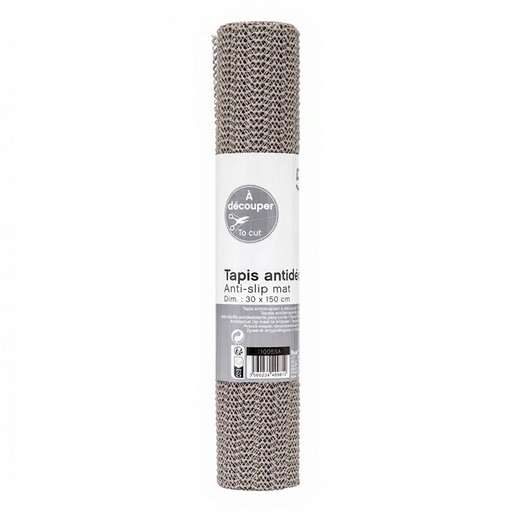
Why this product suits this profile: Measuring 30 × 150 cm, this grey runner is suitable for narrow areas such as hallways, entrances or the transition in front of the kitchen. Its low height of 0.1 cm can make it easier to use beneath doors.
The low profile reduces the likelihood of a door catching on the edge. The described anti-slip backing should be considered for the intended use; the floor should be clean and dry.
PVC foam, a grey colour, a wipe-clean finish and a weight of 0,090 kg. The format is designed for narrow, high-traffic areas.
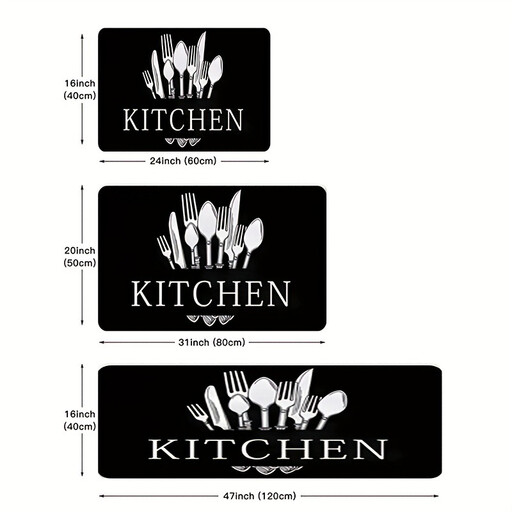
Why this product suits this profile: Measuring 50 × 80 cm, this runner is suitable for smaller areas in the living room, bedroom, hallway or at the kitchen entrance. The combination of a water-repellent finish and anti-slip backing is aimed at users with versatile requirements.
The manufacturer recommends using a suitable anti-slip underlay on very smooth floors. The runner must not be used on another carpet or on stairs, and must lie completely flat.
Water-repellent properties, anti-slip backing and a surface that is easy to clean according to the product description.
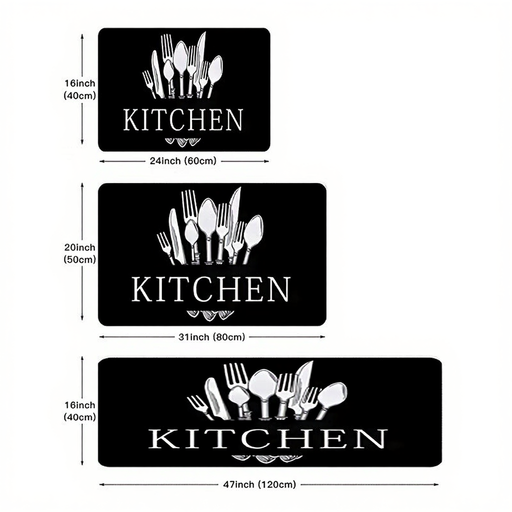
Why this product suits this profile: The large version is designed for more spacious areas in the living room, bedroom, hallway or entrance. A softer surface can provide additional comfort, while the waterproof backing is designed for areas exposed to occasional moisture.
The combination of a large surface area and integrated anti-slip design helps address movement caused by frequent use. Before use, check the dimensions, edge positioning and suitability for the specific floor.
Waterproof backing, soft surface, described as suitable for high-traffic living areas and easy to clean.
We have put together a complete, regularly updated list of products that fully meet these strict selection criteria and the safety regulations applicable in the EU.
Before laying it down, make sure the floor is clean, dry and free from grease. Lay the runner completely flat and check that no corners or edges are curling upwards. Additional checks are advisable around doors, chair legs and frequently used transitions.
For care:
A kitchen or entrance runner should not be placed near an open flame or strong heat sources. According to the product description, the medium-sized model mentioned above is also not suitable for stairs or for use on another carpet.
Clean the floor and underside, lay the runner completely flat and choose a size that suits the walking route. On very smooth floors, a suitable anti-slip underlay can provide additional stability. Edges must not stick up or extend into doorways.
Its lifespan depends on the material, intensity of use, type of flooring and care. A lightly used bedroom is subject to different demands than an entrance area exposed to outdoor footwear or pets. Check regularly whether the surface is worn or whether the underside is losing its original structure.
It can be useful for occasional splashes, provided the product is designed for this purpose. However, water-repellent does not automatically mean that standing liquid will be kept out for an extended period. Spills should be removed promptly, and the care instructions for the specific model should be followed.