
Lieferung heute & morgen

Qualitätsgarantie

Willkommens-Angebote freischalten: KOSTENLOSE Lieferung | Bis zu 80 % RABATT | Kostenlose 30-Tage-JoyPlus-Testphase
App herunterladen
A non-slip sofa cushion cover should do several things: protect cushions from everyday dirt, reduce slipping on a sofa or armchair, and complement your soft furnishings. Even so, a few common assumptions can lead to the wrong choice. A cover won’t necessarily fit just because the cushion looks a similar shape. And a decorative pattern is no substitute for checking the measurements carefully.
A 45 × 45 cm sofa cushion cover is designed for square cushions of the corresponding size. A 30 × 50 cm sofa cushion cover, on the other hand, is better suited to oblong back cushions, lumbar cushions or scatter cushions. Even a difference of a few centimetres can make the fabric feel tight, crease or shift when you sit down.
So make sure you measure:
A textured surface or chenille pattern can help the cover grip the upholstery. However, that doesn’t mean it will stay completely in place on every sofa. Smooth faux leather, steeply sloping seats and very soft upholstery all present different challenges from a firm fabric sofa.
Look for specific details such as a non-slip or slip-resistant texture, suitable dimensions and the intended use. A sofa throw designed to cover an entire seating area can’t be replaced by a small cushion protector.
A washable cushion cover is practical, but ‘washable’ should always be read alongside the care label. The temperature, wash cycle, detergent and drying method can all affect the shape and surface of the fabric. The covers mentioned here should be cleaned according to the product label. For a quick clean between washes, you can use a damp cloth and a mild detergent. Avoid bleach, harsh cleaners and abrasive products.
The dimensions affect how the cover fits, looks and moves. As a guide:
An armrest cover for a sofa should be chosen to suit the shape of the armrest, not just its surface area. A square cover may sit differently on a rounded or particularly wide armrest than on a straight one. The same applies to seat areas: a sofa seat cover should cover the required length and depth without extending into the space you need to move around.
Chenille is made from a textile yarn with a distinctive, soft surface. Some of the products mentioned combine chenille with cotton. The fabric can feel pleasant and work well as a decorative chenille cushion cover. A herringbone pattern isn’t just for looks: according to the product description, it can also help provide a non-slip finish.
However, the material isn’t a substitute for full sofa protection or couch protection against liquids. If you spill a drink, try to soak it up as quickly as possible. Also check whether the product includes just the cover or the cushion filling as well.
Neutral colours are easy to pair with different interiors:
For seats that get a lot of use, removable covers or models that can be machine washed according to the care label are practical. When cleaning regularly, follow the care label rather than relying on the product name alone.
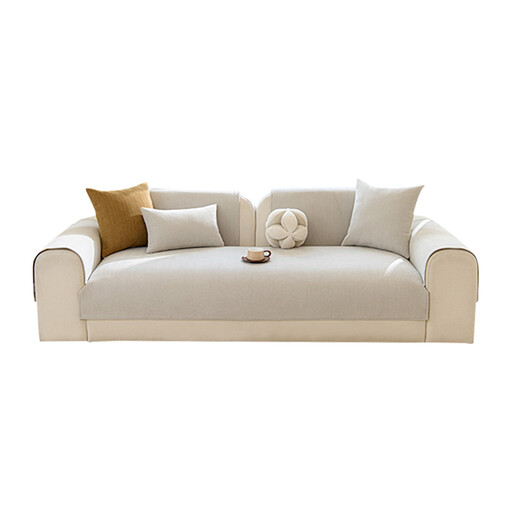
Why this product suits you: The oblong shape is ideal for back or lumbar cushions. The product details specify chenille, cotton and a beige herringbone pattern.
The 30 × 50 cm size is clearly stated, helping to reduce the risk of choosing the wrong cover. Follow the care label when cleaning it.
30 × 50 cm; chenille and cotton; beige herringbone texture described as slip-resistant.

Why this product suits you: The square shape is designed for many standard sofa cushions. Khaki chenille and a patterned design combine protection with a versatile colour scheme.
The stated dimensions make it easier to check the cover against your existing cushion. The slip-resistant texture is listed as a product feature, but it’s still important to check the measurements.
45 × 45 cm; chenille with a cotton cover; khaki shade; care according to the product label.
Why this product suits you: In homes where armrests are often touched or used to hold things, a sofa protector cut specifically for the armrest is more practical than a full sofa throw.
The product is specifically described as a 70 × 70 cm armrest cover. Before buying, check the armrest’s width, depth and curvature.
70 × 70 cm; chenille; khaki; herringbone texture described as slip-resistant.
Why this product suits you: According to its product name, this cover is designed for a larger seating area. It can be an alternative to a full sofa throw if you only want to protect a specific section.
The stated 70 × 120 cm dimensions make it easier to shortlist suitable options. The actual seat depth, cushion shape and position of any fastenings still matter.
70 × 120 cm; individual cover for a seat area; khaki finish according to the product name.
We’ve put together a complete, regularly updated list of products that meet these strict selection criteria and fully comply with the safety regulations in force in the EU.
Lay the cover smoothly over the cushion or upholstery and line up the seams and edges. Don’t pull the fabric too tightly over seat areas or armrests. Remove crumbs while dry first, and treat individual stains as soon as possible. Don’t use bleach or abrasive cleaning products. Keep covers away from naked flames and high heat.
First, choose the right size and a slip-resistant texture. Lay the cover flat without creases, and check that it suits the shape of the cushion. On very smooth or steeply sloping surfaces, you may also need a suitable textile underlay.
For square cushions, a 45 × 45 cm sofa cushion cover is a common size. Oblong cushions are more likely to need a 30 × 50 cm sofa cushion cover. Measure your cushion before ordering and compare it with the dimensions listed for the product.
That depends on the model. The products mentioned here are listed as machine washable according to the care label. Before washing, check the product’s temperature, wash cycle and drying instructions.